
You don’t just hear traditional Burundi music. You feel it.
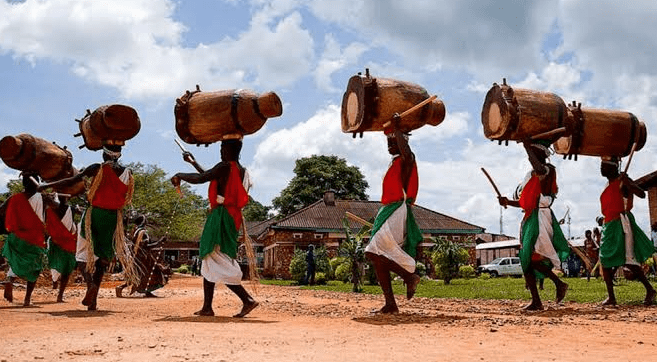
The ingoma drums of Burundi are not instruments in the conventional sense, not objects that produce sound when struck. They are, in the understanding of Burundian tradition, living presences: sacred objects with spiritual authority, social power, and a history that extends back to the foundation of the Great Lakes kingdoms. When fifteen royal drummers play them simultaneously in the outdoor performance ground at Gitega, the sound penetrates the chest cavity and reorganises something in the listener’s relationship to rhythm.
Traditional Burundi music is recognised by UNESCO as one of the world’s Intangible Cultural Heritage treasures, a designation that places it alongside flamenco, the Mongolian throat singing tradition, and the Mediterranean diet as a living cultural practice of global significance. For travellers visiting Burundi, experiencing this music in person is not an optional cultural bonus. It is the heart of the country.
The Royal Drum Tradition: Origins and Sacred Significance
The ingoma, the royal drums of Burundi, are large, barrel-shaped instruments, typically made from hollowed tree trunks with animal skin drumheads. Individual drums of the royal tradition are named and treated as sacred objects; the most important are addressed with the honorifics used for royalty and are associated with specific spiritual properties and protective functions.
The royal drum tradition developed within the court of the Burundian Mwami (king) over several centuries. Drums were the sonic emblem of royal authority, their presence announced the Mwami’s movement, their performance marked the major events of the royal calendar, and their sound carried the king’s authority across the landscape. The lead drummer at the royal court was a figure of significant political importance, not merely a musician.
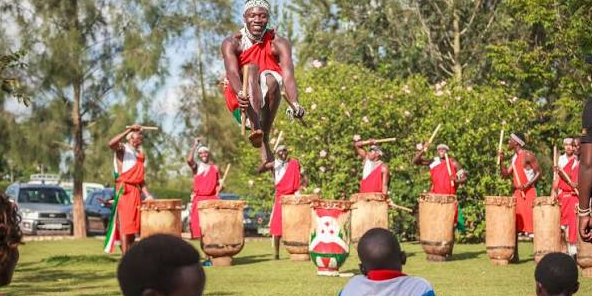
The specific performance style of the Burundian royal tradition, the configuration of drums around a central “mother drum,” the choreographic element of the drummers’ movement while playing, the specific rhythmic patterns associated with different ceremonies, is unique. Unlike the seated ensemble drumming of West Africa or the call-and-response traditions of East African coastal cultures, Burundian royal drumming involves performers who dance while they play, creating a performance that is simultaneously musical and physical.
UNESCO Recognition: What It Means for Traditional Burundi Music
In 2014, the Royal Drum of Burundi was inscribed on UNESCO’s Representative List of the Intangible Cultural Heritage of Humanity. The inscription recognised the tradition’s cultural significance, its role in national identity, and the active efforts of Burundian cultural institutions to transmit it to new generations.
The UNESCO recognition has had practical consequences. It has increased international awareness of traditional Burundi music, attracting cultural tourists who specifically seek out the drum tradition. It has provided a framework for funding cultural transmission programmes, the drum schools that train new generations of performers. And it has strengthened the political case for protecting the tradition within Burundi, making it harder to marginalise as merely folkloric or irrelevant to modern development.
The recognition also gave Burundi valuable international visibility. Consequently, it challenged negative perceptions shaped by the political upheavals of the mid-twentieth century. Moreover, the Royal Drummers of Burundi have performed across Europe, the Americas, and Africa. They have proudly served as cultural ambassadors for Burundi. As a result, they continue to showcase the country’s rich cultural heritage beyond its difficult recent history.
The Royal Drummers: Who They Are and How They Train
Royal Drummers are not a government-appointed ensemble, they are a community of practitioners whose relationship to the tradition is personal, generational, and deeply embedded in local identity. Performance groups in and around Gitega preserve this remarkable tradition. Moreover, hereditary practitioners pass drumming skills through generations. New practitioners learn the tradition through cultural schools and community apprenticeships. To learn more, visit the UNESCO page on the Ritual Dance of the Royal Drum.
Training as a royal drummer is physically demanding and technically intricate. Drummers must master the specific rhythmic patterns of different ceremonial contexts, develop the physical coordination needed to play while dancing, and learn the spatial choreography of the ensemble formations that characterise different performance types. The training period is years, not months, and the expectation is total commitment.
The physical demands of the performance are remarkable. Royal drummers play their instruments at shoulder height or above. Meanwhile, they maintain intense rhythmic precision throughout each performance. Moreover, they execute stylised movements with remarkable skill. These movements include powerful stamps, graceful turns, and dramatic overhead strikes. Consequently, these overhead strikes have become the visual signature of the performance. A full performance is athletic in a way that serious musicians from other traditions immediately recognise and respect.
Other Forms of Traditional Burundi Music
Beyond the royal drum tradition, Burundian musical culture encompasses a rich range of forms:
Inanga: A trough zither, a resonating wooden frame strung with strings plucked by the fingers. The inanga is associated with storytelling and poetic recitation (ibyivugo) and produces a delicate, complex sound quite different from the thunder of the royal drums. Master inanga players are respected as cultural intellectuals as much as musicians.
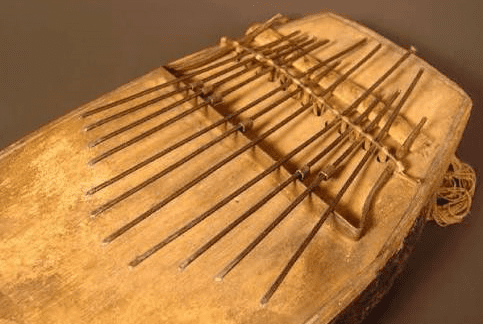
Ikembe: A thumb piano (mbira-type instrument) played individually or in small ensembles. More informal and domestic than the royal instruments, the ikembe is associated with personal music-making and accompaniment to everyday song.
Choral and vocal traditions: Burundian vocal music spans a vast range, from the polyphonic singing of Twa communities, through the communal work songs (akazehe) of agricultural communities, to the formal praise poetry of the royal court. The complexity of Burundian vocal harmonics has attracted significant musicological attention.
Contemporary music: Burundian contemporary music draws on all of these traditions while incorporating global influences. Artists working in genres from afrobeat to hip-hop to neo-traditional fusion are active in Bujumbura’s growing music scene, and the cross-pollination between traditional and contemporary forms is one of the most creatively interesting aspects of Burundian cultural life today.
The Modern Revival of Traditional Burundi Music
The revival of interest in traditional Burundi music among young Burundians is one of the more encouraging cultural stories of the past decade. Several factors have contributed.
Cultural pride following UNESCO recognition: The 2014 inscription gave young Burundians a globally recognised reason to celebrate their cultural tradition. Moreover, it renewed pride in a heritage once associated with older generations.
Cultural school expansion: The network of institutions teaching traditional music, drum performance, inanga playing, vocal traditions, has grown in Gitega and Bujumbura, making formal training more accessible.
Digital visibility: Recordings and videos of the Royal Drummers have circulated widely on social media platforms, introducing the tradition to young Burundians who might never have encountered it in person.
Tourism demand: The steady growth in cultural tourism to Burundi creates economic incentive for practitioners and institutions. When traditional music generates income, through performances for visitors, through recording contracts, through international touring, young people have practical reasons to invest in learning it.
Where to Experience Traditional Burundi Music
Gitega Cultural Centre: The primary venue for royal drum performances. Performances are held regularly for visiting groups and on major cultural calendar occasions.
National Museum of Gitega: Occasional performances in the museum context, with historical exhibits providing backdrop.
Bujumbura live music venues: The capital’s growing arts scene includes venues that programme traditional and fusion music performances. Your guide can advise on current listings.
Umuganuro festival (September/October): The most elaborate and culturally significant context for experiencing the full range of traditional Burundi music.
Arranged private performances: Feather Trail Safaris can organise private royal drum and inanga performances as part of a cultural tour package.
FAQs
Why is the Burundian drum tradition UNESCO-listed?
UNESCO inscribed the Royal Drum of Burundi on its Intangible Cultural Heritage List in 2014. Moreover, it recognised the tradition’s cultural significance, unique performance, and active community transmission.
How long does a royal drum performance last?
A standard performance runs 45 minutes to one hour. Festival performances can be significantly longer.
Can I buy recordings of traditional Burundi music?
Yes. CD and digital recordings of the Royal Drummers and other traditional musicians are available at cultural venues in Gitega and Bujumbura, and some are available on international music streaming platforms.
Is the tradition at risk?
Less so than a decade ago, thanks to UNESCO recognition and growing domestic interest. Active transmission programmes and the economic incentive of cultural tourism have stabilised the tradition.
Book a Burundi cultural tour including royal drum performance with Feather Trail Safaris