
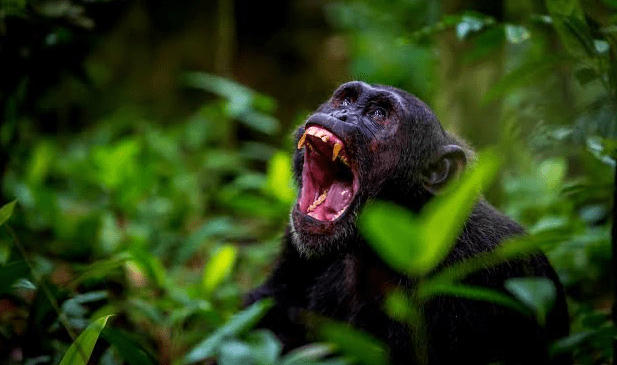
What Is Chimpanzee Habituation?
Chimpanzee habituation is, at its most basic, the process of making wild chimpanzees comfortable with human presence. But that simple description understates both the complexity and the significance of what the process involves.
A wild, unhabituated chimpanzee community encountering humans will typically flee, moving rapidly through the canopy away from the disturbance, alarm-calling as they go.
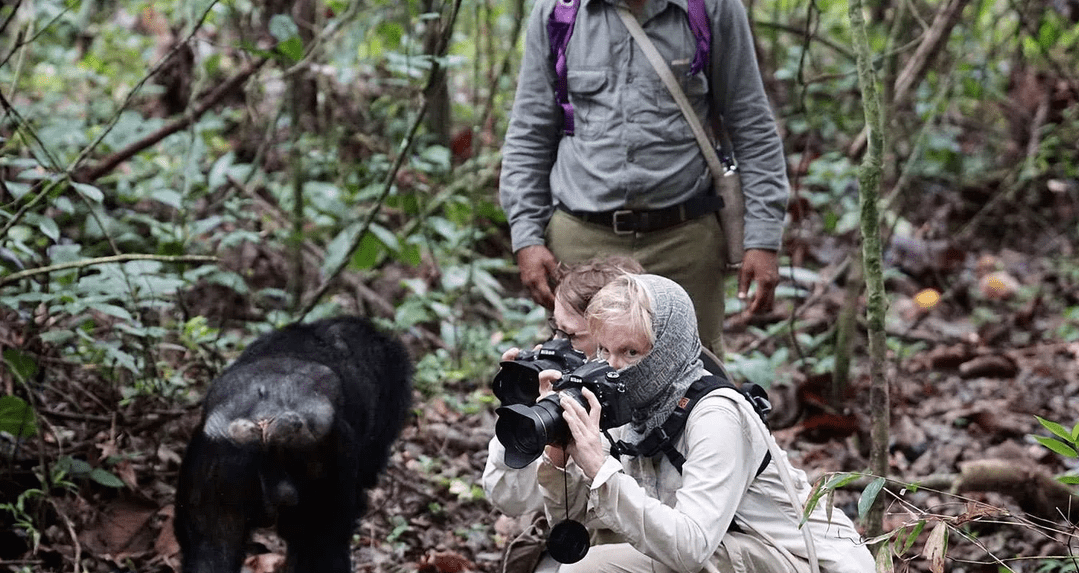
Chimpanzees respond by fleeing because humans have historically hunted and persecuted them across most of their range. Therefore, they developed wariness as a rational survival adaptation.
Habituation works by removing the stimulus for that fear response through consistent, predictable, non-threatening exposure. Rangers visit the community daily, maintaining the same calm presence, making no aggressive movements or sounds, not pursuing when the chimps move away, and simply, over months and years, teaching the community through repeated experience that these particular humans are not dangerous.
The process takes three to five years for complete habituation. Communities available for standard trekking in Kibira have been through this full process. Communities available for the habituation experience are in its mid-stages, familiar enough with ranger presence to tolerate observation at close range, but still responding to the experience in ways that feel genuinely unscripted.
The distinction matters enormously to what visitors see and feel.
The Ultimate Safari Experience Explained
What Kibira’s habituation experience offers that no standard wildlife encounter can replicate is time and continuity. Instead of a managed hour with a community performing a version of its daily life for observers, you are present for the full arc of the day, from the first stirrings in the sleeping trees at dawn to the last nest-building movements at dusk.
In those twelve or more hours, you see things that a one-hour encounter statistically cannot show you:
The morning feeding rush. The community descends from sleeping trees with an agenda, fruit trees productive enough to have been worth travelling toward the evening before, remembered and sought in the morning light. Watching twenty or thirty chimpanzees navigate a fruiting fig tree simultaneously, negotiating access, managing social tensions, the alpha male’s priority position, is a masterclass in applied primate politics.
The social mid-morning. After the primary feeding period, the community settles into extended grooming sessions, the currency of chimpanzee social life. Alliances are maintained, tensions are resolved, juvenile play groups form and reform. This is when individual personalities become visible: the nervous peripheral male, the confident mid-ranking female, the juvenile who pushes the limits of what adults will tolerate.
The long midday rest. Chimpanzees rest extensively in the heat of the day. The quality of stillness in a group of thirty chimpanzees at rest, limbs draped over branches, infants nursing. The old males dozing, is one of those experiences that is impossible to adequately prepare for. It is deeply peaceful in a way that makes you understand, at some level below language, the kinship between their species and yours.
The afternoon ranging and final feeding. As the temperature drops, the community becomes active again, moving, foraging, sometimes hunting. The coordination of a group hunt for red colobus monkeys, when it occurs, is one of the most intense wildlife experiences in Africa.
Nest building at dusk. Each chimpanzee constructs a fresh nest every evening. Watching this happen, the selection of a stable branch, the systematic bending and interlocking of smaller branches, the final arrangement of leaves, closes the day with a gesture of such purposeful domesticity that it stays with you long after you have walked back to your own accommodation.
A Day with Researchers and Chimpanzees
The habituation experience does not feel like a tourist activity. It feels like field research that you have been invited to observe, which is, essentially, what it is.
Your group joins the ranger and research team at 4:30 to 5:00am at the forest entry point. Numbers are strictly limited, typically 4 to 6 people maximum for habituation groups, smaller than standard trekking groups. The rangers are not guides in the conventional sense; they are scientists and conservationists who happen to be sharing their working day with visitors.
Researchers collect data constantly and unobtrusively. They record identifier codes for every individual sighting. They also log GPS coordinates and write behavioral notes in field notebooks. Later, they transfer these records to the research database. Pascal’s note about the male getting comfortable was not idle conversation, it was a data point in a years-long record of that individual’s habituation progress.
Visitors are asked to match the rangers’ professional discipline: quiet, calm, no sudden movements, no eating or drinking in the chimps’ presence, minimum 8 metres distance at all times. The rangers will position the group carefully to maintain these distances while maximising observation quality.
The day ends when the chimps build their nests, typically between 5:30 and 6:30pm. The walk back to the ranger station happens in the last of the forest light, and the debrief over tea at the station, rangers sharing observations, visitors processing what they’ve seen, is one of the finest hours of any Burundi safari.
Why Habituation Benefits Conservation
The habituation programme in Kibira is not designed for tourism. Tourism is a beneficial by-product of a process that exists primarily for conservation and scientific purposes.
A habituated community is a monitored community. Daily ranger presence means that health changes, injuries, births, deaths, and behavioral shifts are detected quickly and responded to appropriately. The Gorilla Doctors model in Rwanda, where veterinary intervention has saved the lives of snare-injured and disease-affected mountain gorillas, depends on the regular, close observation that habituation makes possible. Kibira is working toward the same monitoring capacity for its chimpanzees.
The tourism revenue generated by habituation permits funds the ranger salaries, equipment, and operational costs that make the daily monitoring programme financially sustainable. Without that revenue, the research and protection programme would require continuous external grant funding, a less stable and less self-sufficient model.
Perhaps most importantly, ranger-led groups regularly visit habituated chimpanzee communities. Consequently, they receive the highest level of protection in the park. Rangers know each chimpanzee by its individual identity. They also map their ranges and monitor their health regularly. They are the best-documented and best-defended chimpanzees in Burundi. Habituation, paradoxically, is one of the most effective protective measures available.
Best Time for Chimpanzee Habituation in Burundi
The habituation experience is available year-round, but conditions vary significantly with the seasons. The long dry season (June through August) is the recommended window, trails are manageable, the chimps range at accessible elevations, and full-day forest conditions are most comfortable.
The short dry season (December to January) is an excellent and significantly quieter alternative. Habituation permits for this period are easier to secure than the peak dry season, and the forest in the early dry season has a particular freshness and clarity that makes for outstanding observation.
The rainy seasons are not recommended for the habituation experience. Wet conditions make a full day in the forest significantly more physically demanding. Moreover, limited trail accessibility can restrict the areas that ranger teams can cover. Experienced trekkers who specifically prefer the wet forest atmosphere may choose to disagree, and the rangers will support them.
FAQ
What is chimpanzee habituation in Burundi?
Chimpanzee habituation is a process where rangers gradually acclimatise wild chimpanzee communities to human presence. They achieve this through years of daily visits. In Burundi‘s Kibira National Park, tourists can join the habituation process, spending a full day alongside researchers and rangers as the community goes about its natural activities from dawn to dusk.
How is chimpanzee habituation different from standard trekking?
Standard trekking gives you one hour with an already-habituated community. The habituation experience allows a full day with a community still in the process of becoming accustomed to humans. Through observing the full arc of chimpanzee daily life including morning feeding, social interactions, midday rest, afternoon ranging, and nest-building at dusk.
How much does the chimpanzee habituation experience cost in Burundi?
The full-day chimpanzee habituation permit in Kibira National Park costs approximately $200 to $250 per person. This is significantly more than a standard trek permit but represents exceptional value given the full-day duration and the depth of the experience compared to any single-hour wildlife encounter in Africa.
Is chimpanzee habituation safe for visitors?
Yes, when conducted under trained ranger supervision. Communities in the habituation process are monitored daily and the rangers assess community temperament before introducing visitor groups. The process is gradual and strictly managed to prioritise both chimp welfare and visitor safety. book with us.
How long does it take to habituate a chimpanzee community?
Full habituation typically takes three to five years of consistent daily exposure by trained rangers. Communities available for the habituation experience in Kibira are in the mid-stages of this process, accustomed enough to human presence for safe observation, but not yet fully desensitised, which is what makes the experience feel genuinely wild.