
Self Drive Gorilla Trekking in Uganda: The Most Unforgettable Journey I’ve Ever Made
I have stood on mountain summits. I’ve snorkelled over coral reefs. I’ve watched the Northern Lights blink on above a frozen Norwegian lake. But nothing, absolutely nothing, prepared me for the moment a 200-kilogram silverback mountain gorilla turned, looked directly at me, and held my gaze for five long, silent seconds. Self Drive Gorilla Trekking starts!
That moment happened because I chose to do something a little unconventional: a self drive gorilla trekking safari in Uganda. No group tour. No guide-shepherded minibus. Just me, a well-prepared 4×4, the winding mountain roads of southwestern Uganda, and a permit that granted me one precious hour with one of the rarest animals on earth.
If you’re considering self drive gorilla trekking in Uganda, or even just curious whether it’s possible, this is the article I wish I’d had before I went. It covers everything: the roads, the permits, the packing, the emotion, and the practical details that make the difference between a smooth adventure and a stressful one.
Why I Chose a Self Drive Gorilla Trekking Safari
The honest answer? It started as curiosity and quickly became a conviction.
I’d been researching gorilla trekking in Uganda for almost two years, reading forum posts, watching documentaries, comparing tour operators. Every guided group package I found felt slightly…managed. Scheduled. I wanted to build the trip around the experience itself, not around departure times set by someone else.
A self drive gorilla trekking safari felt like the right approach for a few reasons. Driving yourself means you control the pace of the whole trip — you can spend an extra morning at Lake Bunyonyi if the light is extraordinary, or push on earlier if road conditions look good. You’re not tied to a group’s collective decision-making.
It also meant I could combine the gorilla trekking with a genuine Uganda road trip, weaving through Queen Elizabeth National Park and Kibale National Park on the way, turning the journey to Bwindi into an adventure in its own right rather than just a transfer.
Was it slightly more logistically involved than booking a package tour? Yes. Was it worth every bit of planning? Completely.
Planning a Self Drive Gorilla Trekking Adventure in Uganda
Good planning is what separates a beautiful gorilla trekking experience from a chaotic one. Here’s exactly what I did — and what I’d recommend to anyone planning the same trip.
Booking Your Gorilla Permits
Gorilla permits are the cornerstone of the entire trip, and they need to be your very first booking, before accommodation, before vehicle rental, before flights if possible.
Mountain gorilla trekking permits in Uganda are issued by the Uganda Wildlife Authority (UWA) and cost USD 700 per person per trek. That price reflects the conservation contribution that keeps these gorilla families protected. Each trekking group is limited to eight people per gorilla family per day, which is partly why the experience feels so intimate and private.
Permits for popular periods, June through September and December through February, sell out months in advance. I booked mine six months ahead and still had limited choice of trekking sectors. The very best advice I can give: get in touch with Feather Trail Safaris early, as they handle permit bookings and can secure specific sectors and dates that might otherwise be unavailable through direct booking.
Key gorilla permit facts:
- Cost: USD 700 per person per trek
- Valid for: one hour with a habituated gorilla family
- Maximum group size: 8 people per family per day
- Age restriction: minimum 15 years old
- Booked through: Uganda Wildlife Authority or accredited operators like Feather Trail Safaris
- Book at least 3–6 months ahead for peak season dates
Planning Your Route
The journey to Bwindi Impenetrable National Park is genuinely part of the experience, this isn’t a commute to a destination, it’s an adventure in itself. I planned a 12-day route that gave me enough time to breathe between driving days and actually enjoy the landscapes I was passing through.
My route from Kampala: Kampala → Kibale National Park (2 nights) → Queen Elizabeth National Park (2 nights) → Lake Bunyonyi (1 night) → Bwindi Impenetrable National Park (2 nights) → Lake Bunyonyi (1 night, on the return) → Kampala. Around 1,400 kilometres in total.
Feather Trail Safaris put together a route card with GPS waypoints, fuel station distances, and park gate timings for each leg. That laminated card was on my dashboard the entire trip.
Timing Your Gorilla Trekking Trip
Uganda has two main dry seasons, June to September, and December to February, and these are generally the best periods for gorilla trekking. Trails are less slippery, forest paths are clearer, and the roads to Bwindi are more predictable.
That said, Uganda’s gorillas are habituated year-round, and some travellers actually prefer the green-season months (March–May, October–November) when the forest is lush, the permit crowd is smaller, and daily rates at lodges tend to drop. I went in August and the conditions were excellent, cool mornings in the forest and clear afternoon skies.
Driving to Bwindi Impenetrable National Park
Let me be straightforward with you: the drive to Bwindi is one of the most beautiful and occasionally terrifying stretches of road I’ve ever navigated. And I mean that as a compliment.
The final approach to Bwindi from Kabale or from the Queen Elizabeth direction climbs steeply into the Kigezi Highlands — an ancient, mist-covered landscape of deep valleys, terraced hillsides, and thick forest that feels prehistoric. The road winds. It climbs. It narrows at points to barely more than a single vehicle’s width. And every few hundred metres there’s a view that makes you pull over and just stare.
Road Conditions
The main tarmac road from Kampala to Mbarara and on to Kabale is in reasonable condition, construction zones exist but nothing unmanageable. From Kabale towards Bwindi, the tarmac gives way to steep murram roads that are perfectly driveable in dry conditions but demand respect after rain.
The Buhoma sector entrance (north of Bwindi) is reached via a different route from the Rushaga and Ruhija sectors in the south. Each has different road characteristics — Buhoma involves steep descents through tea estates, while the southern sectors pass through open highland farmland before dropping into the forest.
If you’re driving to Bwindi for the first time, go slowly on the descent. The road is narrow, sometimes wet, and occasionally shared with loaded motorbikes, women carrying firewood, and the odd wandering goat. It’s also incomparably beautiful.
Fuel Stations and Navigation
Fuel up completely in Kabale before heading to any of Bwindi’s trekking sectors. There are no reliable fuel stations near the park. Kabale has several stations — I used the Total station on the main road, which was clean and efficient.
Mobile data becomes unreliable in the mountains and inside the park. I downloaded my route on both Google Maps and Maps.me offline before leaving Kabale — Maps.me performed better in the areas where data dropped out entirely. The GPS coordinates Feather Trail Safaris provided for the park gate were invaluable.
A Practical Driving Tip
Plan to arrive at your accommodation near Bwindi before 4pm. The mountain roads after dark are not impossible, but they’re significantly more demanding — poor visibility, narrow paths, and the absence of any roadside lighting. I made the mistake of pushing too late on one day and spent a tense hour navigating hairpin bends by headlights. Lesson learned.
Best Routes for Self Drive Gorilla Trekking in Uganda
Route 1: The Classic Southern Loop (Kampala via Mbarara)
This is the most popular and most accessible route to Bwindi for self drive travellers. It follows good tarmac from Kampala through Masaka and Mbarara before climbing into the Kigezi Highlands.
- Total distance from Kampala: approximately 480km
- Estimated driving time: 8–10 hours including stops
- Best for: First-time visitors, travellers combining with Lake Bunyonyi or Mgahinga Gorilla National Park
- Key stop: Kabale town — last fuel and supplies before Bwindi
- Trekking sectors accessed: Rushaga (most gorilla families), Buhoma, Nkuringo, Ruhija
Route 2: The Western Safari Loop (via Queen Elizabeth)
My preferred route — and the one that turns the gorilla trek into a full Uganda safari adventure. This approaches Bwindi from the north through Queen Elizabeth National Park, offering game drives en route.
- Total distance from Kampala: approximately 550km via Fort Portal and Queen Elizabeth
- Estimated driving time: split over 2–3 days with park stops
- Best for: Travellers wanting to combine gorilla trekking with savannah safari and chimp tracking
- Key stops: Kibale National Park (chimpanzees), Queen Elizabeth National Park (tree-climbing lions), Ishasha sector
- Trekking sectors accessed: Buhoma and Ruhija from the northern approach
Sector Differences: Which Bwindi Trek Should You Choose?
Bwindi Impenetrable National Park is divided into four trekking sectors, and the choice makes a real difference to your experience.
- Buhoma (North): The original sector. Well-established, with the widest accommodation range from budget to luxury. The Mubare and Habinyanja gorilla families are here. Good for first-timers.
- Ruhija (East): Higher altitude, cooler temperatures, and denser forest. The trekking can be more demanding but wildlife encounters feel wilder. Gorilla families include Bitukura and Oruzogo.
- Rushaga (South): The largest sector with the most gorilla families — including opportunities for habituation experiences (full day, USD 1,500). Great for those wanting maximum choice.
- Nkuringo (Southwest): Dramatic scenery bordering Congo. The most physically challenging terrain but arguably the most spectacular. Best for fit trekkers who want a genuine adventure.
Mgahinga Gorilla National Park: The Alternative
Many travellers don’t know that Uganda has a second gorilla trekking park. Mgahinga Gorilla National Park sits in the extreme southwest, sharing the Virunga Volcanoes with Rwanda and the DRC. It’s smaller than Bwindi and has only one habituated gorilla family, which occasionally crosses into Rwanda.
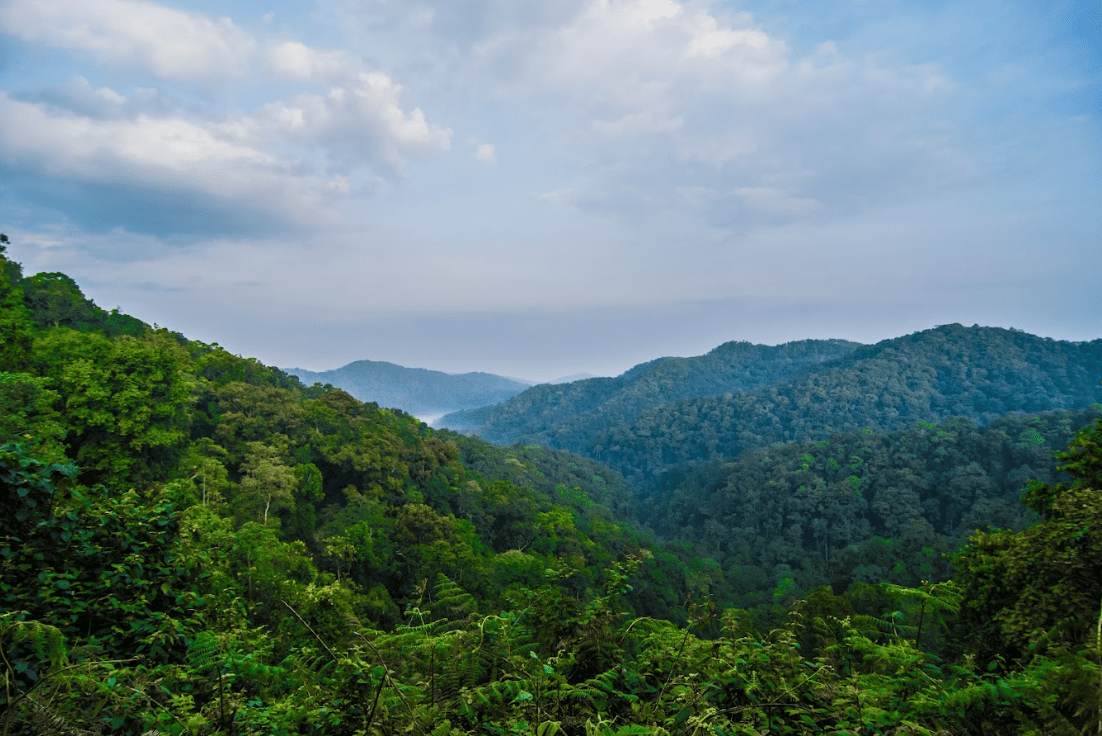
Getting there on a self drive is more complex, the roads through the highlands are steep and winding — but the scenery is extraordinary. Golden monkeys are also traceable here. Permit costs are the same as Bwindi.
What Gorilla Trekking in Uganda is Really Like
Nothing I read fully prepared me for the actual experience. So let me try to do better.
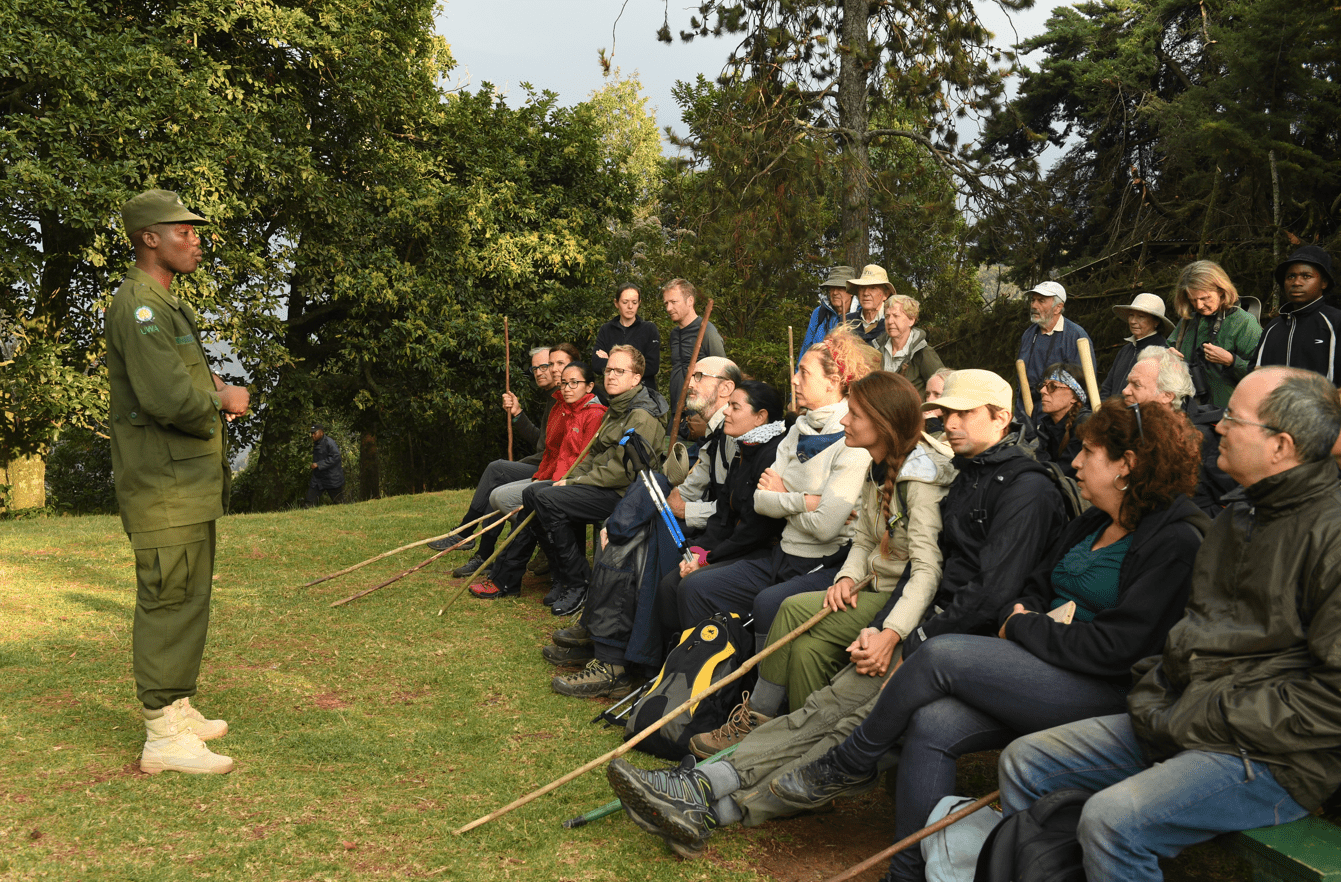
My trek started at 7:30am from the Buhoma sector gate. The ranger briefed our group of eight on rules and expectations — maintain six metres distance, no flash photography, no eating near the gorillas, cover your face if you cough. Then we set off into the forest.
The vegetation thickened within minutes. Vines crossed overhead. The path — where there was one — became a series of careful steps between roots and rocks. Our guide, Francis, moved with the quiet confidence of someone who has done this hundreds of times. He read the forest like a newspaper.
After one hour and forty minutes of hiking (moderate terrain, nothing brutal), Francis stopped, held up his hand, and pointed into a dense thicket twenty metres ahead.
I saw nothing for a moment. Then the thicket moved. A huge, dark shape. And then the gorilla emerged — a blackback male, enormous and unhurried, pulling at a vine with the casual concentration of someone opening a packed lunch.
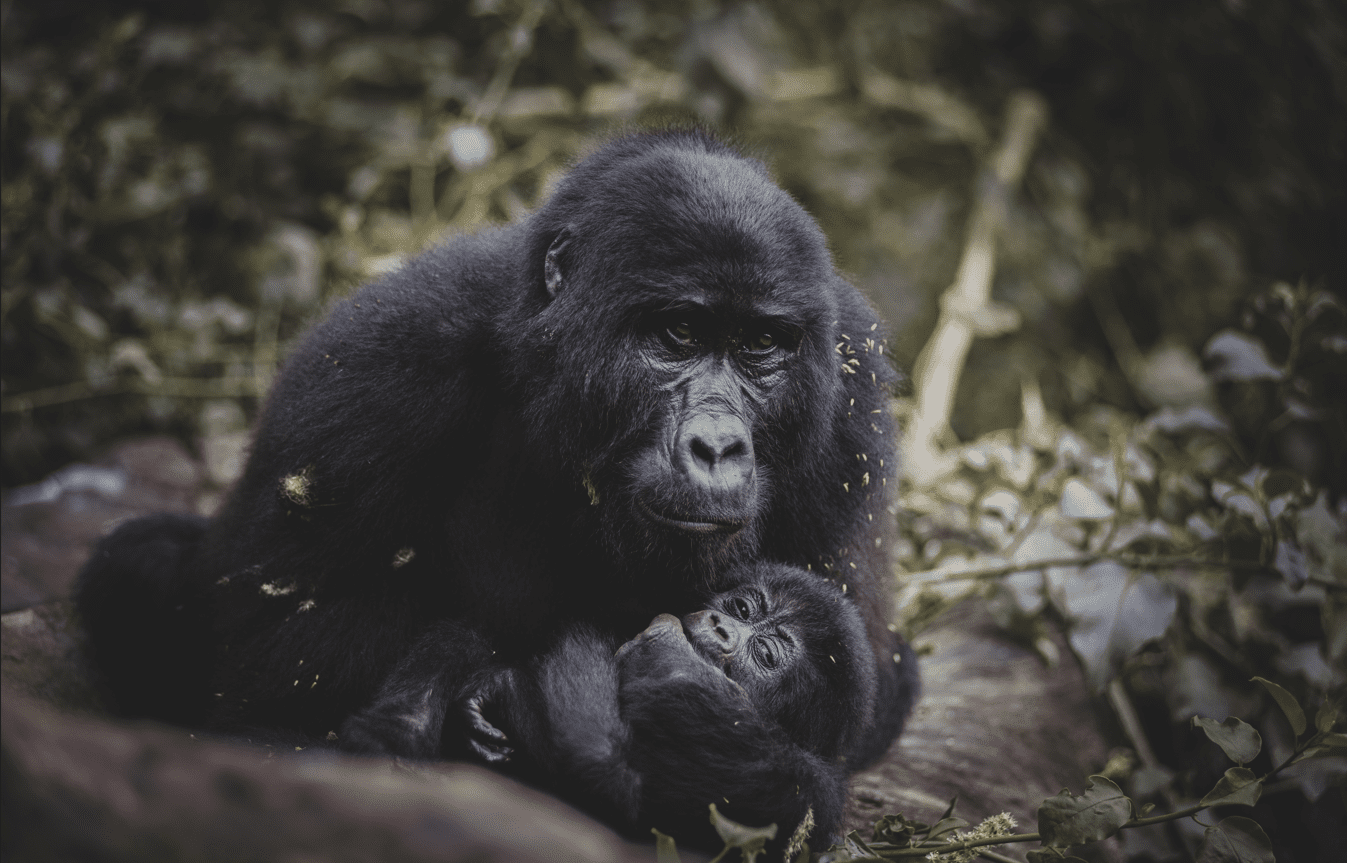
Within minutes we were surrounded. A mother nursing a tiny infant. Two juveniles wrestling in a clearing. And the silverback — the patriarch, perhaps 200 kilograms — sitting close enough that I could hear him breathing.
I forgot to take photographs for the first few minutes. I just stood there, completely present, completely overwhelmed.
That hour went by faster than any hour of my life.
Essential Tips for Self Drive Gorilla Trekking in Uganda
What to Pack for Gorilla Trekking
The forest doesn’t care about your comfort level — pack properly and the trek is memorable for the right reasons.
- Long-sleeved shirt and long trousers — neutral colours (green, brown, khaki). Gorilla rules prohibit shorts.
- Ankle-supporting waterproof hiking boots — trails are steep and often wet, even in dry season
- Lightweight waterproof jacket — morning mist and occasional rain are common in the forest
- Gardening gloves — useful for gripping vegetation on steep sections
- Small daypack with hydration — you’ll be hiking for 1–6+ hours depending on where the gorillas are
- High-energy snacks — no eating near gorillas, but you’ll need fuel for before and after
- Camera with fast autofocus and no flash — forest light is low; a 70–200mm lens is ideal
- Insect repellent — apply before entering the forest
- Walking stick — available at the gate for a small tip, or bring your own trekking poles
Physical Fitness Expectations
Gorilla trekking is not a walk in the park — quite literally. Trails range from relatively gentle (particularly in Buhoma with the Mubare family) to genuinely demanding mountain terrain (Nkuringo). Most treks involve at least some steep climbing and descent on uneven ground.
You don’t need to be an athlete. Fit, reasonably active adults handle it well. But if you have knee problems or serious cardiovascular issues, speak to your doctor before booking and choose a less demanding sector. The gorillas don’t always cooperate by staying on easy terrain.
Treks typically range from 1 to 6 hours depending on where the gorillas are that morning. They move nightly. You’re always following their location from the previous evening’s ranger tracking.
Gorilla Trekking Etiquette and Rules
These aren’t arbitrary rules — they exist to protect both you and the gorillas. Mountain gorillas are susceptible to human diseases, so the boundaries matter.
- Maintain at least six metres from gorillas at all times (they don’t always cooperate)
- Cover nose and mouth if you need to cough or sneeze — turn away from the animals
- Do not eat or drink in the presence of gorillas
- No flash photography — absolutely none
- Speak softly and move slowly — sudden movements stress the animals
- Never attempt to touch a gorilla, regardless of how close they come
- Follow all guide instructions immediately — their read of gorilla body language could be safety-critical
- Leave no litter in the forest — pack out everything you bring in
Accommodation Options Near Bwindi
Accommodation near Bwindi ranges from community guesthouses to genuinely luxurious lodges. Here’s a quick overview by sector.
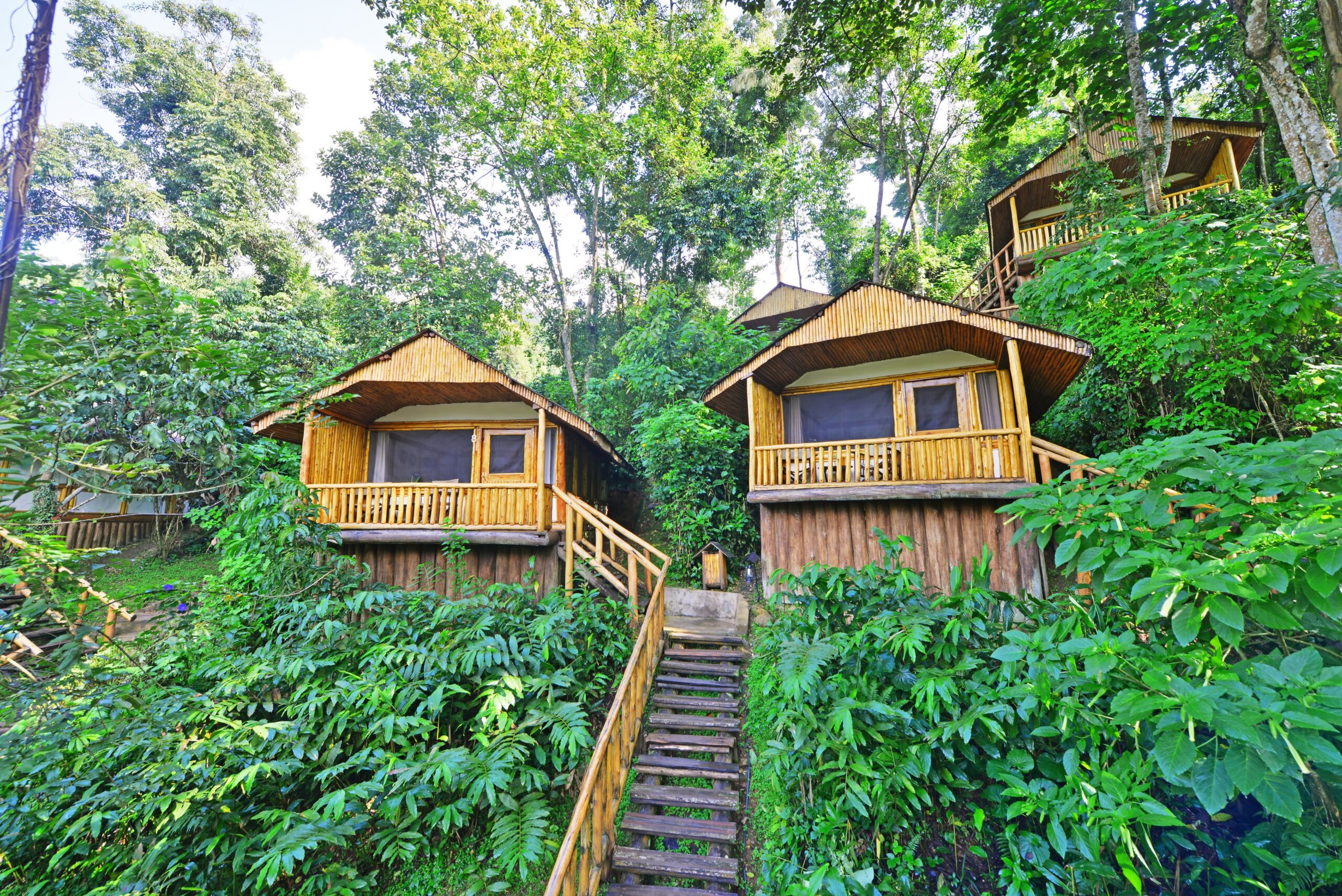
- Buhoma: Buhoma Lodge, Buhoma Community Rest Camp (budget, excellent location), Mahogany Springs (mid-range), Bwindi Lodge (luxury)
- Rushaga: Gorilla Safari Lodge, Rushaga Gorilla Camp, Ichumbi Gorilla Lodge
- Nkuringo: Clouds Mountain Gorilla Lodge (luxury, spectacular views), Nkuringo Safari Camp
- Ruhija: Ruhija Gorilla Friends Community Camp, Gorilla Mist Camp
I stayed at Buhoma Community Rest Camp — comfortable, good food, and the staff were wonderfully warm. The sounds of the forest at night from my tent were worth the price alone.
Choosing the Right 4×4 Vehicle for Gorilla Trekking
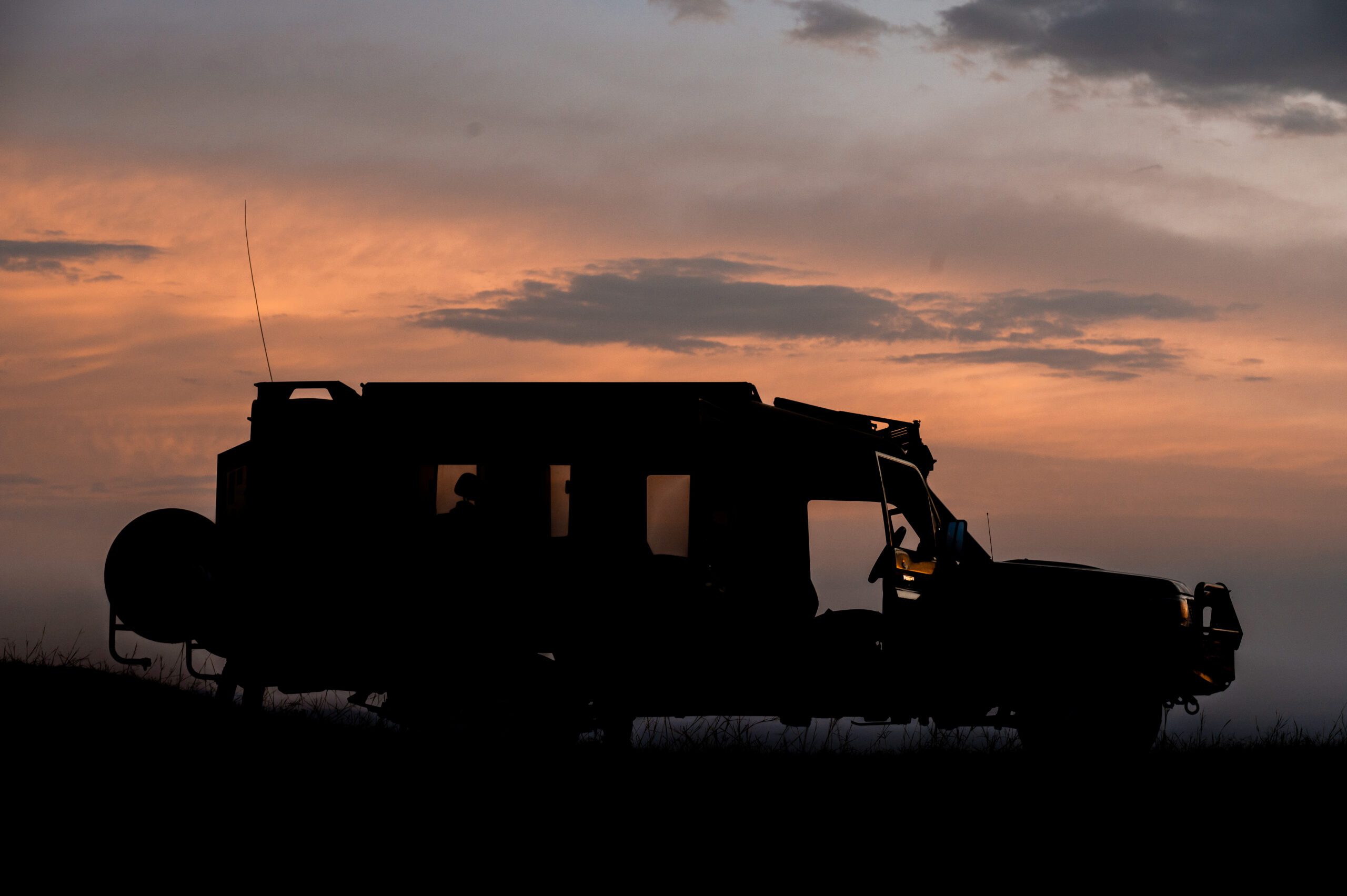
I cannot overstate how important the right vehicle is for a self drive gorilla trekking safari. The roads to Bwindi are not the place to discover your rental is under-equipped.
Why a 4×4 Is Non-Negotiable
The approach roads to all of Bwindi’s sectors involve steep gradients, narrow mountain roads, and — especially after rain — sections that require genuine four-wheel drive. A standard 2WD vehicle, or even a light AWD crossover, would be seriously compromised on the final stretches.
For the Nkuringo sector in particular, the descent to the park boundary is among the most technically demanding roads in the country. Low-range 4WD gearing is not a luxury here — it’s a necessity.
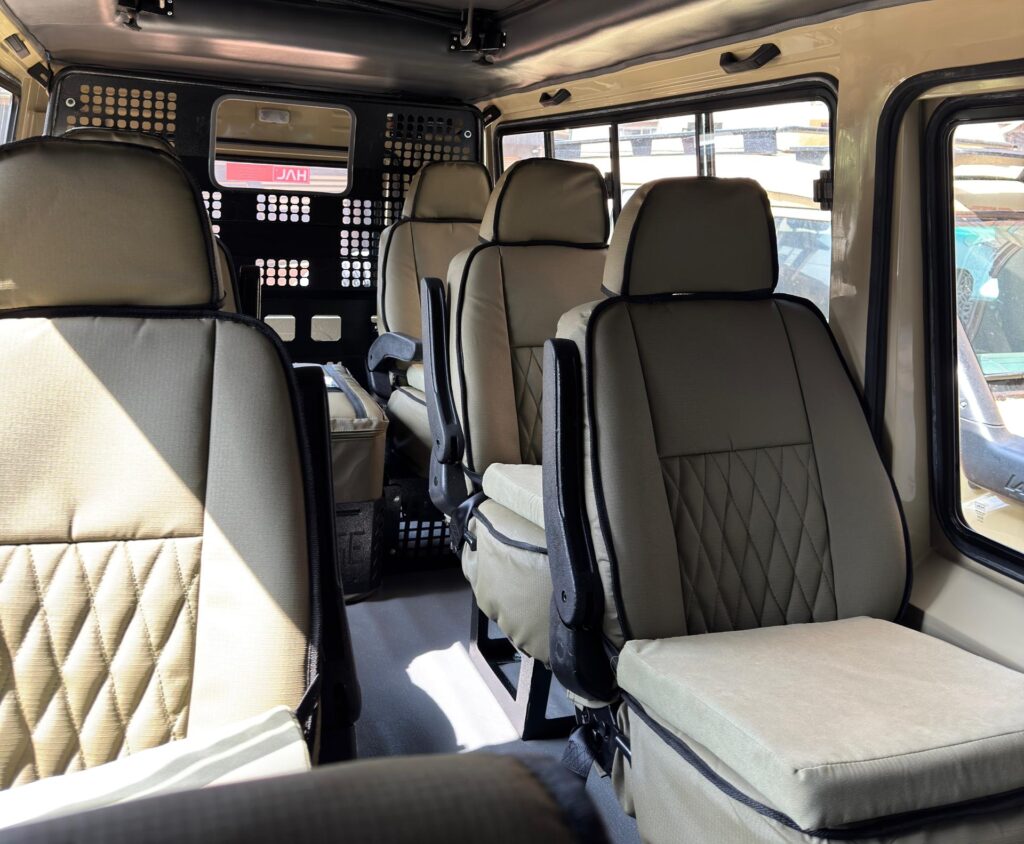
Recommended Vehicles
- Toyota Land Cruiser 79 Series — the definitive Uganda bush vehicle. Unmatched in reliability and clearance.
- Toyota Land Cruiser Prado (150 Series) — more comfortable for longer distances while still fully capable off-road
- Toyota Land Cruiser 70 Series Wagon — excellent for groups of 4–6 with luggage and camping gear
- Nissan Patrol — reliable alternative with good availability through rental operators
Key vehicle features to confirm before renting:
- Full-time 4WD with low-range gearing
- High ground clearance (minimum 200mm)
- Two full-size spare tyres
- Recovery kit — hi-lift jack, tow rope, traction boards
- 12V refrigerator or cool box
- Offline GPS or pre-loaded route maps
Feather Trail Safaris’ self drive fleet is specifically maintained and equipped for Uganda’s mountain roads — pre-checked, fully kitted, and supported by a team who can advise on current road conditions before you set out.
Mistakes to Avoid on a Gorilla Trekking Road Trip
I made most of these so you don’t have to.
- Booking permits too late. I almost lost my August permit by waiting until four months before — in peak season, you may need six months or more. Secure permits before anything else.
- Underestimating driving times. The 480km from Kampala to Bwindi looks manageable on a map. In reality, mountain roads, construction zones, and fuel stops stretch it to 8–10 hours minimum. Never plan to drive this in a single day on the same day as your trek.
- Forgetting to download offline maps. Mobile data in the Kigezi Highlands is patchy at best. Download your route on at least two apps before leaving Kabale.
- Skipping the pre-trek briefing. It’s mandatory, but some people treat it as a formality. Every piece of guidance in that briefing exists for a reason. Listen carefully.
- Wearing the wrong clothes. One person in our group turned up in shorts and a bright red T-shirt. They were given paper overalls from the gate. Not their finest Uganda safari moment.
- Not factoring in the drive back. After an emotionally intense gorilla encounter, you still have to drive down those mountain roads. Build in a rest night near Bwindi before starting the return journey.
- Rushing Lake Bunyonyi. If you’re routing through Kabale, Lake Bunyonyi is 15 minutes away and genuinely one of the most beautiful places in Uganda. Stay at least one night. You’ll thank yourself.
Why Uganda Is the Best Destination for Gorilla Trekking
Rwanda also offers gorilla trekking — and it’s excellent. But for self drive travellers, Uganda wins on multiple fronts.
- More gorilla families: Uganda has over 20 habituated gorilla families across Bwindi and Mgahinga — Rwanda has ten. More choice means more permit availability and greater variety of terrain and experience.
- Lower permit cost: Uganda gorilla permits cost USD 700. Rwanda’s are USD 1,500. If you’re a budget-conscious traveller, the saving is significant.
- The journey itself: The drive through Uganda’s southwest — via Queen Elizabeth’s tree-climbing lions, the crater lakes near Fort Portal, Kabale’s highland scenery — is an adventure that Rwanda’s more streamlined tourism experience doesn’t replicate.
- Fewer crowds: Uganda remains less touristed than Rwanda for gorilla trekking, meaning a quieter, more intimate experience in the forest.
- Multi-park routing: A Uganda road trip allows you to combine gorilla trekking with chimp tracking at Kibale, big game at Murchison Falls or Queen Elizabeth, and the extraordinary remoteness of Kidepo — all in one trip.
Uganda feels, still, like a place you discover rather than a place that’s been packaged for you. That’s an increasingly rare thing in African safari travel, and it’s worth protecting.
Ready to Plan Your Self Drive Gorilla Trekking Safari?
A self drive gorilla trekking adventure in Uganda is not a trip you plan lightly. It takes preparation, the right vehicle, secured permits, and a route that gives you time to actually absorb where you are. But the payoff is unlike anything else travel offers.
That moment in the forest, when the silverback turned and held my gaze, and the whole world seemed to pause — wasn’t just a travel highlight. It was a genuine reckoning with how remarkable this planet is, and how fortunate we are that conservation efforts have given these gorillas a future.

If you’re planning your first self drive gorilla trekking trip to Uganda, Feather Trail Safaris can make every detail of the journey work — from securing your gorilla permits months in advance to setting you up with the right 4×4 for Bwindi’s mountain roads. They know the sectors, the roads, the lodges, and the practical details that don’t appear in any guidebook.
Visit feathertrailsafaris.travel to start planning your self drive gorilla trekking Uganda safari — and discover why this is one of the greatest journeys a traveller can make.
Frequently Asked Questions
How much does a gorilla trekking permit cost in Uganda?
A mountain gorilla trekking permit in Uganda costs USD 700 per person per trek. This includes one hour in the presence of a habituated gorilla family, with a maximum of 8 people per family per day. Permits are issued by the Uganda Wildlife Authority and can be booked directly or through accredited operators like Feather Trail Safaris.
How far in advance do I need to book gorilla permits?
For peak season dates (June–September and December–February), book gorilla permits at least 4–6 months in advance — earlier if possible. Shoulder season dates have more availability, but even these can fill up with only a few weeks’ notice. Never assume availability. Secure your permits before booking anything else.
What is the best sector for gorilla trekking in Bwindi?
It depends on your priorities. Buhoma is the most accessible sector with the widest accommodation range — best for first-timers. Rushaga has the most gorilla families, offering maximum permit flexibility. Nkuringo has the most dramatic scenery but the most challenging terrain. Ruhija sits at high altitude with a wilder, less-visited feel. Feather Trail Safaris can advise on the best match for your fitness level and preferences.
Can I drive to Bwindi on my own without experience of African roads?
Experienced drivers with a capable 4×4 can certainly make the drive independently — but it’s not recommended for absolute first-timers with no experience of mountain roads. The steep, winding approaches to Bwindi’s sectors demand confident driving, especially in wet conditions. If you’re new to self drive safaris in Africa, consider doing Lake Mburo or Kibale first to build confidence, or ask Feather Trail Safaris about a guided driver option for the Bwindi leg.
What is the minimum age for gorilla trekking in Uganda?
The minimum age for gorilla trekking in Uganda is 15 years old, as set by the Uganda Wildlife Authority. This rule applies uniformly across all sectors and cannot be waived. Families with younger children can still visit Bwindi and enjoy other forest activities, but children under 15 may not join a gorilla trek.
How long does gorilla trekking take?
You spend exactly one hour in the presence of the gorilla family — this is a strict conservation rule. However, the total time from trailhead to return varies enormously depending on where the gorillas are that day. Treks range from 1 hour (if the family is close to the gate) to 6–8 hours (if they’ve moved deep into the forest overnight). Most treks average 3–4 hours of hiking. Always plan for a full day.
Is gorilla trekking in Uganda worth the cost?
Unhesitatingly, yes. The combination of conservation impact, the rarity of the experience, and the sheer emotional weight of spending an hour with mountain gorillas makes this one of the most meaningful ways to spend USD 700 in travel. Many travellers describe gorilla trekking as the single most profound wildlife experience of their lives — and with fewer than 1,100 mountain gorillas remaining in the world, it’s an encounter that carries real weight.
Request For a Free Quotation!