
Best National Parks for Self Drive Uganda: A Road-Tripper’s Real Guide
There is a particular kind of freedom that comes from turning a key, hearing a 4×4 engine rumble to life, and knowing that the only schedule you’re keeping for the next two weeks is your own. No group tour departures. No waiting for nineteen other people to finish breakfast. Just you, open road, and the finest wildlife corridors in East Africa.
If you’ve been searching for the best national parks for self drive Uganda, you’ve landed in the right place. Uganda is, without question, one of the most rewarding, and underrated, self drive safari destinations on the continent. It’s compact enough to navigate without a logistics degree, rich enough in wildlife to justify every kilometre, and diverse enough that no two days on the road feel remotely the same.
In this guide, we’ll walk you through Uganda’s top self drive safari parks, what makes each one special, how difficult the roads really are, and what you’ll need to make the most of every stop. This comes from real experience on Uganda’s roads, the smooth tarmac stretches and the bone-rattling murram tracks alike.
Why Choose the Best National Parks for Self Drive Uganda
Uganda gets compared to Kenya and Tanzania constantly, and in some ways, that comparison sells it short. Yes, the Serengeti is spectacular. Yes, the Masai Mara is iconic. But Uganda offers something those destinations increasingly struggle to provide: space.
On a Uganda self drive safari, you can park at an elephant crossing and be the only vehicle in sight. You can navigate a game track at dawn without a convoy of minibuses ahead of you. You can take a wrong turn and accidentally discover a hippo pool that isn’t in any guidebook.
The country packs extraordinary variety into a relatively small area. Six parks, each with a completely different character. Forest and savannah, mountain and lake, wilderness and wetland. One Uganda road trip can feel like four different safaris rolled into one.
And then there’s the practical appeal. 4×4 car rental Uganda options are widely available, parks are accessible on a self drive permit, and operators like Feather Trail Safaris can plan your route, sort your vehicle, and handle gorilla permits so you can focus entirely on the experience itself.
Top Wildlife Destinations for a Uganda Self Drive Safari
Let’s get into the parks themselves. Here are Uganda’s six best national parks for self drive travellers, ranked roughly from most accessible to most remote — though all of them are worth the journey.
1. Queen Elizabeth National Park
If Uganda’s national parks were a dinner party, Queen Elizabeth would be the guest who arrives quietly but ends up being the most interesting person in the room. It’s Uganda’s most visited park, and for good reason — the wildlife diversity here is staggering.
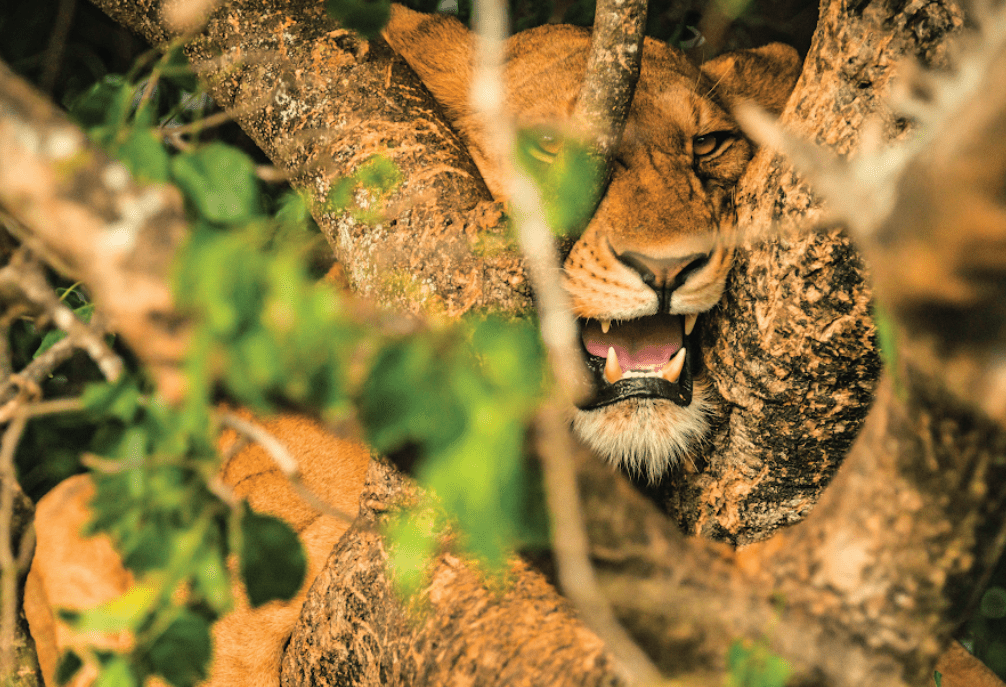
The famous tree-climbing lions of the Ishasha sector are the headline act. Watching a 150kg lioness draped across a fig tree branch like she’s on holiday is genuinely surreal. But Queen Elizabeth also offers elephants, hippos, kob, topi, warthog, and over 600 bird species. The Kazinga Channel, connecting Lake George and Lake Edward, is one of the best places on earth for a hippo boat cruise.
Self Drive Details:
- Road difficulty: Moderate. Northern sector tracks are generally accessible; Ishasha roads can be tough after heavy rain
- Recommended vehicle: 4×4 high clearance — Toyota Land Cruiser or Prado preferred
- Best time to visit: June–September and December–February (dry seasons)
- Park entry fee: USD 40 per person per day; USD 30 per vehicle
- Wildlife highlights: Tree-climbing lions, elephants, hippos, buffaloes, 600+ bird species
- Accommodation: Mweya Safari Lodge, Jacana Safari Lodge, Enganzi Game Lodge, budget bandas at Mweya
- Nearest fuel: Kasese town (stock up before entering the park)
- Driving difficulty for first-timers: 3/5 — manageable with a reliable 4×4 and offline maps
2. Murchison Falls National Park
Murchison is Uganda’s largest and most dramatic national park, and it’s usually the first stop on any serious Uganda safari adventure. The park is anchored by one of the natural world’s most powerful sights: the point where the entire Nile River forces itself through a gap just seven metres wide, erupting into a roaring curtain of white water and spray.
But beyond the falls, Murchison delivers the kind of sustained wildlife viewing that keeps you driving slowly with your window down and your binoculars ready. Elephants in their hundreds roam the northern bank. Rothschild’s giraffe — one of the world’s most endangered giraffe subspecies — are found here and virtually nowhere else in Uganda. Lions, leopards, buffaloes, and over 450 bird species complete the picture.
Self Drive Details:
- Road difficulty: Moderate to challenging. North bank tracks can be corrugated and dusty in dry season; muddy after rain
- Recommended vehicle: 4×4 with high clearance and a spare tyre (carry two if possible)
- Best time to visit: December–February and June–September
- Park entry fee: USD 40 per person per day; USD 30 per vehicle
- Wildlife highlights: Rothschild’s giraffe, elephants, lions, Nile crocodiles, shoebill stork
- Accommodation: Paraa Safari Lodge, Nile Safari Lodge, Budongo Eco Lodge
- Nearest fuel: Masindi town (fill up fully before entering — distances inside are significant)
- Driving difficulty for first-timers: 3.5/5 — distances are deceptively long; plan your day carefully
3. Bwindi Impenetrable National Park
There is no self drive safari in Uganda article that doesn’t eventually arrive here. Bwindi is in a category entirely its own — not because of the roads, or the scenery (though both are memorable), but because of what lives inside that ancient, mist-wrapped forest.
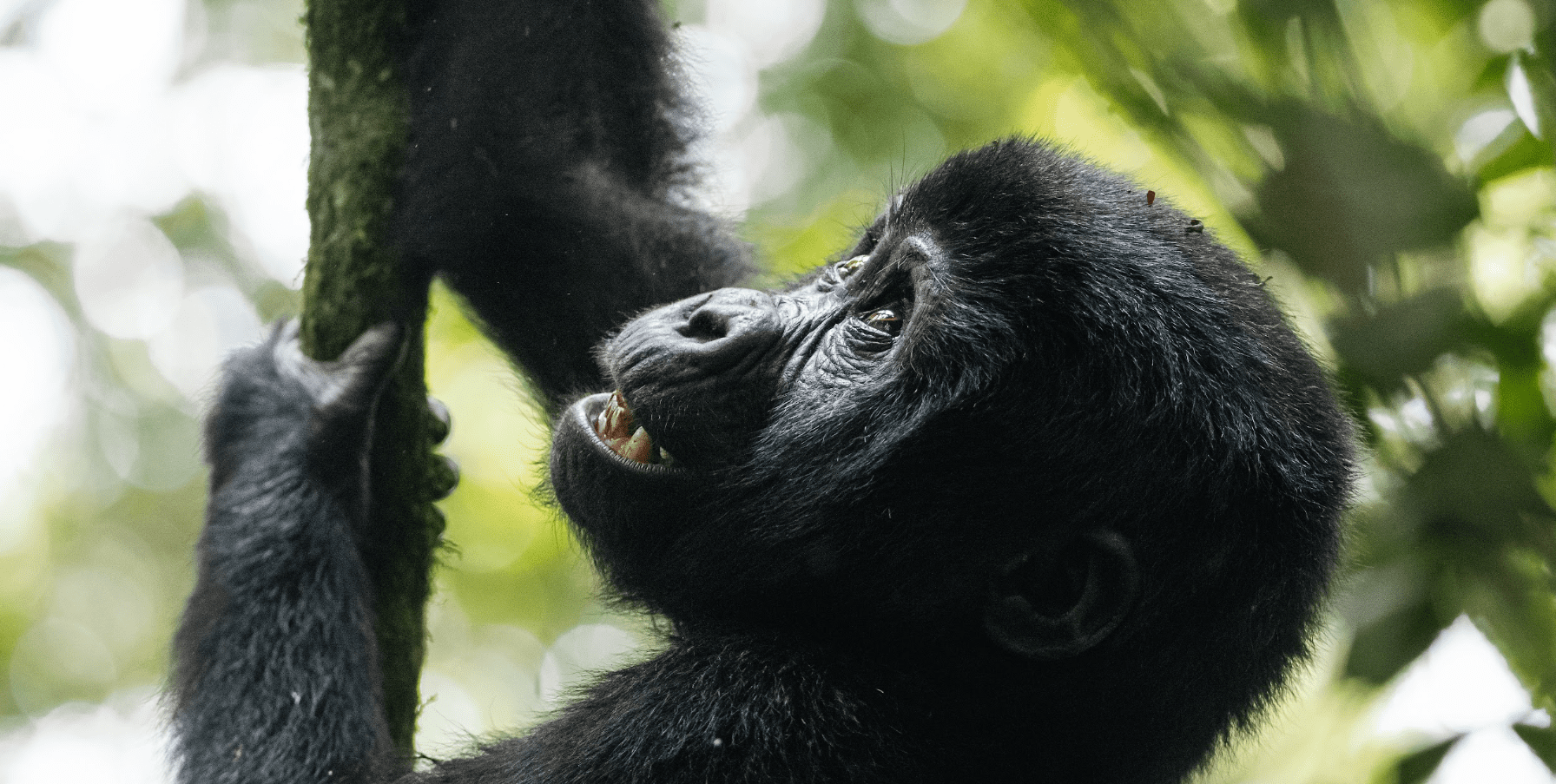
Mountain gorillas. Half of the world’s remaining mountain gorilla population lives in Bwindi’s dense jungle, and a gorilla trekking permit gets you one hour in their presence. It is, without question, the most moving wildlife experience I’ve ever had. Nothing compares to sitting three metres from a silverback while he watches you with calm, intelligent eyes.
Getting to Bwindi on a gorilla trekking Uganda self drive is the adventure before the adventure. The road from Kabale climbs steeply into the Kigezi highlands — misty, terraced, and breathtaking. The final descent to the park is steep and winding, but nothing a good 4×4 can’t handle.
Self Drive Details:
- Road difficulty: Challenging. Mountain roads are steep and winding; sections can be slippery after rain
- Recommended vehicle: 4×4 with low-range gearing — this is not the place for a 2WD
- Best time to visit: June–September and December–February
- Gorilla permit: USD 700 per person — book months in advance through Feather Trail Safaris or Uganda Wildlife Authority
- Wildlife highlights: Mountain gorillas (the main event), chimpanzees, L’Hoest’s monkeys, 350+ bird species
- Accommodation: Buhoma Community Rest Camp, Silverback Lodge, Mahogany Springs
- Nearest fuel: Kabale town — fill up completely before heading to the forest
- Driving difficulty for first-timers: 4.5/5 — recommend driving to Bwindi only in dry conditions if this is your first Uganda road trip
4. Kidepo Valley National Park
Ask any seasoned Uganda wildlife safari traveller to name their favourite park, and many will say Kidepo. It’s remote, genuinely, properly remote. Perched in the far northeast, close to the borders of South Sudan and Kenya, Kidepo feels like a place the rest of the world forgot about. That is entirely its appeal.
The landscape is unlike anything else in Uganda. Semi-arid plains framed by rugged mountain ranges, dotted with termite mounds and ancient fig trees. Kidepo holds animals found nowhere else in Uganda: cheetahs, caracals, bat-eared foxes, and ostriches. The Narus Valley is superb for game drives, and the Karamojong communities nearby offer one of the most authentic cultural encounters on the continent.

Getting to Kidepo is a commitment, it’s roughly seven to nine hours from Kampala on mixed tarmac and murram roads. But self drive travellers who make the journey invariably say it was the highlight of their entire Uganda safari adventure.
Self Drive Details:
- Road difficulty: Very challenging. Remote roads include long murram stretches; some sections impassable in heavy rain
- Recommended vehicle: Fully equipped 4×4 Land Cruiser — carry extra fuel (jerry cans essential), water, and food supplies
- Best time to visit: May–August and December–March
- Park entry fee: USD 40 per person per day
- Wildlife highlights: Cheetahs, lions, elephants, ostriches, caracals, bat-eared foxes, 475+ bird species
- Accommodation: Apoka Safari Lodge (excellent), Kidepo Savannah Lodge, basic UWA bandas
- Nearest fuel: Kitgum or Moroto — fill up completely and carry at least 20 litres extra
- Driving difficulty for first-timers: 5/5 — strictly experienced 4×4 drivers or travellers with route guidance from Feather Trail Safaris
5. Lake Mburo National Park
Lake Mburo often gets overlooked by travellers racing between Kampala and Bwindi, but those who stop — even for a single night — are always glad they did. It’s compact and accessible, making it one of the best national parks for self drive Uganda beginners.
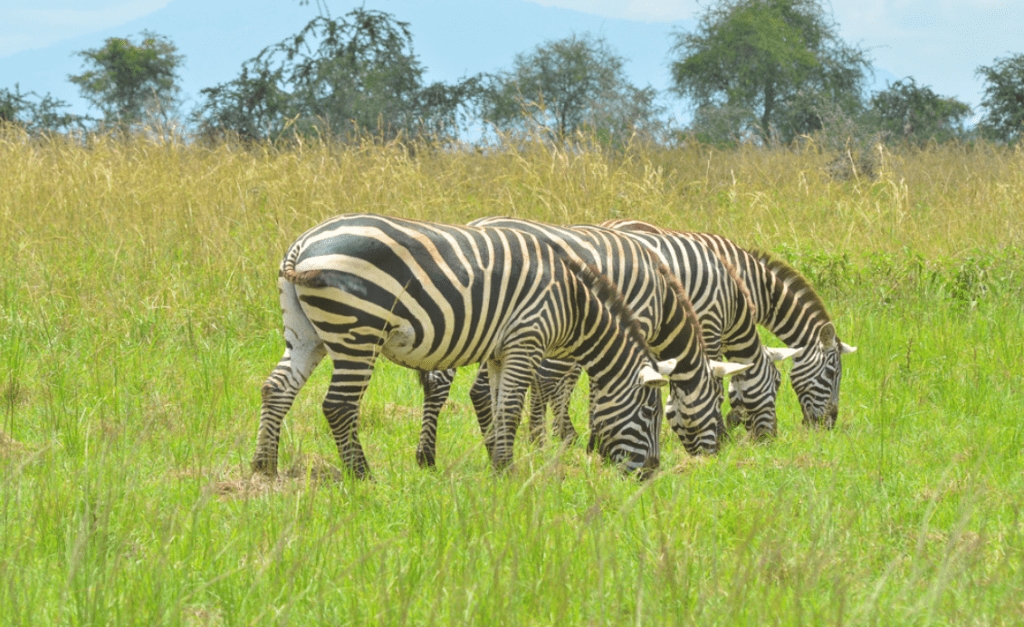
The park is the only place in Uganda where you’ll find impalas and zebras, and the lakeside setting creates gorgeous evening light for photography. Night game drives are available here, offering a chance to spot leopards, genets, and the elusive aardvark. You can also do guided nature walks and horseback safaris, a genuinely unique experience.
Self Drive Details:
- Road difficulty: Easy to moderate. Good tracks suitable for first-time self drive travellers
- Recommended vehicle: 4×4 recommended but a well-maintained 4WD SUV can manage in dry conditions
- Best time to visit: Year-round — Lake Mburo receives rain more evenly than northern parks
- Park entry fee: USD 40 per person per day
- Wildlife highlights: Zebras, impalas, hippos, buffaloes, leopards (night drives), 350+ bird species
- Accommodation: Mihingo Lodge, Arcadia Cottages, Rwakobo Rock, UWA budget bandas
- Nearest fuel: Mbarara town — very accessible
- Driving difficulty for first-timers: 2/5 — ideal as a warm-up park for less experienced self drive travellers
6. Kibale National Park
Kibale is Uganda’s primate capital and arguably the best place on earth for chimpanzee tracking. The park holds over 1,500 chimpanzees across its dense tropical forest — and unlike gorilla trekking, chimp tracking here is faster-paced, noisier, and sometimes hilariously chaotic as the chimps swing, shriek, and crash through the canopy above you.
Kibale connects to Queen Elizabeth via the Kyambura Gorge, making it a natural pairing on a Uganda self drive safari route. Fort Portal, the nearest town, is one of the most charming in Uganda — ringed by crater lakes and tea plantations, with a lively local market and surprisingly good coffee.
Self Drive Details:
- Road difficulty: Easy. Good tarmac from Kampala to Fort Portal; park tracks are well-maintained
- Recommended vehicle: 4×4 preferred but standard 4WD crossover can manage in dry season
- Best time to visit: June–September and December–February
- Chimp tracking permit: USD 200 per person — book in advance through Feather Trail Safaris
- Wildlife highlights: Chimpanzees, red colobus monkeys, L’Hoest’s monkeys, elephants, 375+ bird species
- Accommodation: Primate Lodge Kibale, Chimpanzee Forest Guesthouse, Ndali Lodge (crater lake setting)
- Nearest fuel: Fort Portal town — good access
- Driving difficulty for first-timers: 2/5 — one of the easiest parks to self drive in Uganda
Best National Parks for First-Time Self Drive Travelers
Not all Uganda safari destinations are equally accessible to first-time self drive visitors. Here’s a quick ranking to help you plan:
- Lake Mburo National Park — easiest roads, close to Kampala, excellent for beginners
- Kibale National Park — great tarmac access, well-organised park tracks, Fort Portal is a lovely base
- Queen Elizabeth National Park — moderate challenge, huge wildlife rewards, manageable for careful drivers
- Murchison Falls National Park — longer distances but well-worth it; manageable with planning
- Bwindi Impenetrable National Park — steep mountain roads require confidence and a reliable 4×4
- Kidepo Valley National Park — recommended only for experienced off-road drivers or with expert route guidance
Our honest advice: if this is your first Uganda road trip, start with Lake Mburo or Kibale. Build your confidence on accessible tracks before tackling Bwindi’s mountain roads or Kidepo’s remote terrain.
What to Expect When Driving in Uganda National Parks
Uganda’s self drive safari experience is genuinely rewarding, but it pays to go in with realistic expectations about driving conditions. Here’s what you’ll actually encounter.
Road Surfaces
Uganda’s main highways — Kampala to Masaka, Kampala to Mbarara, the road to Fort Portal — are generally good quality tarmac. Road construction is ongoing in many areas, which can mean delays and dusty diversions.
Inside national parks, roads are mostly unpaved murram tracks. Quality varies enormously depending on the park, the season, and recent maintenance. After heavy rain, some tracks become impassable without a high-clearance 4×4. Always check with the park gate or your rental operator about current conditions before heading out.
Fuel and Distances
Fuel stations are readily available in major towns — Kampala, Masaka, Mbarara, Fort Portal, Kabale, Kasese. In remote areas, especially around Kidepo, fuel availability is unreliable. The cardinal rule of driving in Uganda national parks: fill your tank completely whenever you see a fuel station, regardless of your current level. Carry jerry cans for Murchison and Kidepo.
Navigation
Mobile data coverage is good in urban areas but drops significantly in rural and park areas. Download your routes on Google Maps offline before each leg. Maps.me is an excellent backup — it works offline and has good coverage of Uganda’s rural roads. A physical printed map from Feather Trail Safaris makes a sensible third layer of navigation.
Wildlife Viewing Etiquette
- Switch off your engine when stationary near wildlife — noise disturbs animals and kills the experience
- Never get out of the vehicle on a game drive unless at a designated walking area
- Maintain a respectful distance — at least 10 metres from most animals; 25 metres from predators
- Don’t use flash photography — it startles animals and is banned in most parks
- Keep voices low and move slowly — erratic movement disturbs wildlife
- Never feed animals — this habituates them to humans and creates danger for future visitors
Park Rangers and Gate Procedures
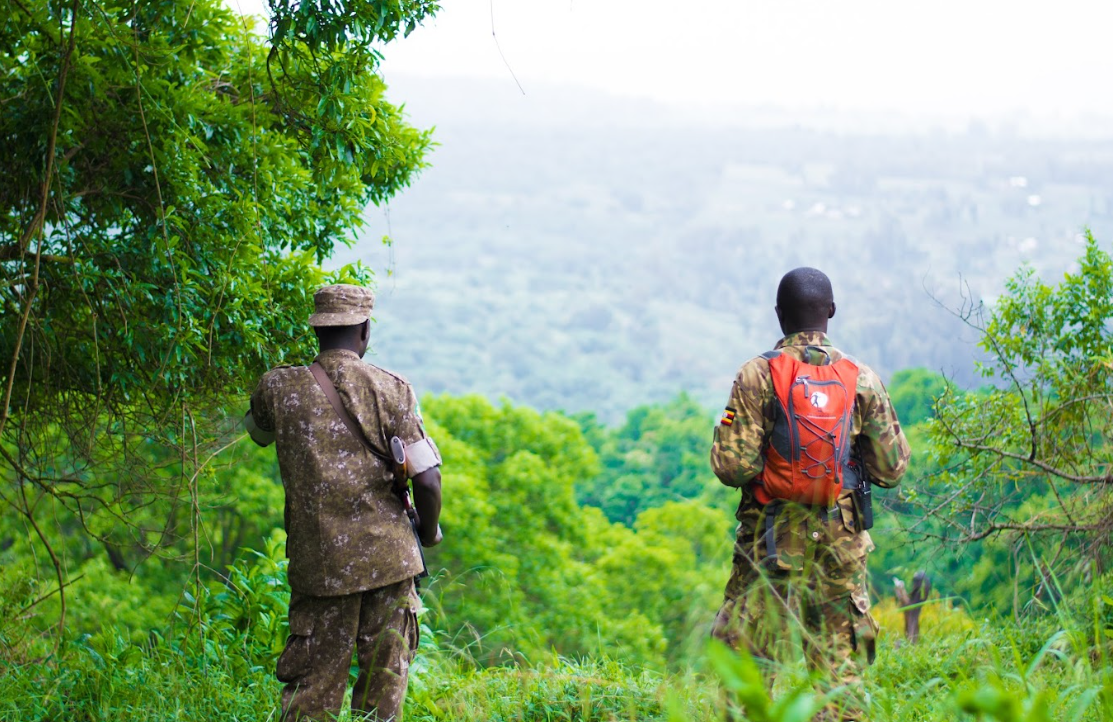
Always register at the park gate on entry and exit. Some parks assign a ranger to accompany self drive vehicles, this is both a safety measure and genuinely helpful for wildlife spotting. Rangers know where the animals are. Listen to them.
Essential Self Drive Safari Tips for Uganda
Packing for Your Uganda Self Drive Safari
- Neutral-coloured clothing (khaki, green, brown) — avoid bright colours that disturb wildlife
- Polarised sunglasses — essential for glare reduction during game drives
- Binoculars — minimum 8×42 magnification for satisfying wildlife viewing
- Camera with telephoto lens — wildlife doesn’t pose close enough for phone cameras
- Insect repellent (DEET-based) and antimalarial medication — Uganda is a malaria zone
- Lightweight waterproof jacket — afternoon rain is possible even in dry season
- First aid kit, oral rehydration salts, and any personal medications
- Dry bags for electronics — humidity and dust are constant companions
- Snacks and water for long game drives — don’t rely on finding provisions inside parks
- Portable power bank — charging in parks can be unreliable
Gorilla Trekking Preparation
Gorilla trekking in Uganda is one of the most sought-after wildlife experiences on earth, and preparing properly makes an enormous difference to your experience.
- Book your permit months in advance — permits sell out, especially for June–September
- Wear long-sleeved clothing and long trousers — you’re hiking through dense, occasionally spiky vegetation
- Wear ankle-supporting hiking boots — trails can be steep and slippery
- Bring gardening gloves for holding onto vegetation during steep sections
- Carry only small amounts of food and drink — eating near gorillas is not permitted
- Heed all instructions from your guide — maintaining distance protects both you and the gorillas
- Leave your ego at the trailhead — some treks take one hour; others take eight. Fitness helps
Choosing the Right 4×4 Vehicle for Uganda Safaris
This is, genuinely, the most important practical decision you’ll make. The right vehicle transforms a Uganda self drive safari from stressful to spectacular. The wrong one leaves you stuck in mud watching daylight disappear.
What to Look For in a Self Drive Safari Vehicle
- 4WD with low-range gearing — essential for Bwindi, Kidepo, and any wet-season driving
- High ground clearance — minimum 200mm; more is better on corrugated tracks
- Snorkel or air intake extension — useful for water crossings and dusty conditions
- Roof rack or pop-up roof tent — for equipment storage and bush camping
- Refrigerated cool box or 12V fridge — keeps food and drinks cold on multi-day routes
- Recovery equipment — tow rope, hi-lift jack, traction boards
- Two full-size spare tyres — one is not enough for remote parks
- Comprehensive toolkit — a flat in Kidepo is your problem to solve
Recommended Vehicle Models
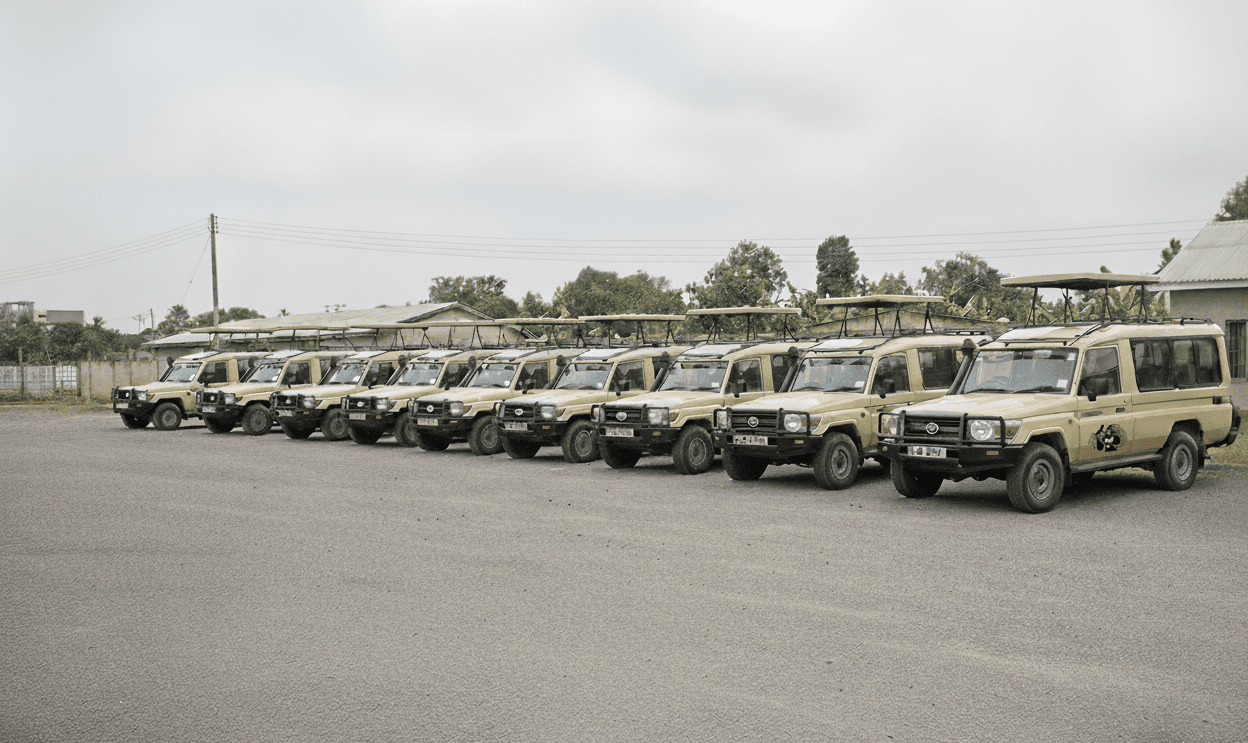
- Toyota Land Cruiser 79 Series — the gold standard for Uganda’s toughest terrain
- Toyota Land Cruiser Prado (150 Series) — excellent all-rounder, comfortable for longer distances
- Toyota Land Cruiser 70 Series Wagon — great safari vehicle with third-row seating
- Nissan Patrol GU/Y61 — capable and reliable; good availability
Feather Trail Safaris maintains a fleet of well-serviced 4×4 vehicles specifically prepared for Uganda’s roads — pre-trip checked, equipped with emergency gear, and supported by a team who know the parks intimately.
Safety Tips for Self Drive Uganda Adventures
Uganda is, broadly speaking, a safe and welcoming country for self drive travellers. With sensible precautions, most journeys pass without incident. Here’s what experienced Uganda safari travellers recommend.
On the Road
- Drive only during daylight — fatigue, poor lighting, and animals on the road make night driving genuinely dangerous
- Wear seatbelts at all times — this is both law and common sense
- Slow down through villages and school zones — children and boda bodas move unpredictably
- Keep doors locked in urban traffic — petty opportunism happens in congested areas
- Avoid driving during extremely heavy rain — flash flooding can make murram roads dangerous
- Carry copies of your driving licence, IDP, and vehicle documents at all times
In National Parks
- Never exit the vehicle in an unfenced area unless specifically instructed by a ranger
- Inform the park gate of your planned route before heading out — they need to know where you are
- Carry a charged phone and note the park emergency number before entering
- Don’t approach predators — lions, leopards, and buffaloes have all injured people who got too close in vehicles
- Stick to marked tracks — off-track driving is both ecologically damaging and illegal
- Check your vehicle’s spare tyre and jack before every game drive — a flat tyre inside a park is stressful
Plan Your Uganda Self Drive Safari with Feather Trail Safaris
The best national parks for self drive Uganda aren’t just destinations on a map, they’re completely different worlds, each offering an experience you can’t replicate anywhere else on earth. From the thundering Nile at Murchison Falls to the ancient forest mist at Bwindi, from Kidepo’s vast, lion-patrolled plains to the chimp chaos of Kibale, Uganda’s parks demand to be experienced slowly, at your own pace, behind your own steering wheel.
A Uganda self drive safari isn’t just a holiday. It’s a story you’ll tell for the rest of your life, the elephant that blocked the road for twenty minutes and seemed entirely unbothered about it, the silverback that held eye contact just a moment longer than felt comfortable, the sunset over Kazinga Channel when the hippos started grunting and the whole scene felt almost too beautiful to be real.
Feather Trail Safaris specialises in making that experience happen, with the right vehicle, the right route, the right permits, and the right advice at every turn. Whether you’re planning your first self drive safari or you’ve been dreaming of Kidepo for years, they’ll help you get there properly.
Visit feathertrailsafaris.travel to plan your self drive Uganda safari today, and let Uganda’s roads take you somewhere extraordinary.
Frequently Asked Questions
What is the best national park for a self drive safari in Uganda?
For first-time visitors, Queen Elizabeth National Park and Murchison Falls National Park offer the best combination of accessible roads, outstanding wildlife, and practical infrastructure. For a once-in-a-lifetime experience, Bwindi Impenetrable National Park is unmatched — though it requires a confident driver and a capable 4×4.
Do I need a special licence for a self drive safari in Uganda?
You need a valid driver’s licence from your home country plus an International Driving Permit (IDP). Uganda drives on the left-hand side of the road. Your IDP must be obtained in your home country before you travel — it cannot be arranged in Uganda.
How much does a self drive safari in Uganda cost?
Costs depend on your route length, vehicle type, park fees, and accommodation choices. As a rough guide: 4×4 vehicle rental typically costs USD 80–150 per day depending on the vehicle; park entry fees are USD 40 per person per day; gorilla trekking permits are USD 700 per person; and chimpanzee tracking permits are USD 200 per person. Feather Trail Safaris can provide a tailored quote for your exact itinerary.
What is the best time of year for a self drive safari in Uganda?
The two main dry seasons — June to September and December to February — offer the best conditions for driving in Uganda national parks. Roads are drier, wildlife gathers around water sources making viewing easier, and gorilla trekking trails are less slippery. Uganda can be visited year-round, but wet season travel (March–May and October–November) requires more driving experience and a highly capable 4×4.
Is it safe to self drive in Uganda national parks?
Yes, with proper preparation. Uganda is a stable, welcoming country and self drive safaris are well-established. Key safety practices include: driving only in daylight, carrying offline maps and extra fuel, staying in your vehicle during game drives, and working with a reputable operator like Feather Trail Safaris who can advise on current road and park conditions before you head out.
How far is Bwindi Impenetrable National Park from Kampala?
Bwindi is approximately 480km from Kampala — around 8–10 hours of driving depending on road conditions and stops. Most self drive travellers break the journey by stopping at Lake Mburo National Park or the Kabale area overnight, which also makes for a much more enjoyable road trip.
Can I self drive in Uganda without a guide?
Yes. Uganda Wildlife Authority allows self drive game viewing in all national parks on a self drive permit. However, gorilla trekking and chimpanzee tracking always require a UWA-certified guide. For Kidepo Valley in the far north, it’s strongly advisable to have route guidance from an experienced operator given the remoteness and fuel logistics.