
Why Kibira National Park Is Burundi’s Premier Chimpanzee Destination
Kibira is not a small forest reserve. It is the largest protected area in Burundi , 40,000 hectares of montane rainforest sitting at the top of the Albertine Rift escarpment in the country’s northwest, sharing a border with Rwanda’s Nyungwe Forest to the north and forming part of one of the most biologically significant forest ecosystems remaining in Central and East Africa.
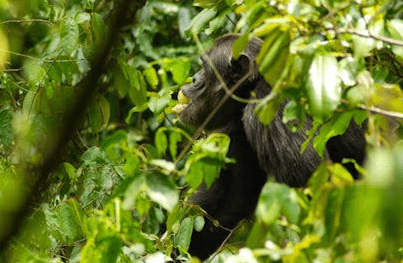
At elevations ranging from 1,600 to 2,670 metres, the forest is genuinely ancient. The trees are vast, their canopies interlocking high above the forest floor in a dense green ceiling through which light filters in columns and shafts that change colour as the sun moves. The undergrowth is dense, dark, and layered, ferns, orchids, mosses, and climbing plants filling every available space between the great trunks.
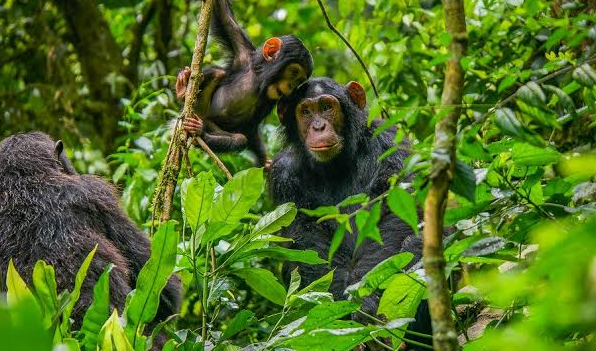
And the wildlife. Thirteen primate species live in Kibira, including the Eastern chimpanzee (Pan troglodytes schweinfurthii), whose population in the park is estimated at several hundred individuals. Several communities have been habituated specifically for trekking, a process that takes three to five years of daily, patient exposure by trained rangers, and it is these communities that form the centrepiece of the Kibira National Park chimpanzee trekking experience.
What makes Kibira exceptional compared to more famous chimpanzee destinations in Uganda and Tanzania is the combination of genuinely wild, complex forest and small, unhurried trekking groups. You are not part of a convoy. You are part of a small group moving through a living ecosystem with experienced guides, looking for animals that are wild, habituated, and absolutely indifferent to your presence in the best possible way.
Kibira National Park Chimpanzee Trekking: Best Experiences & Prices Explained
Before we get into the detail of individual experiences, a brief overview of what Kibira’s trekking programme currently offers:
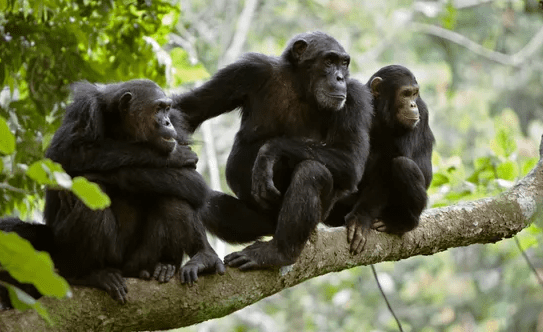
Chimpanzee trekking in Kibira is managed jointly by the Office Burundais pour la Protection de l’Environnement (OBPE) and the Office Burundais du Tourisme et des Hôtels (OBTH). Several habituated chimpanzee communities are available for trekking, each with a defined home range in different sections of the park.
Group sizes are strictly limited, currently a maximum of 6 to 8 people per community per day. This limit exists to minimise stress on the chimpanzees and to maintain the quality of the encounter for visitors. It is, from a practical standpoint, one of the most significant advantages Kibira holds over more heavily visited primate destinations: you will never find yourself in a crowd.
All treks are led by trained OBPE rangers accompanied by experienced trackers who follow the specific chimpanzee community daily and have an intimate knowledge of individual animals’ movements, relationships, and habits.
The Best Chimpanzee Trekking Experiences in Kibira National Park
Standard Chimpanzee Trek (Half Day)
The most common experience and the starting point for most visitors. The standard trek begins at dawn at the ranger station, involves active tracking through the forest, and concludes with one hour in the presence of the habituated chimpanzee community.
The trek duration varies enormously depending on where the community has moved overnight, anything from forty-five minutes to four hours of forest hiking before the encounter. Most standard treks involve 2 to 3 hours of hiking in total, making it a morning activity that leaves the afternoon free.
Best for: First-time trekkers, travellers combining Kibira with a broader Burundi itinerary, and those with moderate fitness.
Full-Day Chimpanzee Habituation Experience
For visitors who want the deepest possible immersion in the chimpanzee world, the habituation experience offers a full day with a community that is in the ongoing process of becoming accustomed to human presence. You join the research and ranger team at dawn and stay with the community through the full arc of their day, morning feeding, midday rest, afternoon ranging, before leaving as they build their nests at dusk.
This experience is significantly more physically demanding than a standard trek and requires a full day in the forest. But what it offers is incomparable: you see a social world, hierarchies, relationships, conflicts, play, communication, that a one-hour encounter only glimpses.
Best for: Serious wildlife enthusiasts, photographers, and researchers. Excellent physical fitness required.
Guided Birding and Multi-Primate Walk
Kibira’s biodiversity extends well beyond chimpanzees, and a dedicated half-day guided walk focused on birdwatching and multi-primate spotting is an excellent complement to, or replacement for, a standard trek for those whose interests range wider.
The park protects over 200 bird species, including many Albertine Rift endemics. Moreover, visitors encounter colobus monkeys, red-tailed monkeys, L’Hoest’s monkeys, and baboons more frequently than chimpanzees. They also spot these primates with much less physical effort. This is also an excellent option for second-day visitors who want to return to the forest without the cost and physical demand of a full trekking permit.
Best for: Birdwatchers, nature photographers, those travelling with children (below minimum trekking age), and second-day visitors.
Night Walk in Kibira Forest
An emerging experience offered by some operators in partnership with local rangers: a guided evening or night walk on the forest edge to experience Kibira’s nocturnal ecology, galagos (bushbabies), owls, forest nightjars, and the extraordinary sounds of a montane rainforest after dark. This is not a mainstream offering and requires advance arrangement through your safari operator, but for those willing to seek it out, it is genuinely memorable.
Best for: Night wildlife enthusiasts and experienced African safari-goers looking for something completely different.
Chimpanzee Trekking Prices and Permit Costs
Transparency on costs is important. Here is the current (2026) price structure for Kibira National Park chimpanzee trekking:
| Experience | Permit Cost (Per Person) |
| Standard Chimpanzee Trek | $100 to $150 USD |
| Full-Day Habituation Experience | $200 to $250 USD |
| Research/Photography Permit | Available on application |
Beyond the permit itself, budget for:
| Additional Cost | Approximate Amount |
| Park Entry Fee | $20 to $30 per person per day |
| Ranger/Guide Fee | $20 to $40 per group |
| Porter Hire (highly recommended) | $10 to $15 per porter |
| Tracker Tip (customary) | $10 to $20 per group |
Total estimated cost for a standard trekking day: $150 to $250 per person, including permit, park entry, guide, and porter. This makes Kibira one of the most affordable chimpanzee trekking destinations in Africa, a fraction of comparable Uganda experiences and dramatically less than Rwanda gorilla trekking permits.
Accommodation near Kibira: Budget guesthouses near Rwegura start from around $30 per night. Mid-range options with better facilities and often spectacular hillside views run $60 to $120. A small number of higher-end eco-lodge options exist or are under development; confirm current availability with your operator.
What Happens During a Trekking Day
The structure of a Kibira trekking day follows a consistent pattern, though the content of that day is never entirely predictable, which is as it should be.
5:30 to 6:00am: Wake up and breakfast at your accommodation. A substantial breakfast matters, you will be hiking for several hours and the altitude increases caloric demand.
6:30 to 7:00am: Arrive at the ranger station for the pre-trek briefing. Your lead ranger covers: chimpanzee behaviour basics, trek rules (8-metre minimum distance, no flash photography, no food or drink consumption near the chimps, controlled movement and noise), and what the trackers’ morning radio report has indicated about the community’s current location.
7:00am: Trek begins. From the forest edge, your group follows the ranger and tracker team into Kibira. The tracking phase involves reading the forest, listening for calls, watching for feeding evidence, occasionally following tracks through soft ground. It is active and engaging, even before you’ve found the chimps.
Variable: First sighting. The moment varies enormously day to day. In some cases it comes within the first hour; in others it requires patient hiking through challenging terrain. When it happens, the ranger signals the group to slow and stop, and you approach quietly to the observation position.
One hour: Time with the community. No more, no less. The ranger monitors the time and will begin moving the group back when the hour is complete, regardless of what the chimps are doing. Use every minute.
Return trek: Typically faster than the ascent, though tired legs on steep downhill terrain require careful footing. The mood in the group on the return is invariably buoyant. People who came as strangers tend to leave as friends.
Back at the ranger station: Your trekking certificate is issued, a signed, hand-written document that is one of the most satisfying physical mementos of any African safari experience. Tips for the ranger, tracker team, and porter are given here.
Afternoon: Rest, explore the surrounding area, visit a local community, or simply sit on a hillside above the park with a cup of Burundian tea and watch the forest canopy move in the wind below you.
Best Time to Visit Kibira National Park
The long dry season from June through August is the optimal period for Kibira National Park chimpanzee trekking. Trails are dry and manageable, the chimps tend to range at more accessible elevations, and the forest light in the dry season has a quality that makes photography particularly rewarding.
The short dry season in December and January is an excellent and much less visited alternative. Permit availability is higher, accommodation is easier to secure, and the experience of having the forest to yourself, something that even Kibira’s low visitor numbers can make meaningful, is more likely.
The rainy seasons (March to May and September to November) bring challenges: muddy trails, heavier vegetation on paths, and more unpredictable chimp movement. But they also bring an intensity of green and the sound of rain on a forest canopy that experienced wilderness travellers often prefer. If you’re fit, well-equipped, and undaunted by mud, Kibira in the rains is not a lesser experience, just a different one.
Wildlife You May Encounter Besides Chimpanzees
Kibira’s biodiversity is one of its defining characteristics, and the forest rewards patient observation beyond the target chimpanzee encounter. Wildlife commonly encountered during trekking days includes:
Other primates: Black-and-white colobus, Angolan colobus, red-tailed monkeys, L’Hoest’s monkeys, and olive baboons are all present in good numbers and often encountered during the approach trek or on the return.
Forest birds: With over 200 recorded species including multiple Albertine Rift endemics, Kibira is outstanding for birdwatching. The African green broadbill, Rwenzori turaco, handsome francolin, and numerous sunbird species are among the highlights. A dedicated birding morning before or after your chimpanzee trek significantly adds to the experience.
Forest elephants: A small population of forest elephants is present in Kibira, though encounters during standard treks are rare. Evidence, dung, broken branches, footprints in soft ground, is much more commonly seen than the animals themselves.
Buffalo and giant forest hog: Both are present in the park and occasionally encountered on the forest trails, particularly in areas of denser understorey.
Reptiles and amphibians: Kibira hosts remarkable reptile and amphibian diversity, much of it poorly documented. Chameleons are commonly seen, and the forest’s streams support numerous frog species, some of which produce extraordinary calls after rain.
Frequently Asked Questions
How many chimpanzees can I see during a trek?
Habituated communities in Kibira range from 15 to 40+ individuals, and during a good sighting it is common to observe a significant proportion of the community. The exact number varies by day and by the community’s social dynamics at the time of your visit.
Is Kibira National Park trekking safe?
Yes, when conducted with trained rangers following established protocols. Habituated chimpanzees are accustomed to human presence and rarely display threatening behaviour toward trekking groups. Meanwhile, your trained ranger manages the group’s position and movement. Consequently, the ranger maintains appropriate viewing distances throughout the trek.
Can I combine Kibira chimpanzee trekking with other activities?
Absolutely, and most visitors do. Common combinations include birdwatching in Kibira, visiting the shores of Lake Tanganyika in Bujumbura, exploring the Rusizi Delta wetlands, or crossing into Rwanda for a combined Burundi-Rwanda itinerary.
How do I book a trekking permit for Kibira?
Visitors can book permits directly through OBPE and OBTH. However, international visitors often find it more practical to use a reputable safari operator. These operators maintain established relationships with park authorities. Therefore, book your permit well in advance for the dry season.
Final Thoughts on Kibira National Park Chimpanzee Trekking
The cold morning air. The dark path to the station. The moment Emmanuel tilted his head to listen to a call from somewhere in the canopy above and said, simply: “They’re already moving.”
Kibira National Park chimpanzee trekking offers a rare African wildlife experience. Moreover, visitors enjoy intimate encounters with great apes in a complex wilderness. Small trekking groups create a more personal experience. Furthermore, visitors avoid large crowds and expensive premium prices.
That won’t last forever. Burundi is opening. The forest is being discovered. The best time to go is before everyone else works out what you’re about to find out.
Ready to hear the canopy come alive before the crowds do? Let Feather Trails Travels take you there. Our small-group Kibira chimpanzee treks are built for the traveler who wants the real forest, not the postcard version. Book your window into Burundi’s untouched wild with Feather Trails Travels today.