
Burundi Cultural Experiences: A Deep Travel Guide to the Twa Community
The fire had been burning for a long time before I arrived.
I could smell the wood smoke from the path, a particular, resinous smell that mixed with the damp red earth of the hillside and the sweetness of banana trees heavy with fruit. Then I heard it: a slow, low drumbeat from somewhere ahead, not urgent, not performative, just steady, the sound of something that had been happening long before I got there and would continue long after I left.
This was my introduction to immersive Burundi cultural experiences, to the community, the warmth, and the extraordinary human depth that this small, largely undiscovered country holds for travellers willing to go beyond the obvious.
Burundi is known, when it is known at all, for its chimpanzees and its rainforests. The wildlife is genuinely extraordinary. But Burundi’s cultural heritage, particularly the living traditions of the Indigenous Twa Pygmies, one of Central Africa’s oldest and most fascinating communities, offers a dimension of travel experience that no forest trek, however breathtaking, can provide. It is the dimension of human story: who has lived here, how they have lived, and what they carry forward into the present.
Cultural tourism in East Africa is growing rapidly, and the reasons are not difficult to understand. Travellers are increasingly seeking experiences that connect them with real communities rather than packaged performances. They want encounters that feel genuine, that teach them something true about a place and its people. In Burundi, those encounters are available, and they are, by the standards of Africa’s more visited destinations, refreshingly unmediated.
This comprehensive guide covers everything you need to know about authentic Burundi cultural experiences, from who the Twa people are and where to find them, to what to expect during a community visit and how to make sure your presence does more good than harm.
What Makes Burundi Cultural Experiences Unique?
Every country in Africa offers some form of cultural tourism. What makes Burundi cultural experiences distinctive is a combination of depth, authenticity, and accessibility that is rare in more heavily visited destinations. Because mass tourism has not yet commercialised the local heritage, interactions remain deeply personal and grounded in mutual respect.
Burundi sits at the geographical and cultural crossroads of several major African zones. The country’s history spans the ancient kingdoms of the Great Lakes region, the colonial period under first Germany and then Belgium, the trauma and recovery of recent decades, and the ongoing vitality of communities that have maintained their traditions through all of it. The result is a cultural landscape of genuine complexity, layered, often surprising, and offering far more than a single narrative.
The Twa people are the most ancient thread in that landscape. But Burundi’s cultural richness extends far beyond a single community. It encompasses the Hutu and Tutsi communities whose agricultural and pastoral traditions have shaped the country’s endless rolling hills for centuries, the world-famous royal drummers of Gitega whose performance is a UNESCO-recognised intangible cultural heritage, and the contemporary urban culture of Bujumbura, a lakeside city that has rebuilt itself with an energy, culinary flair, and artistic creativity that rewards curious visitors.
What ties all of these diverse elements together is a quality that is difficult to manufacture and impossible to fake: the sense that you are encountering a living culture rather than a preserved museum exhibit.
Who Are the Indigenous Twa Pygmies?
To fully appreciate the depth of Burundi cultural experiences, one must understand the history of the Twa (also written Batwa). They are the oldest documented inhabitants of the Great Lakes region of Central Africa. Long before the historic Bantu migrations brought the ancestors of the Hutu and Tutsi peoples to the region, the Twa lived across the vast, contiguous forests and wetlands of what is now Burundi, Rwanda, Uganda, and the Democratic Republic of Congo.
Physically, Twa individuals are generally shorter in stature than the Bantu populations that share the region. Anthropologists note that this characteristic reflects a highly successful genetic adaptation to life in a dense, closed-canopy forest environment, where a smaller frame offers practical advantages in terms of physical movement through thick undergrowth and efficient body heat regulation. The term “Pygmy,” while still used in historical and some international contexts (including by some Twa communities themselves), is considered by many modern scholars and global advocacy organisations to carry outdated colonial associations. Today, the preferred, self-designated term in most local communities is simply Twa or Batwa.
Today, Burundi’s Twa population includes between 80,000 and 100,000 individuals. This group represents approximately 1% of the national population.
Fortunately, the African Commission on Human and Peoples’ Rights formally recognizes them as an indigenous people. This status grants them specific rights protections. Consequently, the government increasingly protects their ancient cultural traditions. These customs remain an irreplaceable part of Burundi’s national heritage.
The story of how the Twa came to occupy their current marginalized position in modern Burundian society is one of gradual displacement, from forest to forest edge, and from forest edge to agricultural margin.
This structural transition happened over centuries. Historically, massive habitat loss and large-scale deforestation drove this painful shift. Furthermore, conservation-driven exclusions forced communities off their ancestral lands.
Meanwhile, deep structural disadvantages continuously harmed these small, dispersed minority populations. Ultimately, limited institutional resources in the country worsened these systemic challenges over time.
Understanding this complex history is essential context for any meaningful cultural visit, and our expert guides make sure to provide this background before you step into a community.
History and Origins of the Twa Community in Burundi
The Twa are classified by anthropologists as a distinct forest-adapted population found across the Central African equatorial belt, extending from Cameroon to the western edges of the Albertine Rift. Archaeological and genetic evidence suggests that these hunter-gatherer populations have inhabited Central African forests for at least 60,000 years, making them among the oldest continuous human lineages on the entire continent.
In the Great Lakes region specifically, the Twa are believed to have been the sole inhabitants of the highland montane forests for thousands of years before the historic Bantu migration. This massive demographic shift brought iron-working agricultural communities from West-Central Africa eastward across the continent over a period of roughly 2,000 years, beginning around 3,000 years ago.
The arrival of Bantu-speaking farmers did not immediately displace or alienate the Twa. Historical records and oral traditions from the pre-colonial era describe a complex, deeply interdependent relationship between the Twa and the emerging Hutu and Tutsi kingdoms (the Kingdom of Burundi).
Forest Specialists: Twa hunters provided highly prized forest products, including wild game meat, honey, structural forest materials, and medicinal plants to agricultural communities. In exchange, they received cultivated root crops and iron tools.
Master Potters: Twa potters supplied the clay vessels that were universally essential to domestic life, storage, and cooking across all strata of society.
Royal Performers: Twa musicians and dancers were highly prized at the courts of the Mwami (King), where their music, sharp wit, and dramatic dances were considered to carry unique spiritual power and protective blessings.
The arrival of European colonial administrations fundamentally shattered this ancient ecological and social equilibrium. Colonial-era conservation policies excluded the Twa from the ancestral forest areas they had managed sustainably for millennia, abruptly converting traditional resource-use territories into strictly protected nature reserves without providing alternative land titles.
Concurrently, rapid agricultural expansion accelerated by regional population growth further reduced the pristine forested zones on which Twa communities depended for their primary subsistence. By the time of Burundian independence in 1962, the Twa had been largely pushed to the absolute socioeconomic margins of a rapidly modernising nation state.
Recovery, legal recognition, and cultural revitalisation have been slow but steady. Since the late 1990s, local Twa advocacy organizations, supported heavily by international indigenous rights groups like the International Work Group for Indigenous Affairs (IWGIA). They have worked tirelessly to secure land tenure, improve access to formal education and maternal healthcare, and preserve the unique cultural practices that define Twa identity. Community-based cultural tourism has begun playing a vital role in this modern renaissance, providing sustainable alternative income streams, creating a dignified context where traditional skills have commercial value, and building the mutual respect that shifts how outside populations perceive the Twa.
Traditional Lifestyle of the Twa People
Hunting and Gathering Traditions
The Twa are historically hunter-gatherers, one of the few remaining populations in the Albertine Rift with an active cultural memory of forest-based subsistence. While the dramatic loss of primary forest habitat over the past century has made a full-time hunter-gatherer lifestyle impossible for modern Twa communities, core elements of this rich tradition survive in daily practice, vivid oral folklore, and an extraordinary ethno-ecological knowledge system.
Traditional Twa hunting techniques, which include the strategic construction of small pit traps, the selection of specific plant toxins for arrows, and the flawless reading of animal tracks or feeding signs, represent a highly specialized body of environmental knowledge developed over millennia. This deep knowledge is increasingly recognized by international conservation bodies, such as the IUCN (International Union for Conservation of Nature), as an invaluable asset for biodiversity monitoring and forest management. The Twa understand the inner workings of the rainforest in ways that formal academic training cannot easily replicate.
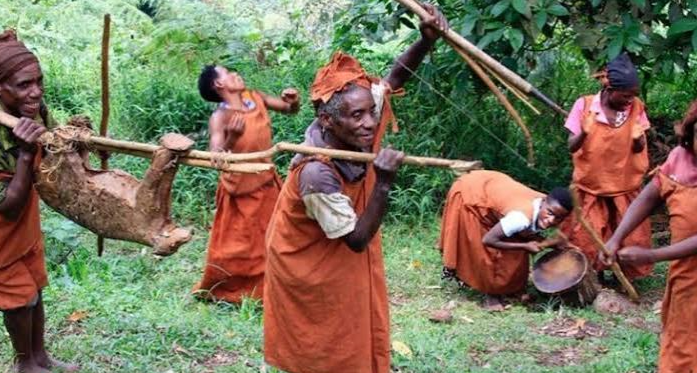
Wild honey collection also remains a highly practiced skill. Twa men pass wild honey harvesting skills from fathers to sons. They locate hidden beehives high in tree cavities. They use traditional smoke techniques to calm the bees before harvesting. During your visit, they demonstrate this remarkable skill and explain its cultural importance.
Pottery and Handcraft Skills
Among the most celebrated and widely recognized visual elements of Burundi cultural experiences is the art of traditional pottery. Twa women have historically been the primary artisanal potters of the Great Lakes region, creating durable clay vessels, cooking pots, water containers, and large storage jars that were foundational to rural household survival.
Their pottery is not merely utilitarian; it is an intricate form of artistic expression. The Twa artisans hand-form each vessel without using a potter’s wheel. They fire the pottery in open-air wood fires. They decorate each piece with delicate geometric patterns that reflect generations of cultural knowledge. Female potters shape thick coils of clay by hand. They smooth each vessel with polished river stones. They have preserved this ancient craft through generations, keeping a remarkable cultural tradition alive.
Today, local Twa pottery cooperatives in Burundi produce beautiful, updated ceramic pieces. International collectors purchase these items as contemporary artworks. The income generated from these cooperative sales has become a primary livelihood source for communities that no longer have access to forest resources. Visiting a cooperative, watching raw clay transform under skilled hands, and feeling the texture of a finished piece is an incredibly tactile and unforgettable experience.
Music, Dance, and Storytelling
Twa musical and performance traditions are breathtaking in their complexity and raw emotional power. Recognized across East Africa for their unmatched polyphonic singing, complex drumming patterns, and high-energy dances, their performances are a highlight of any trip.
Twa vocal music is characterized by unique arrangements, including a form of polyphonic yodelling that bears strong structural similarities to the vocal traditions of the Central African rainforest BaAka communities. The layered harmonics produced by a group of Twa singers in full harmony carry through the hills with an acoustic intensity that is deeply moving.
The storytelling tradition is equally rich. Twa oral literature, consisting of ancient folktales, historical epics, and origin myths, preserves the community’s cultural memory through displacement and social transformation. Elders who serve as the keepers of these stories are held in high regard, and the deliberate transmission of these tales to younger generations is viewed as an vital act of cultural survival.
Visiting Indigenous Twa Communities in Burundi
A visit to an indigenous Twa community in Burundi is a profoundly human encounter, not a performance, and must never be approached as a commercial commodity. You are entering the living spaces of individuals with distinct personal histories, family concerns, and deep personal dignity.
The most successful and respectful cultural visits are those organized through responsible operators like Feather Trail Safaris, who maintain established, transparent, and long-term relationships with specific communities. We negotiate fair compensation directly with village councils. ensure funds reach local households without intermediary losses. We also brief guests on local etiquette before every visit.
Community visits typically take place in organized settlements bordering the dense montane forests of Kibira National Park within Kayanza Province, as well as in dedicated rural clusters throughout Gitega and Rutana provinces. Your private guide will introduce you to the village elders and handle the delicate social navigation of the visit, showing you whom to greet first, how to appropriately accept local hospitalities, and which topics of conversation are welcome or sensitive.
The depth of your experience is directly tied to the level of trust your guide has established with the community. A trusted guide opens the door to genuine cross-cultural exchanges, real conversations, spontaneous demonstrations of ancestral skills, and invitations to sit inside family homes.
Cultural Activities Travellers Can Experience
Traditional Dance Performances
A Twa dance performance is a high-energy event with its own internal rhythm, far faster and more athletic than standard commercial performances. Accompanied by live hand-carved drums and polyphonic call-and-response singing, the dancers execute complex footwork and jumps that seem to defy gravity. Visitors are frequently invited to join the circle, and the laughter and encouragement that follows make for a wonderful moment of shared connection.
Pottery Demonstrations
Watching a master Twa potter shape raw clay entirely by hand is hypnotic. The speed and absolute precision with which an artisan can coil, smooth, and pinch clay walls to a perfectly uniform thinness makes a difficult technical craft look entirely effortless. Most community visits give you the chance to try working the clay yourself under the patient guidance of an artisan, resulting in a lopsided but memorable souvenir to take home.
Community Ecology Walks
A guided walk through a Twa settlement and its surrounding landscape reveals the practical brilliance of traditional ecological knowledge. Community specialists will point out hidden medicinal roots, wild edible plants, honey-bearing trees, and organic building materials. This is a living education in forest survival, showing you how a community can thrive in harmony with its ecosystem.
Cultural Exchanges with Local Families
The most meaningful moments are often the quietest and least structured. For example, you may sit by a hearth as a family prepares dinner. You may also watch children play traditional games. Meanwhile, you can share tea with an elder curious about your home country and family. Moreover, our expert translators facilitate these conversations. However, every interaction unfolds naturally through mutual curiosity, presence, and open-mindedness.
Responsible Cultural Tourism and Ethical Travel
Engaging with marginalized indigenous communities requires a high standard of ethical responsibility. The Twa have historically been the subjects of outside curiosity, sometimes well-meaning, but often exploitative. To ensure your visit supports community empowerment, we strictly adhere to the following principles of responsible travel:
Fair and Direct Compensation: Tourism fees must directly benefit the local economy. We ensure that financial returns are distributed transparently into community-managed funds that support education, clean water access, and healthcare.
Strict Photography Etiquette: Never point a camera or take a photograph without explicit verbal or gestural permission from the subject. Treat people with the same digital respect you would expect in your own home.
Follow Professional Guidance: Pay close attention to your guide’s briefing regarding local customs, greeting styles, and personal space. Avoid giving money or sweets directly to children, as this promotes dependency; instead, route structured donations through village schools or community elders.
Gitega and the Gishora Royal Drum Sanctuary
Gitega, Burundi’s political capital, is the beating heart of the nation’s heritage. It is home to the National Museum of Gitega, which houses an extraordinary collection of ethnographic artifacts, royal regalia, and historic photography documenting the era of the old Burundian monarchy.
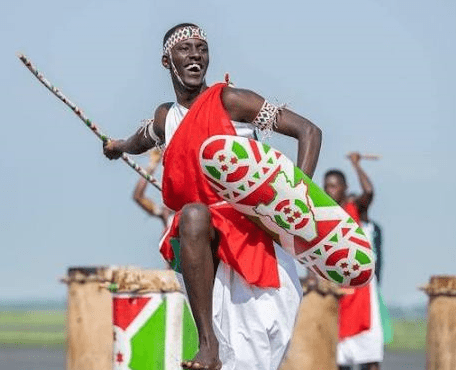
Just outside the city lies the Gishora Royal Drum Sanctuary. A performance by the Royal Drummers of Burundi is one of Africa’s most powerful artistic experiences. Moreover, over twenty master drummers wear the national colors of red, white, and green. They carry massive wooden drums on their heads with remarkable strength. Meanwhile, they beat syncopated rhythms with immense physical energy. They also perform athletic leaps and dramatic choreography, creating an unforgettable cultural spectacle. This isn’t just entertainment. It is a sacred living tradition. Historically, elders used these drums to announce state ceremonies and royal successions.
Rural Twa Settlements in Kayanza and Muramvya Provinces
For travellers seeking deep, immersive connections, the Twa communities near Kibira National Park offer authentic experiences. Moreover, these communities live beside the primary montane rainforest. As a result, their ecological knowledge, hunting traditions, and forest crafts remain vibrant today. Therefore, visitors should plan carefully before travelling. Additionally, a knowledgeable local guide helps navigate the mountainous terrain. They also ensure a welcoming and respectful community visit.
Combining Wildlife and Cultural Experiences in Burundi
Burundi’s compact geography lets travelers combine wildlife safaris and cultural experiences in one seamless itinerary. Unlike many African destinations, it eliminates exhausting multi-day road journeys.
A beautifully balanced 7-day or 10-day Burundi safari allows you to trek through the mist-shrouded canopy of Kibira National Park. Find wild chimpanzees in the morning. Spend the afternoon sitting with a Twa community along the forest boundary learning about the medicinal plants used to treat ailments for centuries. You can follow this with a trip to see the hippos and crocodiles of Rusizi National Park, watch the sun set over the pristine waters of Lake Tanganyika, and finish with the thunderous performance of the Gishora Royal Drummers.
Experiencing these elements together gives you a complete, honest, and multi-dimensional understanding of Burundi. This journey highlights how its people, wildlife, and landscapes beautifully intertwine.
Why Choose Feather Trail Safaris for Your Journey?
At Feather Trail Safaris, we believe that true travel is about human connection. We don’t view culture as an optional add-on to a wildlife itinerary; we design our journeys with the understanding that the people and their heritage are what give a landscape its soul.
Ready to Experience Burundi Firsthand?
Let’s create an unforgettable, ethical, and immersive journey through the heart of East Africa. Explore our signature Burundi Safari Itineraries or get in touch with our expert travel design team at Feather Trail Safaris today to customize your next adventure.