
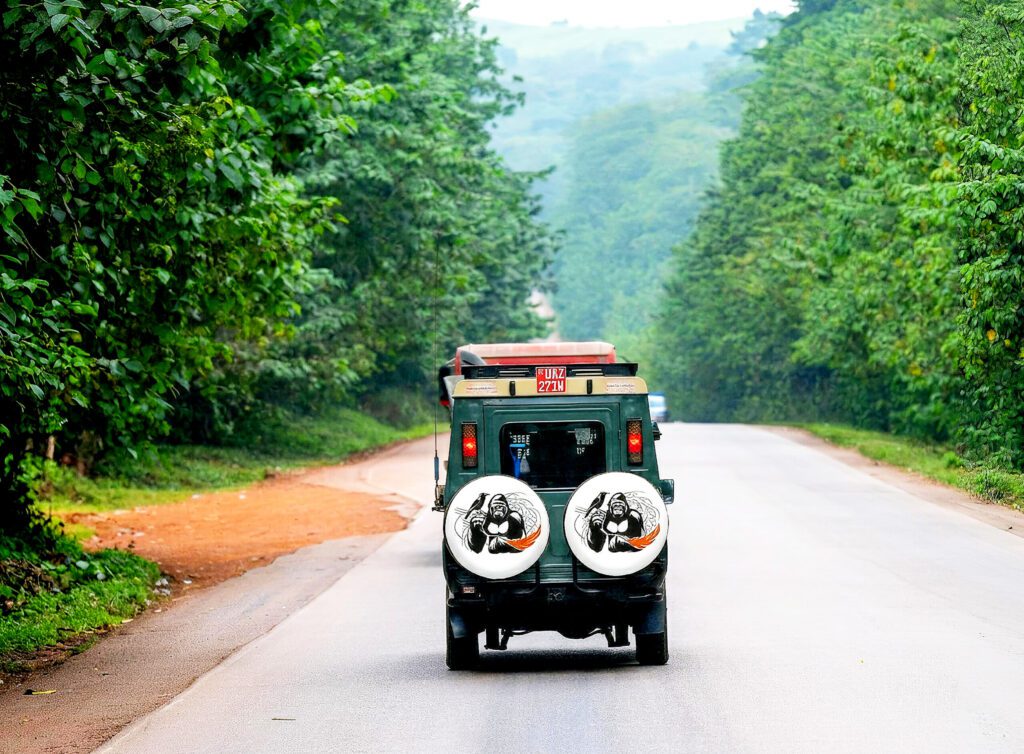
Best 4×4 Safari Vehicles for Uganda Roads: What Every Traveler Needs to Know
If you’ve ever watched a safari video and wondered how those vehicles glide through muddy tracks, ford shallow rivers, and navigate crater-rim roads without batting an eye, the answer is simple: the right 4×4 makes all the difference.
Uganda is one of Africa’s most rewarding safari destinations. It’s also one of the most demanding on vehicles. From the tarmac highways connecting Kampala to Mbarara to the steep, slippery trails descending into Queen Elizabeth National Park, or the notorious red-earth roads of Bwindi during the rainy season — Uganda tests every vehicle it encounters.
This guide covers the best 4×4 safari vehicles for Uganda roads in 2025, compares your options honestly, and helps you decide which vehicle fits your trip, budget, and adventure style. Whether you’re planning a self drive Uganda safari or booking a guided tour, getting the vehicle right is step one.
Why Choosing the Right 4×4 Vehicle in Uganda Matters
Uganda is not a drive-anywhere-in-any-car destination. This isn’t a criticism, it’s simply geography. The country’s extraordinary biodiversity is partly because its most spectacular wildlife parks are tucked into remote, mountainous terrain with limited infrastructure.
Bwindi Impenetrable Forest, where mountain gorillas live, sits at over 2,300 metres above sea level. The access roads are steep, narrow, and notorious for turning treacherous after rain. Queen Elizabeth National Park’s Ishasha sector, where the famous tree-climbing lions live — requires crossing savannah grasslands and seasonal tracks. Murchison Falls, Uganda’s largest park, involves long drives on rough murram (laterite gravel) roads that punish underpowered and low-clearance vehicles without mercy.
Even during the dry season, Uganda’s roads demand respect. During the long rains (March–May) and short rains (October–November), many park roads become impassable for ordinary cars.
A proper 4×4 safari vehicle for Uganda isn’t a luxury, it’s the difference between reaching your gorilla trek trailhead on time and being stranded on a hillside.
Uganda Road Conditions and the Ideal 4×4 Vehicles
Uganda’s road network is a tale of two worlds. The main highways, Kampala to Masaka, Kampala to Jinja, the stretch toward Fort Portal, are paved and generally in reasonable condition. But once you turn off toward any national park, the tarmac typically ends and the adventure begins.
What you’ll actually encounter:
- Murram roads: Red laterite gravel tracks that become extremely slippery when wet and produce blinding dust clouds when dry. These are the primary access roads to most Uganda parks.
- Black cotton soil: Found in areas like the Albertine Rift valley floor, this soil expands dramatically when wet, creating thick, sticky mud that can swallow a tyre up to the axle.
- Crater rim roads: Narrow tracks with steep drop-offs, common around Queen Elizabeth and Kibale areas.
- Unpaved park tracks: Inside the national parks, game drive tracks are largely ungraded and require genuine ground clearance and 4WD capability.
- River crossings: Some routes, particularly in Murchison Falls, involve seasonal water crossings.
For these conditions, you need a vehicle with high ground clearance (ideally 200mm or more), a proper four-wheel-drive system (not just AWD), good approach and departure angles, and robust tyres.
Best 4×4 Safari Vehicles for Uganda Roads
Here is an honest, experience-based breakdown of the vehicles that perform best on Uganda roads and why.
Toyota Land Cruiser 70 Series (Hard Top & Pop-up Roof)
The Toyota Land Cruiser 70 Series is the undisputed king of African safari vehicles, and it earns that title every single day on Uganda’s roads.
Why it dominates:
Built for punishment, the Land Cruiser 70 combines a ladder-frame chassis, high ground clearance, a powerful diesel engine, and battle-tested 4WD mechanics. It doesn’t need to be babied. It can wade through water, climb steep muddy hillsides, and cover 400km of murram without complaint.
The pop-top roof version is particularly popular for Uganda gorilla trekking safaris, passengers can stand and photograph wildlife through the roof hatch while staying cool and comfortable.
Best use case: All Uganda national parks, gorilla trekking, long-distance overland routes, rainy season travel
Comfort level: Functional rather than luxurious. The suspension is firm, and rides on rough roads can be fatiguing over long distances. Worth noting: many operators have upgraded interior seating significantly.
Off-road capability: Exceptional, among the best available for African roads
Fuel efficiency: Moderate. The diesel engine is economical at highway speed but thirsty on rough terrain.
Luggage capacity: Very good, the extended body version carries safari luggage for 4–6 passengers easily
Suitability for gorilla trekking: Outstanding. High clearance handles Bwindi approach roads in any season.
Ideal traveler type: Adventure travelers, photography safaris, rainy season trips, large groups
Budget: Mid to upper range for rental or guided safari
Disadvantages: Firm ride on long highway sections; older models lack modern comfort features
Toyota Land Cruiser V8 (200 Series)
Step up to the Land Cruiser V8 and you enter the world of luxury overlanding. This is the vehicle that senior government officials and high-end safari operators use across East Africa, and there’s good reason for that.
Why it stands out:
The V8 200 Series combines everything the 70 Series offers in terms of capability with a completely different interior experience. Air conditioning that actually works in the Uganda heat, leather seating, comfortable legroom, modern infotainment, it feels like a premium SUV and performs like a bush vehicle.
Best use case: Luxury Uganda safaris, families, honeymooners who want comfort without sacrificing capability
Comfort level: Excellent, comparable to premium European SUVs
Off-road capability: Outstanding. Full-time 4WD, Kinetic Dynamic Suspension System, and electronic locking differentials make it virtually unstoppable.
Fuel efficiency: Lower than the 70 Series due to the V8 engine. Fuel costs are a real consideration for self drive.
Luggage capacity: Very large, the V8 can comfortably fit luggage for 4 passengers plus full safari gear
Suitability for gorilla trekking: Excellent
Ideal traveler type: Honeymooners, families, travelers who want maximum comfort, luxury safari packages
Budget: Premium, the most expensive vehicle class for Uganda safari car hire
Disadvantages: High fuel consumption; costs significantly more per day
Toyota Prado
The Toyota Prado sits in a sweet spot that many Uganda safari travelers find ideal: more comfortable than the 70 Series Land Cruiser, more capable than a standard SUV, and more fuel-efficient than the V8.
Why travelers love it:
The Prado is genuinely comfortable over long distances. Its suspension is tuned more for road comfort than the 70 Series, which makes the Kampala–Bwindi journey (roughly 8–9 hours on mixed roads) significantly less exhausting. And yet it still delivers real 4WD capability when the tracks get rough.
For Toyota Prado rental Uganda trips, particularly those combining city travel, national park visits, and moderate off-road sections, the Prado is arguably the most balanced choice.
Best use case: Mixed itineraries combining city, game parks, and gorilla trekking; couples; small families
Comfort level: Very good, better highway ride than the 70 Series; well-equipped interiors
Off-road capability: Good to very good. Handles most Uganda national park roads comfortably. In extremely wet conditions on steep tracks (like wet-season Bwindi), a Prado can struggle more than a 70 Series.
Fuel efficiency: Better than the V8; similar to or slightly better than the 70 Series diesel
Luggage capacity: Good for 2–4 passengers. Tight with a full group’s luggage.
Suitability for gorilla trekking: Good in dry season; adequate in wet season on most routes
Ideal traveler type: Couples, small families, travelers wanting comfort with off-road capability, self drive safari Uganda enthusiasts
Budget: Mid-range — very popular for Uganda safari car hire due to the comfort-capability-price balance
Disadvantages: Less ground clearance than the 70 Series; luggage space limited for groups of 4+
Toyota RAV4
The RAV4 appears on many Uganda car rental lists, and it’s genuinely useful — but it comes with important caveats for safari travelers.
Where it works:
On paved roads, the RAV4 is excellent: comfortable, fuel-efficient, easy to drive, and spacious enough for 2–4 passengers with moderate luggage. For a Uganda road trip sticking primarily to good tarmac with occasional unpaved detours, it performs well.
Where it struggles:
The RAV4 is an All-Wheel-Drive crossover, not a true 4WD vehicle. It lacks the ground clearance and mechanical low-range gearing of a Land Cruiser or Prado. On the steep, muddy approaches to Bwindi during the rainy season or on black cotton soil sections, it can get into genuine difficulty.
Best use case: City travel, tarmac road trips, dry season trips to parks with good access roads (like Lake Mburo), budget-conscious travelers
Comfort level: Very good — modern, well-appointed, easy to drive
Off-road capability: Limited — adequate for moderate unpaved roads in dry conditions
Fuel efficiency: Very good — the most economical option on this list
Luggage capacity: Good for 2 passengers; tight for 4 with full safari luggage
Suitability for gorilla trekking: Not recommended in wet season; possible in dry season on the better-maintained routes with an experienced driver
Ideal traveler type: Budget-conscious travelers, short city-park combinations, dry season trips to accessible parks
Budget: Budget to mid-range — the most affordable 4×4 car rental Uganda option
Disadvantages: Not a true 4WD; limited ground clearance; not suitable for difficult rainy-season tracks
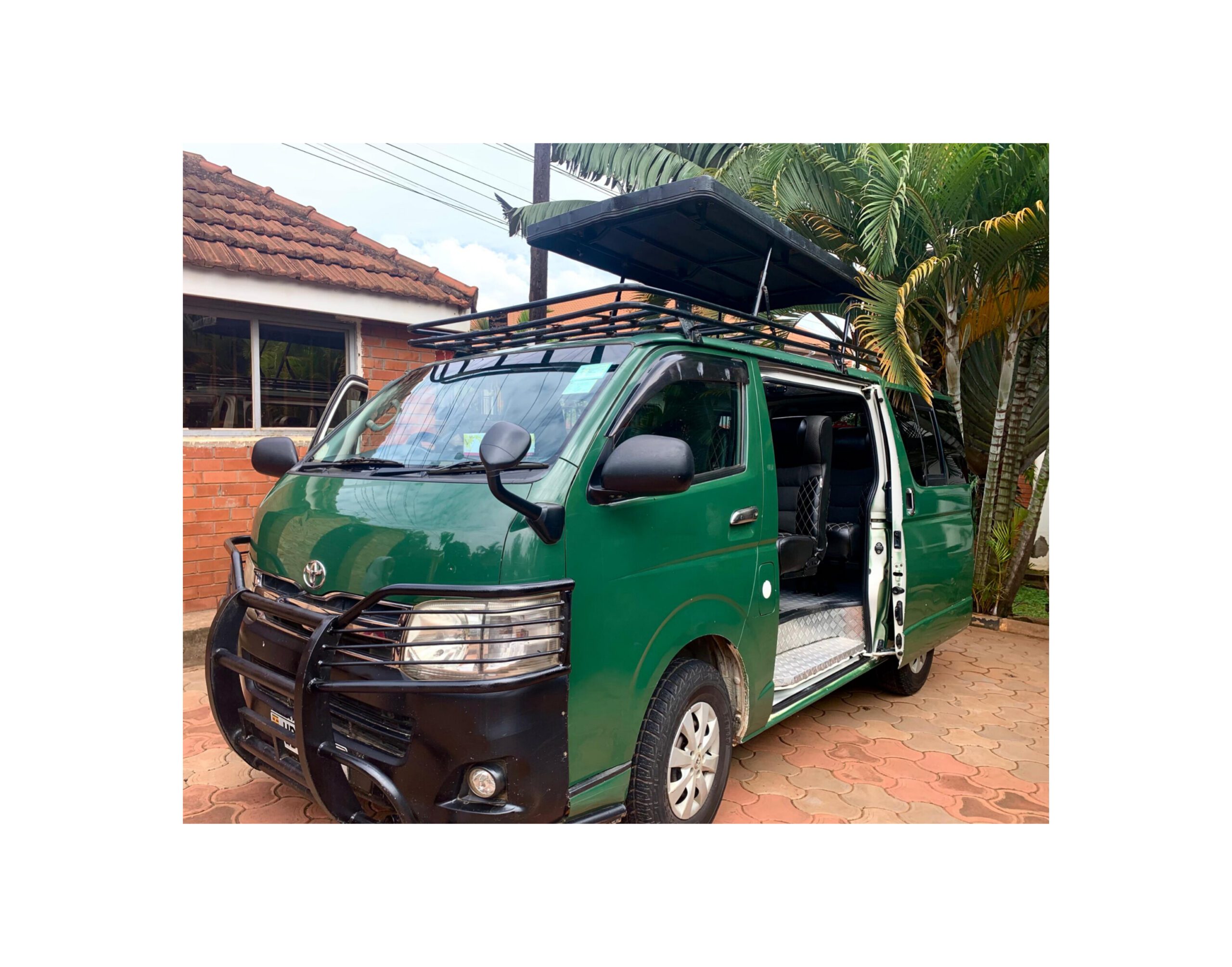
Safari Van (Customized Minivan with Pop-up Roof)
The safari van occupies a completely different niche to the 4×4 vehicles above, but it’s worth understanding because it’s widely used in Uganda — and for good reason in specific contexts.
What makes it useful:
The customized safari van (usually a Toyota HiAce or similar) fitted with a pop-up roof and individual reclining seats offers a panoramic game-viewing experience that a standard 4×4 cannot match. When the roof is open, all passengers can stand and photograph wildlife simultaneously, a significant advantage during game drives.
The trade-off:
Safari vans are built for savannah park conditions, flat, relatively stable ground. They are not suited for the steep, narrow tracks of Bwindi or the deeply rutted trails of Kidepo Valley. Their ground clearance is lower, they’re heavier, and they handle rough terrain less confidently.
Best use case: Game drives in Queen Elizabeth, Murchison Falls, and Lake Mburo National Parks; larger groups who prioritize game viewing over off-road capability
Comfort level: Excellent for game viewing, elevated, panoramic, individually configured seating
Off-road capability: Limited, adequate for established park game drive tracks in dry conditions
Fuel efficiency: Moderate
Luggage capacity: Large, the van body carries substantial luggage for 6–8 passengers
Suitability for gorilla trekking: Generally not recommended for the trailhead approach
Ideal traveler type: Larger groups, photography enthusiasts prioritizing game viewing, flat-park itineraries
Budget: Good value for groups, cost per person is lower when sharing a 6–8 seat van
Disadvantages: Limited off-road capability; not suitable for all Uganda national park access roads
Best 4×4 Safari Vehicles for Gorilla Trekking in Uganda
Gorilla trekking in Uganda centers on Bwindi Impenetrable National Park, with a secondary location at Mgahinga Gorilla National Park. Both parks share the same access challenge: the roads are steep, narrow, and heavily affected by rainfall.

For gorilla trekking vehicle Uganda requirements, here’s what matters most:
Essential specifications:
- High ground clearance (200mm minimum, 220mm+ preferred)
- True 4WD with low-range gearing (not just AWD)
- Strong diesel engine with good torque at low speed
- All-terrain or mud-terrain tyres
- Reliable braking on steep descents
Best vehicle choices for gorilla trekking:
- Toyota Land Cruiser 70 Series — first choice in any season
- Land Cruiser V8 (200 Series) — best choice for luxury travelers
- Toyota Prado — adequate in dry season; less confident in wet season
Avoid for gorilla trekking: RAV4, standard safari vans, or any vehicle without genuine 4WD low-range capability — particularly during the rainy months of March–May and October–November.
Automatic vs Manual Safari Cars in Uganda
For self drive Uganda safari travelers, this is an important practical question.
Manual transmission:
Most traditional safari Land Cruisers come in manual transmission. For experienced drivers comfortable with manual gearboxes, this is actually preferable on rough terrain — you have more direct control over engine braking on descents and can be more precise with gear selection in difficult conditions.
Automatic transmission:
Automatic safari vehicles (particularly the Land Cruiser V8 and many Prado variants) are increasingly available and popular with international travelers unfamiliar with manual driving on challenging terrain.
For Uganda off-road driving in genuinely difficult conditions, an automatic with proper 4WD modes is reliable and often easier to manage when you’re also trying to navigate, watch for wildlife, and manage unfamiliar terrain simultaneously.
Our recommendation: If you’re not experienced with manual 4WD driving in off-road conditions, choose an automatic. On steep, muddy Bwindi tracks, dealing with a manual clutch in demanding conditions adds unnecessary stress to your gorilla trekking day.
Best Vehicles for Self Drive Safari Uganda
Self-driving in Uganda is legal, feasible, and can be deeply rewarding — but it requires honest preparation. Here’s what to know:
Top picks for self drive:
- Toyota Prado (automatic) — the most manageable self-drive safari vehicle for confident but non-specialist drivers. Good balance of capability and ease of driving.
- Land Cruiser 70 Series — the most capable, but manual gearbox and heavy steering require experience. Best for drivers with genuine 4WD off-road experience.
- RAV4 — suitable for self-drive on dry-season routes with good tarmac access (like Lake Mburo or parts of Queen Elizabeth via Mbarara).
Self drive safety essentials:
- Always carry a spare tyre (two spares for very remote routes)
- Carry a high-lift jack and recovery boards
- Download offline maps (Maps.me or OsmAnd with Uganda downloaded)
- Keep fuel tanks topped up — filling stations are sparse in park zones
- Know your park entry times — most Uganda national parks close gates at dusk
- Share your itinerary with your accommodation or a trusted contact
The honest truth: For first-time Uganda visitors, gorilla trekking routes, or any rainy-season travel, a driver-guided safari is genuinely safer and more relaxing. The drivers at Feather Trail Safaris know every track, seasonal variation, and shortcut across Uganda’s parks — knowledge that simply takes years to accumulate.
What to Look for in a Uganda Safari Vehicle
Whether you’re renting independently or booking a guided safari, here’s a checklist for evaluating any safari vehicle rental Uganda option:
Mechanical requirements:
- [ ] Full 4WD system with low-range (not just AWD)
- [ ] Ground clearance of 200mm or higher
- [ ] Diesel engine (preferred for torque and fuel range)
- [ ] Maintained tyres with good tread depth
- [ ] Functioning spare tyre (check this before you leave)
- [ ] Working air conditioning
- [ ] Functional windows and window mechanisms
Documentation and safety:
- [ ] Valid vehicle insurance
- [ ] Third-party liability coverage
- [ ] Recent service records
- [ ] Emergency contact for roadside assistance
- [ ] First aid kit on board
- [ ] Fire extinguisher
Comfort for long safari days:
- [ ] Adequate legroom for your group
- [ ] Luggage space for all bags (confirm capacity honestly)
- [ ] Charging points for cameras and phones
- [ ] Cooler box or ice compartment for water
- [ ] Pop-up roof or game-viewing hatch if doing multiple game drives
Tips for Renting a 4×4 Safari Vehicle in Uganda
Renting a vehicle for a Uganda safari car hire trip requires more care than renting a city car. Here’s what experienced travelers and operators know:
1. Book early, especially for peak season
July–September (the dry season, coinciding with the Great Migration window) and December–January see high demand. Quality 4×4 vehicles, particularly Land Cruisers and Prados in good condition — book out weeks in advance.
2. Inspect the vehicle thoroughly before departure
Walk around the vehicle and document any existing damage with photos. Check the spare tyre condition, jack, and toolkit. Ensure you understand the fuel type (diesel vs petrol) before filling the tank.
3. Understand your fuel range
Most Uganda national parks do not have fuel stations inside them. Murchison Falls is a 5–6 hour drive from Kampala; fuel up before entering and again when you exit. Carry a jerry can as backup on remote routes.
4. Clarify insurance terms carefully
Understand exactly what’s covered: collision damage, theft, third-party liability, tyre damage. Murram roads are hard on tyres, know who pays if you get a sidewall puncture on a rocky track.
5. Ask about the vehicle’s recent service history
Reputable operators like Feather Trail Safaris service their fleet regularly and can show you recent maintenance records. Avoid operators who cannot or will not answer questions about vehicle maintenance.
6. Don’t underestimate transfer distances
Uganda’s parks are spread across the country. Bwindi is 8–9 hours from Kampala. Kidepo Valley is a full day’s drive in the northeast. Build realistic driving time into your itinerary and don’t plan to drive more than 5–6 hours per day on rough roads.
Common Mistakes Travelers Make When Renting Safari Vehicles in Uganda
We’ve seen these errors cost travelers time, money, and in some cases, their entire gorilla trekking permit:
Choosing a vehicle based on price alone. The cheapest safari car hire in Uganda sometimes means an unmaintained vehicle that breaks down on a remote park track. Budget appropriately for a reliable vehicle.
Booking a non-4WD vehicle for Bwindi. Bwindi’s access roads have defeated many brave drivers in RAV4s and conventional SUVs during the rainy season. If your trip includes gorilla trekking, book a genuine 4WD vehicle.
Underestimating driving time. Google Maps distances look manageable until you realize the road is unsealed, has speed bumps every 500 metres through every trading centre, and averages 40km/h. Always add 30–50% to estimated journey times.
Ignoring luggage capacity. A Land Cruiser with 6 passengers and 6 large suitcases is overloaded. Use soft-sided bags that compress and confirm luggage capacity with your rental provider upfront.
Not carrying enough water. Uganda’s heat, especially in the low-altitude parks like Murchison Falls and Queen Elizabeth, is real. Carry at least 2 litres per person per day, plus emergency reserves.
Driving in parks after dark. Most Uganda national parks have strict rules about vehicle movement after dark. Driving at night in a park is not just against the rules, it’s genuinely dangerous and disrespectful to the wildlife.
Rooftop Tents and Camping Safari Setups
For overland camping enthusiasts, Uganda offers some wonderful options, and a Land Cruiser 70 or Prado fitted with a rooftop tent is arguably the best way to experience the country’s remote corners.
Several Uganda parks have designated campsites where rooftop tent setups are permitted: Murchison Falls, Queen Elizabeth, Bwindi, and Kibale all have community or Uganda Wildlife Authority (UWA) campsites.
A rooftop tent setup requires a vehicle with a roof rack rated for the tent’s weight (typically 100–150kg loaded), and ideally a vehicle with robust suspension to handle the elevated centre of gravity on rough roads. The Land Cruiser 70 and Prado with upgraded roof racks are the standard choice.
At Feather Trail Safaris, we can advise on camping safari setups and connect you with the right equipment for your Uganda overland trip.
Why Feather Trail Safaris for Your Uganda Safari Vehicle
Choosing the right operator is as important as choosing the right vehicle. Here’s what makes Feather Trail Safaris different:
Our fleet is properly maintained. Every vehicle in our fleet is serviced on a regular schedule, not just when something breaks. Before any safari, our team conducts a full pre-departure check: tyres, fluids, brakes, spare wheel, and emergency toolkit.
We offer genuine advice, not just sales. When you tell us your itinerary and travel dates, we’ll recommend the vehicle that actually fits your needs — not the most expensive option. If a Prado serves your trip better than a Land Cruiser V8, we’ll tell you.
Our drivers know Uganda’s roads intimately. Every Feather Trail Safaris driver has years of experience on Uganda’s national park tracks across all seasons. They know which routes to take when the rains have made the usual road impassable, where the fuel stations are, and how to read a muddy track before committing to it.
24/7 on-trip support. If something goes wrong, a tyre, a breakdown, a route question, you can reach us around the clock. Our vehicles are always accompanied by emergency contact support.
Flexible options for every traveler:
- Self drive 4×4 rental with or without a driver
- Driver-guided private safari packages
- Airport pickup and drop-off
- Multi-day gorilla trekking and wildlife safari vehicles
- Group and family safari transportation
- Customized itinerary planning at no extra charge
We handle the logistics so you can focus on the experience. Uganda is extraordinary, your job is to be present for it.
Plan Your Uganda Safari With Feather Trail Safaris
You’ve done the research. You understand the roads, the vehicles, and what it takes to navigate Uganda properly. Now it’s time to make it real.
Uganda’s mountain gorillas don’t wait. The morning light on the Nile at Murchison Falls doesn’t hold. The tree-climbing lions of Ishasha are best seen in the cool of the afternoon. Every moment of a Uganda safari is specific, irreplaceable, and waiting for you.
At Feather Trail Safaris, we’ve been helping travelers experience Uganda at its finest for years. We know these roads. We know these parks. And we know exactly which vehicle will get you there safely, comfortably, and on time.
Whether you’re ready to book now or still planning, reach out to our team. We’ll talk through your itinerary, recommend the right vehicle and guide for your trip, and give you an honest quote with no hidden costs.
Your Uganda safari starts with the right vehicle. Let us help you choose it.
WhatsApp: +256 757 622 988 Email: info@feathertrailsafaris.travel Website: feathertrailsafaris.travel
Frequently Asked Questions (FAQ)
What is the best 4×4 vehicle for Uganda safari roads? The Toyota Land Cruiser 70 Series is widely considered the best safari vehicle for Uganda roads due to its exceptional ground clearance, robust 4WD system, and proven performance on both murram tracks and steep park roads in all weather conditions. For luxury travelers, the Land Cruiser V8 (200 Series) adds significant comfort while maintaining the same off-road capability.
Can I use a RAV4 for a Uganda safari? A RAV4 can be used for Uganda safaris in dry season on routes with good road access, such as Lake Mburo National Park. However, it is not recommended for gorilla trekking in Bwindi (especially in rainy season), remote parks, or any route with steep or deeply rutted murram tracks. For most Uganda national park visits, a true 4WD vehicle with high ground clearance is strongly recommended.
Is it safe to self drive in Uganda? Self-driving in Uganda is legal and possible for experienced drivers with a genuine 4WD vehicle. However, Uganda’s roads require confidence, especially on unpaved park access roads. For first-time visitors, gorilla trekking routes, or rainy-season travel, a driver-guided safari is safer and often more enjoyable. Feather Trail Safaris offers both self drive and driver-guided options.
What is the difference between 4WD and AWD for Uganda safari? 4WD (four-wheel drive) with a low-range gearbox is designed for serious off-road conditions — it provides much greater torque and control on steep, slippery, or deeply rutted tracks. AWD (all-wheel drive) distributes power automatically but lacks the low-range gearing needed for genuine off-road performance. For Uganda national park roads, especially in wet conditions, a true 4WD vehicle is strongly preferred.
How much does it cost to rent a safari vehicle in Uganda? Safari vehicle rental Uganda costs vary by vehicle type, duration, and whether a driver is included. A Toyota RAV4 self drive starts around USD 80–100 per day. A Toyota Prado runs USD 120–180 per day. A Land Cruiser 70 Series runs USD 150–200 per day. A Land Cruiser V8 starts around USD 200–250 per day. Driver-guided vehicles typically include the driver’s fees, fuel, and sometimes park entry. Contact Feather Trail Safaris for current, customized pricing.
Do I need a 4×4 for gorilla trekking in Uganda? Yes. The access roads to both Bwindi Impenetrable National Park and Mgahinga Gorilla National Park are steep, narrow, and significantly affected by rainfall. A high-clearance, genuine 4WD vehicle is essential for gorilla trekking in Uganda, particularly between March–May and October–November. Feather Trail Safaris provides properly equipped gorilla trekking vehicles for all seasons.
Where can I rent a 4×4 safari vehicle in Uganda? You can rent a 4×4 safari vehicle in Uganda through specialized safari operators like Feather Trail Safaris, who maintain a professional fleet of safari-ready vehicles with insurance, roadside assistance, and optional driver-guide services. Airport pickup from Entebbe International Airport is available, and vehicles can be returned at the end of your safari.
What tyres are best for Uganda safari roads? All-terrain (AT) tyres are the recommended standard for Uganda safari vehicles. They provide better traction on murram roads and wet grass while remaining manageable on tarmac. Mud-terrain (MT) tyres are sometimes used for very remote or wet-season heavy-duty routes, but they wear faster on tarmac and can be noisier on highway sections.
Talk to Safari Expert
© Feather Trail Safaris, Uganda Safari Specialists | feathertrailsafaris.travel Written by the Feather Trail Safaris team, safari operators with on-the-ground Uganda experience.