
Kibira Forest Chimpanzee Population: What Scientists Discovered
The research team left camp before 4am. There were four of them, a field biologist from the University of Burundi, a ranger who had worked in Kibira for twelve years, a data recorder, and a visiting PhD student from Belgium who had arrived two weeks earlier and was still adjusting to the altitude, the mud, and the particular darkness of a montane rainforest before dawn. They moved quickly along a path the ranger knew by feel as much as by sight, following the GPS coordinates that marked the community’s last known sleeping site.
By the time the forest began to pale with the first suggestion of light, they were in position: upwind, quiet, settled behind a screen of vegetation 30 metres from the base of the sleeping trees. Within minutes, the first stirring sounds came from above. A low hoot. A rustle of branches. Then, emerging from the canopy with the unhurried confidence of a 60-kilogram animal with no natural predators, the alpha male descended to the forest floor and looked around in the early morning light.
The data recorder clicked the identifier code. The field biologist noted the time: 5:47am.
Another morning in the field. Another data point in the scientific portrait of the Kibira Forest chimpanzee population, a portrait that is slowly revealing something extraordinary about one of Africa’s most important and least studied great ape populations.
Why Scientists Are Studying Kibira Forest Chimpanzees
The obvious question is: why Kibira, and why now?
The answer is partly scientific and partly urgent.
Scientifically, Kibira is interesting for reasons that go beyond the simple presence of chimpanzees. The forest sits at the junction of two of Africa’s most biogeographically significant zones, the Albertine Rift mountains and the Congo basin, and the chimpanzee population here has evolved in isolation long enough to potentially show behavioural and genetic characteristics that differ from better-studied populations elsewhere. Understanding Kibira’s chimpanzees adds a data point to the broader picture of Eastern chimpanzee ecology that the research community genuinely lacks.
Practically, the urgency is conservation. Burundi has experienced significant forest loss over the past several decades, and the chimpanzee population, though still present in meaningful numbers, has never been rigorously counted, never had its health and demographics systematically assessed, and never been monitored long-term in the way that populations at Gombe (Tanzania), Kibale (Uganda), or Bossou (Guinea) have been.
Without baseline data, you cannot detect decline. Without detecting decline, you cannot respond to it. The scientific work being done in Kibira right now is, in a very direct sense, the foundation on which any meaningful conservation response must be built.
Kibira Forest Chimpanzee Population: What Scientists Discovered
The research findings emerging from Kibira National Park over the past decade represent the most detailed scientific portrait of Burundi’s chimpanzees ever assembled. They are, simultaneously, encouraging and sobering, which is perhaps the most honest description of what field conservation science usually finds when it looks carefully at a wildlife population under pressure.
Here is what the science currently tells us.
Population Size and Distribution
The Kibira Forest chimpanzee population is estimated at several hundred individuals, the most commonly cited range is 250 to 500 individuals within the park’s boundaries, though the methodological challenges of counting chimpanzees in dense montane forest make precise figures difficult. Surveys using nest counts (estimating population size from the density of sleeping nests, a standard methodology in great ape research), acoustic monitoring, and camera trap data are ongoing and progressively refining these estimates.
What the spatial data clearly shows is that the chimpanzee population in Kibira is not evenly distributed across the park. Density is highest in the central and northern sections of the park, where primary forest is most intact and fruit tree density is greatest. The park’s southern and eastern margins, where human activity and agricultural encroachment are most pronounced, support significantly lower chimpanzee density and show evidence of avoidance behavior: animals ranging away from areas of human disturbance even when suitable food sources are present.
Community Structure and Size
Several distinct chimpanzee communities have been identified within Kibira, each with defined home ranges that do not significantly overlap. Community sizes range from approximately 20 to 50+ individuals in monitored groups, with the typical community structure of a single alpha male, multiple adult males in ranked hierarchy, adult females with dependent offspring, and juveniles and infants at various stages of development.
Critically, some communities extend their ranging across the international boundary into Rwanda’s Nyungwe Forest National Park, a finding with significant implications for cross-border conservation planning. Animals that spend time in both parks are subject to different management regimes, different levels of protection, and different human pressure dynamics. Coordinating conservation across the border is not merely desirable; for these communities, it is essential.
Latest Findings About Chimpanzee Numbers and Distribution
Genetic Connectivity
One of the most scientifically significant findings from recent research in Kibira concerns the genetic connectivity of the chimpanzee population, specifically, the degree to which individuals from different parts of the park, and from the cross-border area with Nyungwe, are exchanging genes through dispersal.
Young male chimpanzees, which are the typical dispersers (females in many populations tend to stay close to their natal community), are sometimes found ranging widely across the landscape, potentially moving between communities in different sections of the park or even between Kibira and Nyungwe. This dispersal is essential for maintaining genetic health, preventing the inbreeding that would result from entirely isolated communities, and its existence suggests that the Kibira-Nyungwe forest block still functions, at least partially, as a connected population.
However, the research also found evidence that dispersal is being inhibited in sections of the landscape where forest has been cleared or degraded. In areas where the forest corridor between habitat patches has been broken by agriculture, genetic differentiation between communities is higher, a signal that individuals are not crossing these gaps and that the population is beginning to fragment. This finding has direct conservation implications: the maintenance and restoration of forest corridors is not a theoretical priority but a demonstrated necessity for the long-term genetic health of Kibira’s chimpanzees.
Behavioural Repertoire and Cultural Traditions
Comparative behavioral research, comparing the specific behaviors observed in Kibira communities with those documented at other Eastern chimpanzee field sites, has revealed both expected similarities and intriguing local differences.
Tool-use behaviors documented in Kibira include stick use for insect extraction and leaf-sponge use for water collection, both widespread behaviours found across Eastern chimpanzee populations. More locally distinctive is the use of specific moss and lichen species as bedding material in sleeping nests, a behaviour not widely reported from other populations and potentially representing a local cultural tradition transmitted within communities.
Hunting behavior in Kibira’s communities follows the general Eastern chimpanzee pattern. Cooperative male hunts target red colobus monkeys. However, the frequency and success rate of hunts varies significantly between communities. These variations appear linked to the relative abundance of colobus in different sections of the park.
Infant Survival and Population Growth Rate
Perhaps the most important conservation metric tracked by the Kibira research team is infant survival, the proportion of chimpanzee infants born in monitored communities that survive to independence. This figure, more than any other, determines whether a population is stable, growing, or declining.
Preliminary findings suggest that infant survival in Kibira’s core habituated communities is broadly comparable to healthy populations at established field sites, a cautiously positive finding suggesting that the animals in the park’s better-protected areas are reproducing and raising young successfully. However, communities in more disturbed habitat areas show noticeably lower infant survival, correlated with higher rates of respiratory illness (likely from proximity to human settlements), higher stress indicators (measured through non-invasive fecal hormone analysis), and reduced food security during dry-season periods when agricultural areas that previously served as food supplementation are not accessible.
What These Discoveries Mean for Conservation
The scientific findings from Kibira are not simply academic, they have direct and specific implications for how the chimpanzee population should be managed and protected.
Forest corridor maintenance is critical. The genetic data showing inhibited dispersal across degraded areas is the strongest possible scientific argument for prioritising the protection and restoration of forest corridors connecting Kibira’s core zones and linking the park to Nyungwe. Conservation investments in these connecting areas are not peripheral but central.
Community-level monitoring must continue. The variation in infant survival and health indicators between communities in different habitat conditions. They shows that park-level statistics can mask significant internal variation. Monitoring that tracks individual communities, their membership. The health, their reproductive success, is essential for detecting problems early and responding before they cascade.
Cross-border coordination is not optional. The finding that some communities range across the Rwanda-Burundi border makes binational conservation planning a scientific necessity, not just a diplomatic nicety. Coordinated permit systems, shared ranger communication, and joint anti-poaching operations in the border area are all recommended by the research.
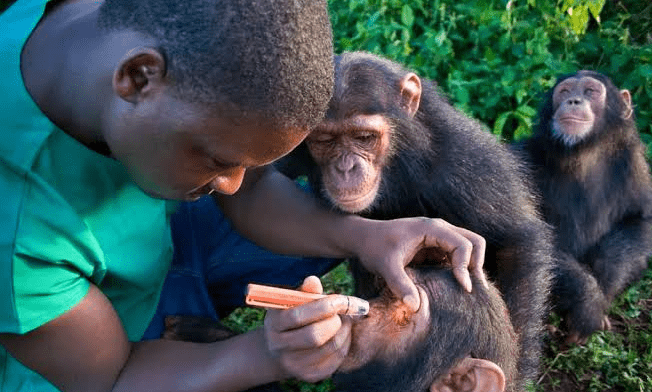
Tourism habituated communities need ongoing health monitoring. Disease transmission from tourism remains manageable with proper protocols. However, the risk is real and requires continuous veterinary monitoring. Moreover, veterinarians closely monitor habituated chimpanzees for respiratory illnesses. Consequently, early detection and treatment have saved lives at other great ape research sites. Kibira needs the infrastructure to do the same.
How Researchers Monitor Chimpanzees in Kibira Forest
The methods used to study and monitor the Kibira Forest chimpanzee population are a combination of established field primatology techniques and newer technologies increasingly available for remote forest research.
Daily Focal Follows
Trained observers conduct daily focal follows for habituated communities. They select a specific individual for tracking. They record everything that individual does, eats, and interacts with over a defined period. Accumulated across months and years, these focal follows build a detailed portrait of each individual. Through them, researchers understand the community as a whole.
Nest Count Surveys
For unhabituated populations in areas of the park without regular human presence, nest count surveys provide population density estimates. Chimpanzees build fresh sleeping nests every night, and the density of fresh and old nests in a given area, combined with estimates of nest decay rates, allows calculation of approximate chimp density. Teams of rangers and researchers conduct systematic transect walks through the park, recording nests at defined intervals.
Acoustic Monitoring
Passive acoustic monitoring, the placement of recording devices in the forest to capture the long-distance pant-hoot calls that chimpanzees use to communicate across their home range, allows researchers to detect presence and estimate density in areas too remote or inaccessible for regular human surveys. Analysis of recordings can also, with sufficient data, identify individual chimpanzees by their distinctive vocalization patterns.
Camera Traps
A network of camera traps deployed across the park records images and video of passing animals, providing data on species presence, individual identification (for animals with distinctive features), and activity patterns. Camera trap data has been particularly valuable for documenting the ranging behavior of communities in the park’s less-visited sections.
Non-Invasive Genetic and Hormonal Sampling
lt Fecal samples,collected from the forest floor by trained rangers and preserved for laboratory analysis. Provide genetic material for population structure and connectivity studies, and hormonal data for health and stress assessment. This non-invasive approach allows detailed individual-level data collection without any direct interference with the animals.
Challenges Facing the Kibira Chimpanzee Population
The research picture is not one-dimensional. Alongside the cautiously positive findings about core population health. The science reveals a set of challenges that are serious and, in some cases, worsening.
Agricultural encroachment: The forest edge around Kibira continues to face pressure. Satellite imagery analysis shows that the park boundary is holding, but the buffer zone, the unprotected secondary forest between the park’s legal edge and the agricultural frontier, is contracting. As this buffer shrinks, the park becomes more isolated, and the risks of human-wildlife conflict along its edge increase.
Snaring: Wire snares set for bushmeat species remain the most consistently documented direct threat to individual chimpanzees in Kibira. The ranger patrol system removes significant numbers of snares from the park annually. The rate of new snare placement has not significantly declined. Injured animals, those with snare wounds to hands, feet, or ankles.These are present in several monitored communities and represent both a welfare concern and, for severely injured individuals, a survival risk.
Climate variability: Changing rainfall patterns in the Albertine Rift are affecting the phenology of fruit production in Kibira. This shifts the timing and duration of fruiting seasons in ways that may not align with the foraging strategies that communities have developed over generations. The research team is tracking these shifts. Though the long-term implications for food security and community health are not yet clear. Research capacity: The most fundamental challenge facing Kibira’s scientific programme is funding and personnel. The research team is small, the equipment is often limited. Plus the international conservation funding that has transformed the research capacity of field sites in Uganda. Rwanda, and Tanzania has been slower to reach Burundi. Expanding the research programme, more community monitoring, broader genetic sampling, more comprehensive camera trap coverage, requires resources that the current programme does not consistently have.
The Role of Tourism in Chimpanzee Protection
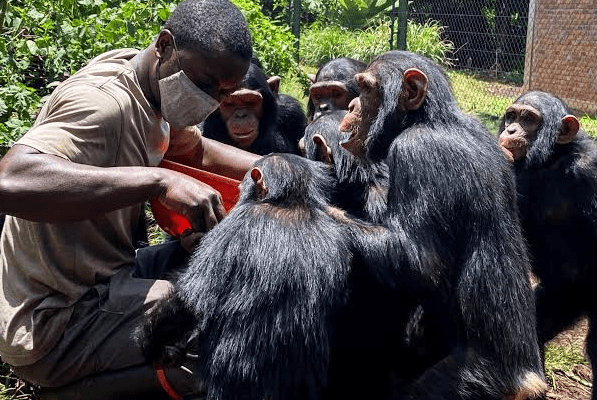
Every trekking permit for a habituated chimpanzee community in Kibira contributes to the scientific monitoring programme protecting those communities. The same ranger team leads tourism treks. It also conducts daily monitoring of habituated individuals. They record identity, health observations, and behavioral notes for the broader research database. The tracking skills that bring tourists to chimpanzees also allow researchers to locate study animals efficiently and consistently.
Tourism revenue funds ranger salaries, equipment, and community employment programmes. Consequently, these programmes reduce poaching incentives in surrounding villages. Moreover, the connection between a tourist’s permit fee and a removed forest snare remains indirect but real. In addition, research teams track snare removal rates. They then compare them with patrol efforts funded by tourism revenue. Therefore, they demonstrate this connection rather than merely assume it.
For the researchers in Kibira, tourism is not a distraction from science. It is part of the conservation system that makes the science possible in the first place.
Frequently Asked Questions
How many chimpanzees are in Kibira Forest?
Current estimates based on nest count surveys and focal follows of habituated communities suggest 250 to 500 individuals within the park. The additional numbers in the surrounding forest areas and the cross-border Nyungwe region. Ongoing research is progressively refining this estimate.
Are Kibira’s chimpanzees genetically different from those in other countries?
They are the same subspecies, Eastern chimpanzee (Pan troglodytes schweinfurthii), as populations in Uganda, Rwanda, Tanzania, and the DRC. Genetic analysis shows they are connected to the wider regional population through dispersal. Though isolation effects are beginning to appear in communities in degraded habitat areas.
Have scientists found any unique behaviours in Kibira chimpanzees?
Some locally distinctive behaviours have been documented, including specific nest material preferences. This may represent cultural traditions unique to Kibira’s communities. Research into the full behavioural repertoire is ongoing.
Can tourists contribute to the scientific research?
Indirectly, yes, through permit fees that fund the monitoring programme. Some operators offer citizen science-integrated trekking experiences where visitor observations are recorded as supplementary data. Ask your operator whether this option is available.
Is the chimpanzee population in Kibira growing or declining?
The honest answer is that the data is not yet comprehensive enough to provide a definitive trend assessment. Core habituated communities in the park’s best-protected areas appear stable or growing slightly. Communities in more disturbed areas show concerning indicators. The research programme is designed to provide clearer trend data over the next 5 to 10 years.
Final Thoughts on Kibira Forest Chimpanzee Population
The data recorder clicked the identifier code at 5:47am. It clicked again at 5:49am, and 5:52am, and every few minutes after that through the rest of the morning. The community came alive in the trees above, twenty-three individuals accounted for by 7am, a good start to the daily census.
What the Kibira Forest chimpanzee population scientists discovered is not a simple story. It is not a story of crisis because the core population appears resilient and the conservation infrastructure is working. On the other hand, a story of easy triumph, because the threats are real and some of them are worsening.
A small team of scientists, rangers, and community members sustains this population and forest. They decided these animals are worth the effort.
The research matters because these decisions require evidence. They involve resource choices, priorities, and interventions.
The tourism matters because it generates revenue. This revenue funds the research and protection. And the travelers who come to Kibira.
Stand quietly at the base of a sleeping tree at dawn, and watch a chimpanzee descend into the morning light. They are part of the system too. Come be part of it.
Interested in experiencing Kibira’s chimpanzees for yourself, and contributing to the conservation that protects them?
Plan your Kibira chimpanzee trek with Feather Trail Safaris. Expert-guided, permit-included experiences in one of Africa’s most important and under visited great ape habitats.