
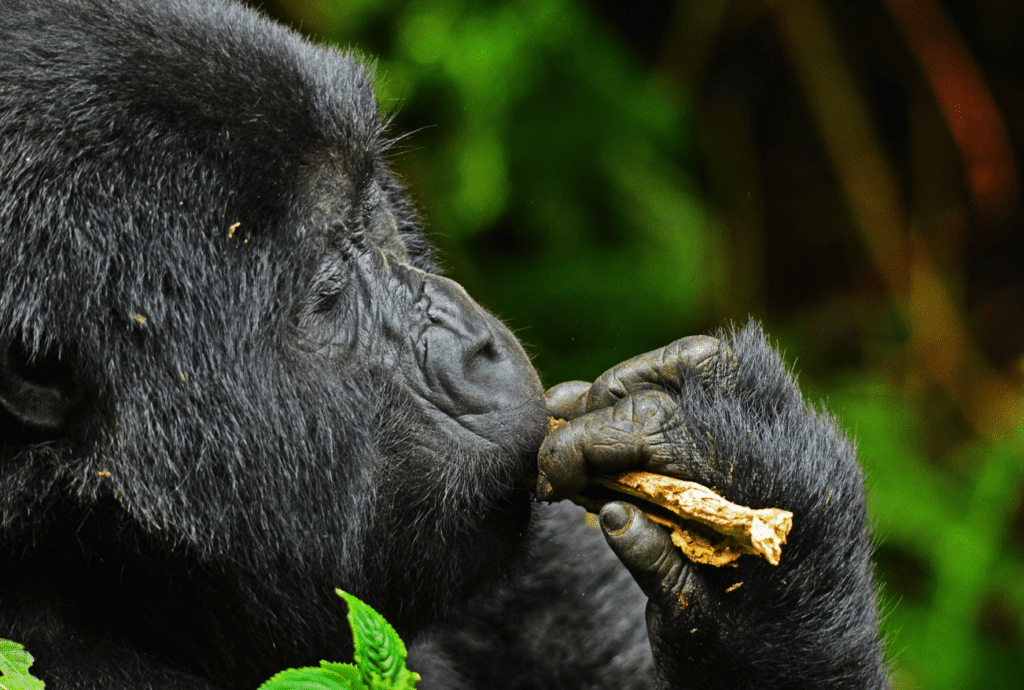
Is Gorilla Trekking Difficult? Complete Guide for First-Time Travelers
Gorilla trekking is extensively considered one of the most extraordinary wildlife gests in the world. Every time, trippers
from across the globe trip to Uganda, Rwanda, and the Democratic Republic of Congo with a single thing in mind, to stand face to face with the risked mountain hoods in their natural niche.
still, before making that trip, one question constantly comes up among nearly every rubberneck
Is gorilla trekking difficult?
This question is important because goon trekking is not a typical sightseer exertion. It is not a simple game drive where you sit in a vehicle and observe wildlife from a distance. rather, it involves hiking through thick tropical timbers, climbing steep pitches, and navigating changeable terrain in hunt of a goon family that lives fully free in the wild.
The honest answer is that goon trekking can be physically demanding, but it is not extreme or reserved only for largely athletic individualities. In fact, thousands of people of different periods, fitness situations, and backgrounds complete it successfully every time.
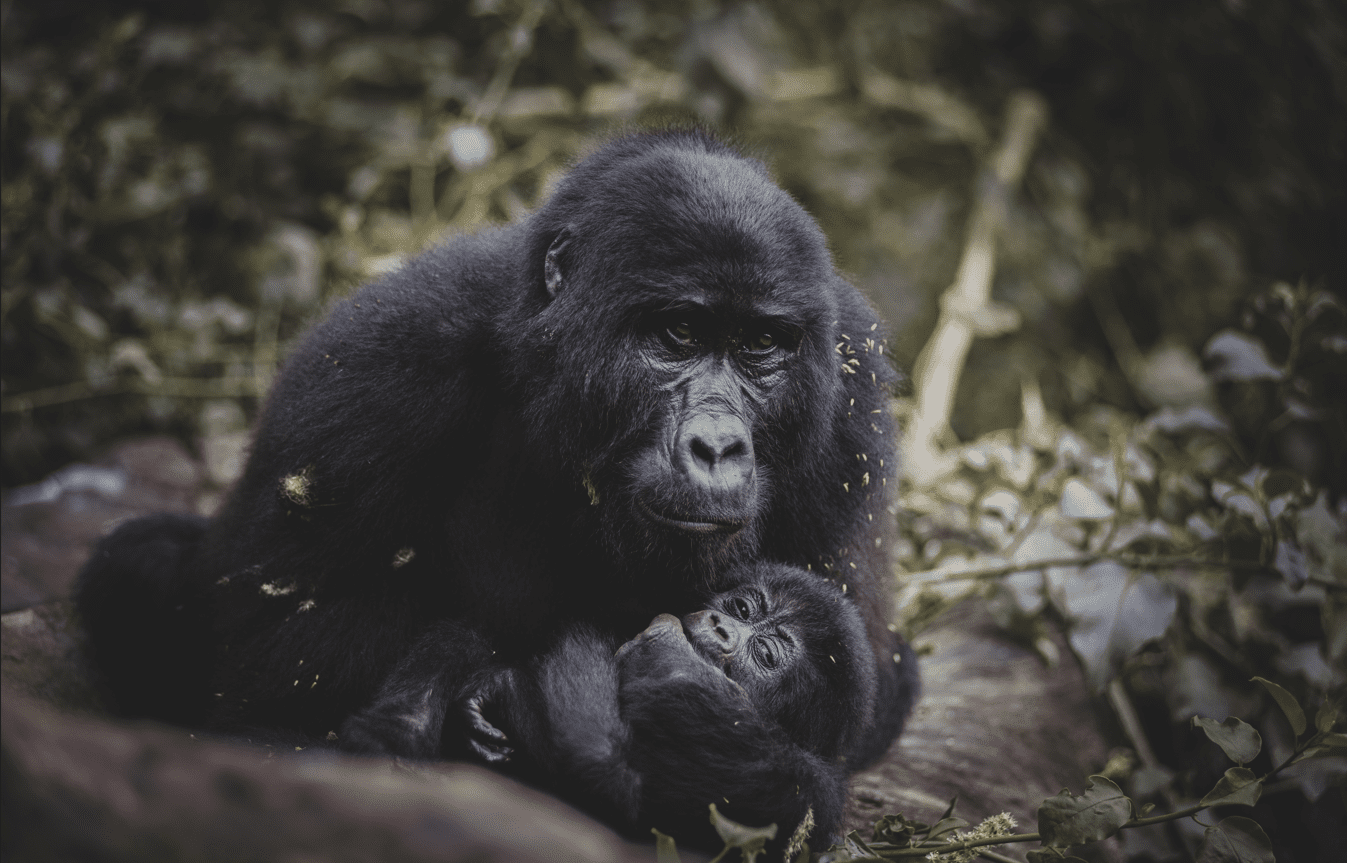
This companion provides a deeply detailed explanation of what makes goon touring grueling , how delicate it really is, who can do it, what to anticipate, and how to prepare duly so that the experience becomes pleasurable rather than inviting.
Understanding What Gorilla Trekking Actually Involves
Before agitating difficulty, it’s essential to understand what goon touring truly means.
Gorilla touring is the process of hiking into a defended rainforest under the guidance of educated demesne rangers and trackers in order to detect a accustomed family of mountain hoods. These hoods live freely in the wild and are not confined to any fixed position, which means they move naturally across different corridor of the timber every day.
This alone formerly explains why goon trekking can not be compared to a typical walking stint. Unlike standard hiking trails that are easily marked and maintained, goon touring takes place in surroundings that are
thick and heavily forested
frequently steep and mountainous
Naturally changeable
Covered with foliage, vines, and undergrowth
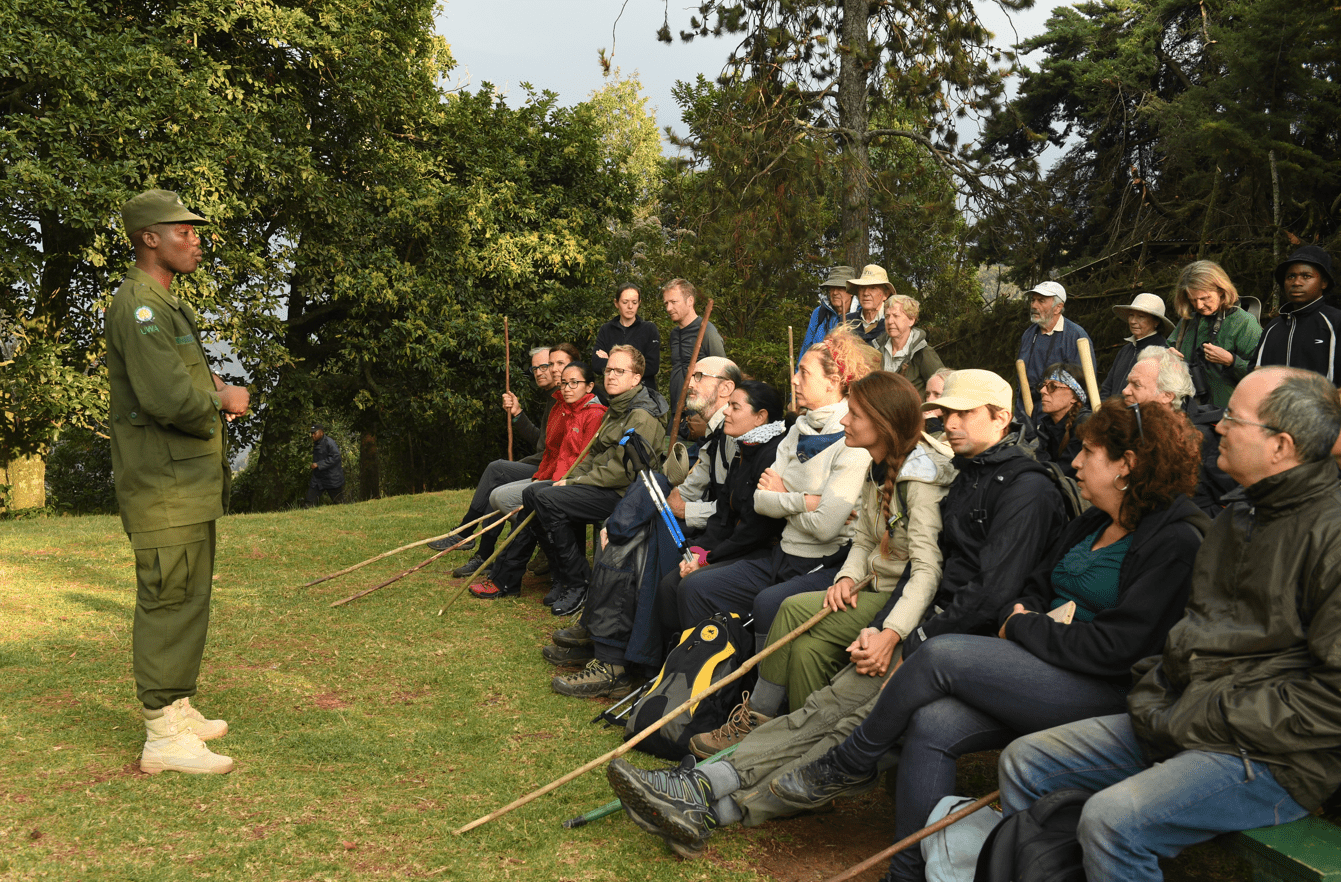
The experience begins beforehand in the morning at demesne headquarters, where callers are briefed and assigned to different goon families grounded on fitness situations and group allocation. From there, each group is guided into the timber by fortified rangers and trackers who formerly have information about where the hoods were last seen.
The trekking begins with expectation but also query because no bone
can guarantee how long it’ll take to find the hoods. The duration of the journey depends entirely on the movement of the goon family assigned to that group on that particular day.
Why Gorilla Trekking Is Considered Physically Challenging
The difficulty of gorilla trekking is not caused by a single factor. Instead, it is a combination of several environmental, physical, and logistical conditions that together make the experience more demanding than most traditional hikes.
Let us explore these factors in detail.
1. The Nature of the Forest Terrain
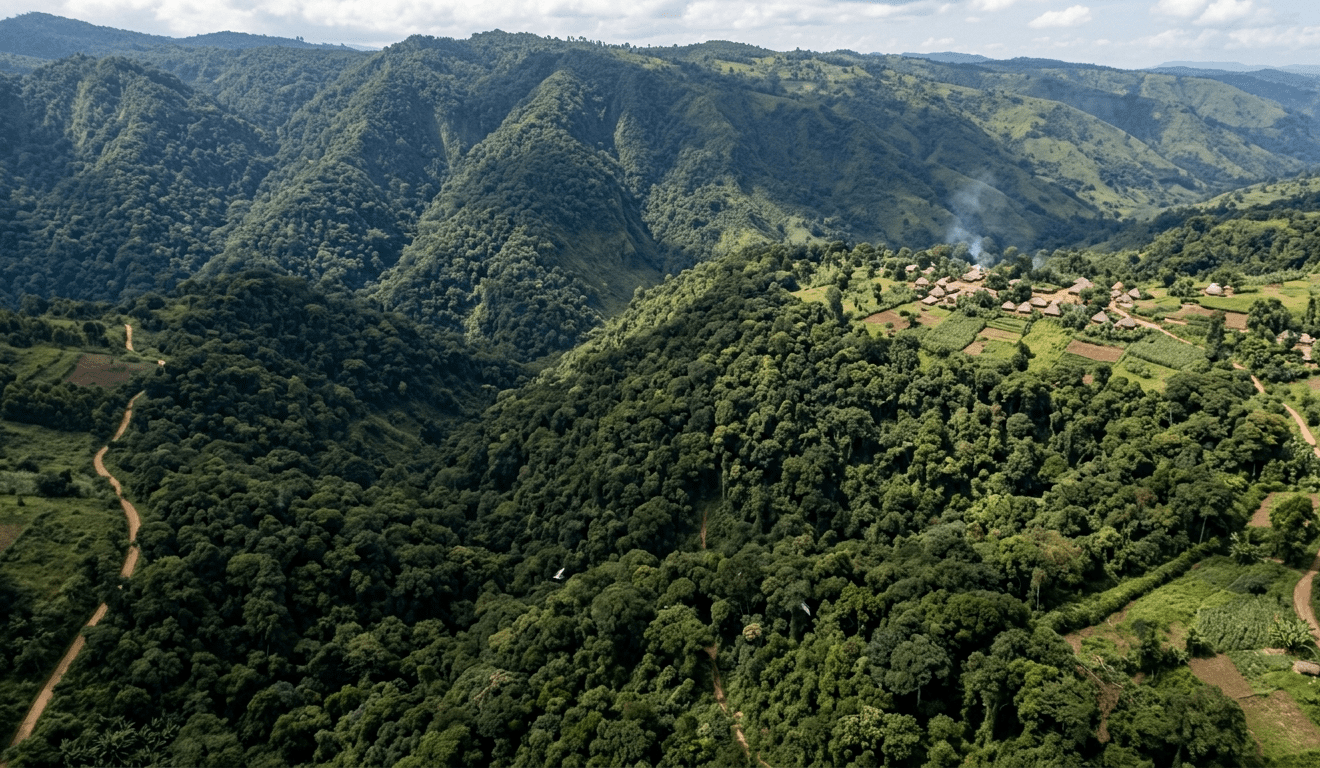
One of the biggest contributors to the difficulty of gorilla trekking is the natural terrain of the rainforest itself. Gorilla habitats such as Bwindi Impenetrable National Park and Volcanoes National Park are not flat, open spaces. Instead, they are dense, wild ecosystems that have developed naturally over thousands of years.
The word “impenetrable” in Bwindi is not just symbolic, it is descriptive. The forest is thick with vegetation, tangled vines, shrubs, and towering trees that create a layered environment where visibility and movement are naturally restricted.
Walking through such terrain requires constant attention to footing, balance, and direction. The paths are not paved, and in many cases, there is no clear path at all. Instead, visitors follow narrow trails created by wildlife or previous trekking groups.
The ground itself is often uneven, with roots, rocks, and mud forming part of the walking surface. This makes movement slower and more physically engaging than walking on normal hiking trails.
2. Steep and Mountainous Landscapes
Another important factor that increases the difficulty of gorilla trekking is elevation.
Most gorilla habitats are located in mountainous regions, often on the slopes of volcanic ranges or high-altitude forests. For example, Bwindi Impenetrable Forest is characterized by steep ridges and deep valleys, meaning trekkers frequently ascend and descend repeatedly during a single hike.
This constant change in elevation requires sustained physical effort. Even if the distance covered is not extremely long, the vertical movement significantly increases fatigue levels. Climbing uphill requires strength and endurance, while descending steep slopes demands balance and control.
Unlike regular hiking trails that may have gradual inclines, gorilla trekking often involves unpredictable and sometimes sudden changes in gradient.
3. Unpredictable Trek Duration
One of the most unique aspects of gorilla trekking is that the duration of the hike is completely unpredictable.
Some trekkers may locate gorillas within one hour of entering the forest. Others may walk for several hours before reaching the assigned group. In some rare cases, the trek may take an entire day depending on the movement of the gorillas.
This unpredictability is not due to poor planning but rather the natural behavior of gorillas. These animals move freely in search of food, shelter, and social interaction. Because they are not confined, their location changes daily.
This means that visitors must be prepared for both short and long hikes, regardless of their expectations.
The uncertainty itself adds to the physical and mental challenge of the experience because it requires endurance, patience, and adaptability.
4. Weather Conditions in Tropical Rainforests
Rainforests are naturally humid and wet environments. As a result, weather plays a significant role in the difficulty of gorilla trekking.
Even during dry seasons, rain can occur unexpectedly. During wet seasons, rainfall becomes more frequent and intense.
Rain affects the trekking experience in several ways:
- Trails become slippery and muddy
- Vegetation becomes heavier and more difficult to move through
- Footing becomes less stable
- Clothing and gear may become wet and heavy
Walking in such conditions requires extra caution and slower movement, which increases physical exertion.
However, rain also contributes to the beauty of the forest, keeping it lush, green, and vibrant.
5. High Altitude and Oxygen Levels
Gorilla trekking often takes place at high elevations ranging from approximately 1,100 meters to over 2,500 meters above sea level in some regions.
At higher altitudes, oxygen levels are slightly lower than at sea level. While this does not affect everyone equally, some travelers may experience:
- Slight shortness of breath
- Increased fatigue
- Reduced stamina during physical activity
These effects are usually mild but can make trekking feel more physically demanding, especially when combined with steep terrain and humidity.
6. Physical Exertion and Endurance Requirements
Although gorilla trekking is not a technical sport, it does require a reasonable level of physical endurance.
Participants are expected to walk continuously for extended periods, sometimes over uneven and challenging terrain. This includes climbing, descending, balancing, and navigating through vegetation.
However, it is important to emphasize that gorilla trekking is not a race. The pace is always adjusted by park rangers based on the group’s overall ability.
Frequent rest breaks are allowed, and trekkers are encouraged to move steadily rather than quickly.
Who Finds Gorilla Trekking More Challenging?

While goon trekking is accessible to numerous people, certain groups may find it more physically demanding.
These include
individualities with low physical fitness situations trippers who are not oriented to hiking
People with mobility limitations
Those touring during stormy seasons
Callers assigned to more distant goon families
still, indeed in these cases, touring remains possible with proper medication and support.
The part of Attendants, Rangers, and janitors in Reducing Difficulty
One of the most important aspects of goon trekking is the support system handed by trained professionals.
Park rangers and attendants play a pivotal part in icing that the experience is safe and manageable.
Attendants are responsible for
Leading the group safely through the timber
Choosing the most applicable routes
Monitoring the pace of the group
furnishing information about wildlife and foliage
Trackers, who frequently go ahead of the group, detect goon families beforehand in the day and communicate their position. This significantly reduces query during the journey.
janitors also play an essential part. They help by carrying packs, furnishing physical support on steep sections, and helping pedestrians navigate delicate terrain. Hiring a gatekeeper not only reduces physical strain but also contributes to original community livelihoods.
How to Make Gorilla Trekking Easier
There are several practical ways to reduce the difficulty of goon trekking.
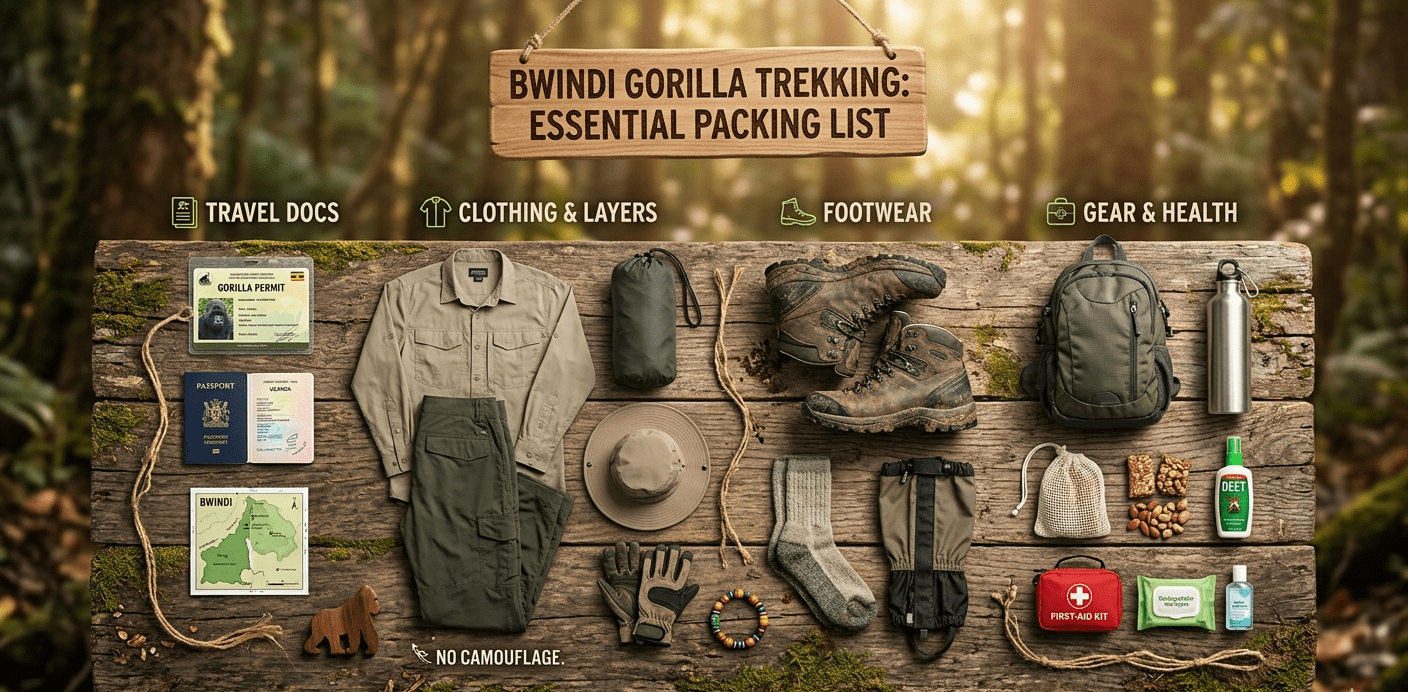
Proper medication is one of the most important factors.
Wearing applicable hiking thrills is essential, as they give grip and stability on slippery shells. Clothing should be featherlight but defensive, including long sleeves and trousers to guard against foliage and insects.
Hydration is also important, as trekking can be physically demanding over long ages. Carrying enough water and light snacks helps maintain energy situations.
Maintaining a steady pace rather than rushing is another crucial factor. Trekking is n’t a competition, and conserving energy ensures a more comfortable experience.
Hiring a gatekeeper is largely recommended for all trippers
, anyhow of fitness position.
Choosing the right season can also impact difficulty. Dry seasons generally offer more stable and manageable conditions, while stormy seasons increase the challenge but reduce sightseer crowds.
The Emotional price After the Trek
Despite the physical trouble involved, the price of goon trekking is extraordinary.
After hours of hiking, callers eventually encounter a goon family in the wild. This moment is frequently described as deeply emotional, humbling, and indelible.
Spending one hour observing hoods in their natural terrain allows trippers
to witness actions similar as feeding, fixing, playing, and minding for youthful bones
. This close hassle creates a important connection between humans and wildlife.
For utmost trippers
, the difficulty of the journey fades snappily once the hoods are seen.
Is Gorilla Trekking Worth the Effort?
Without vacillation, the answer is yes.
Gorilla touring is n’t only a physical trip but also a conservation experience. The freights paid for permits contribute directly to guarding risked mountain hoods and supporting original communities.
The experience is rare, regulated, and precisely managed, making it one of the most exclusive wildlife encounters in the world.
Lastly Is Gorilla touring delicate?
Gorilla touring is relatively delicate, but not beyond the reach of utmost trippers.
It requires
introductory physical fitness
amenability to hike for several hours
Mental medication for changeable conditions
still, it does not bear athletic capability or advanced hiking chops.
With proper medication and guidance, goon touring becomes not only manageable but deeply satisfying.
Gorilla touring is a trip that challenges the body but transforms the mind. While the terrain, rainfall, and duration may present difficulties, the experience itself is one of the most meaningful wildlife encounters on Earth.
For numerous trekkers, the trouble needed is not flashed back as difficulty, but as part of what makes the experience indelible.
Book With Us!