
Serengeti National Park: In-Depth Guide to Africa’s Most Iconic Wilderness
Few places on Earth stir the imagination quite like Serengeti National Park. Synonymous with vast open plains, dramatic wildlife encounters, and the timeless rhythm of nature, the Serengeti stands as one of Africa’s most celebrated safari destinations—and for good reason. It is a land where nature unfolds on a scale so immense and unfiltered that it leaves even the most seasoned traveler humbled.
For travelers seeking a truly immersive African safari, the Serengeti offers far more than just game viewing. It presents a living ecosystem where predator and prey interact in raw, unscripted ways, where landscapes shift with the seasons, and where every sunrise reveals a new story across the savannah. This detailed guide explores every aspect of the Serengeti—from its geography and wildlife to safari experiences, travel logistics, conservation challenges, and why it continues to captivate the world.
1. Introduction: What Makes the Serengeti So Special?
The Serengeti is not just a national park; it is a globally significant ecosystem that stretches across northern Tanzania and into southwestern Kenya, where it connects seamlessly with the Maasai Mara National Reserve. Covering approximately 14,750 square kilometers, the park forms the core of the larger Serengeti ecosystem, which includes conservation areas, game reserves, and community lands.
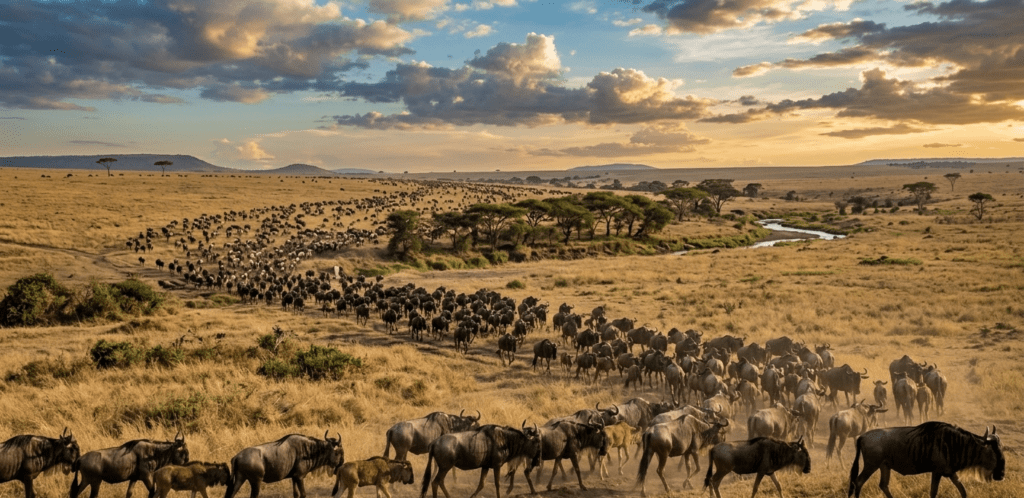
The name “Serengeti” originates from the Maasai word Siringet, meaning “endless plains.” This name perfectly captures the park’s defining feature—vast grasslands that appear to stretch infinitely into the horizon. These plains, dotted with acacia trees and rocky outcrops known as kopjes, create one of the most recognizable landscapes in the world.
What truly sets the Serengeti apart is its extraordinary biodiversity and the presence of the Great Migration, often described as the greatest wildlife spectacle on Earth. Every year, millions of animals move across the ecosystem in search of food and water, creating a natural phenomenon unmatched anywhere else.
2. Historical Background and Cultural Significance
Long before it became a national park, the Serengeti was home to the Maasai people, a semi-nomadic pastoralist community known for their deep connection to the land and wildlife. The Maasai coexisted with animals for generations, practicing sustainable grazing that allowed ecosystems to thrive.

In the early 20th century, European explorers and hunters began documenting the region’s incredible wildlife densities. Recognizing the need to protect this unique environment, the British colonial administration established the area as a game reserve in the 1920s. By 1951, it was officially designated as Serengeti National Park.
In 1981, the Serengeti was declared a UNESCO World Heritage Site, recognizing its ecological importance and the need for long-term conservation. Today, it remains one of the most studied ecosystems in the world, providing valuable insights into wildlife behavior, migration patterns, and environmental sustainability.
3. Geography and Diverse Ecosystems
One of the Serengeti’s most remarkable features is its ecological diversity. Although often associated with open plains, the park contains a variety of habitats that support different species and behaviors.
Southern Serengeti Plains
These short-grass plains are rich in nutrients, making them ideal for grazing animals. During the wet season, this region becomes the primary calving ground for wildebeest and zebras.
Central Serengeti (Seronera Valley)
Often referred to as the heart of the Serengeti, this region offers year-round wildlife viewing. It features a mix of grasslands, riverine forests, and permanent water sources, attracting predators such as lions and leopards.
Western Corridor
Stretching toward Lake Victoria, this area is characterized by woodlands and the Grumeti River. It plays a crucial role during the migration, particularly during river crossings.
Northern Serengeti
A more remote and less crowded region, the north is known for its rolling hills and the Mara River, where dramatic crossings occur between July and October.
Kopjes (Rocky Outcrops)
Scattered throughout the plains, kopjes provide shelter for predators and serve as vantage points for lions and cheetahs scanning for prey.
This diversity of landscapes ensures that the Serengeti remains vibrant and dynamic throughout the year.
4. The Great Migration: Nature’s Most Spectacular Event
At the heart of the Serengeti experience lies the Great Migration, a continuous, circular movement of animals driven by rainfall and the search for fresh grazing.
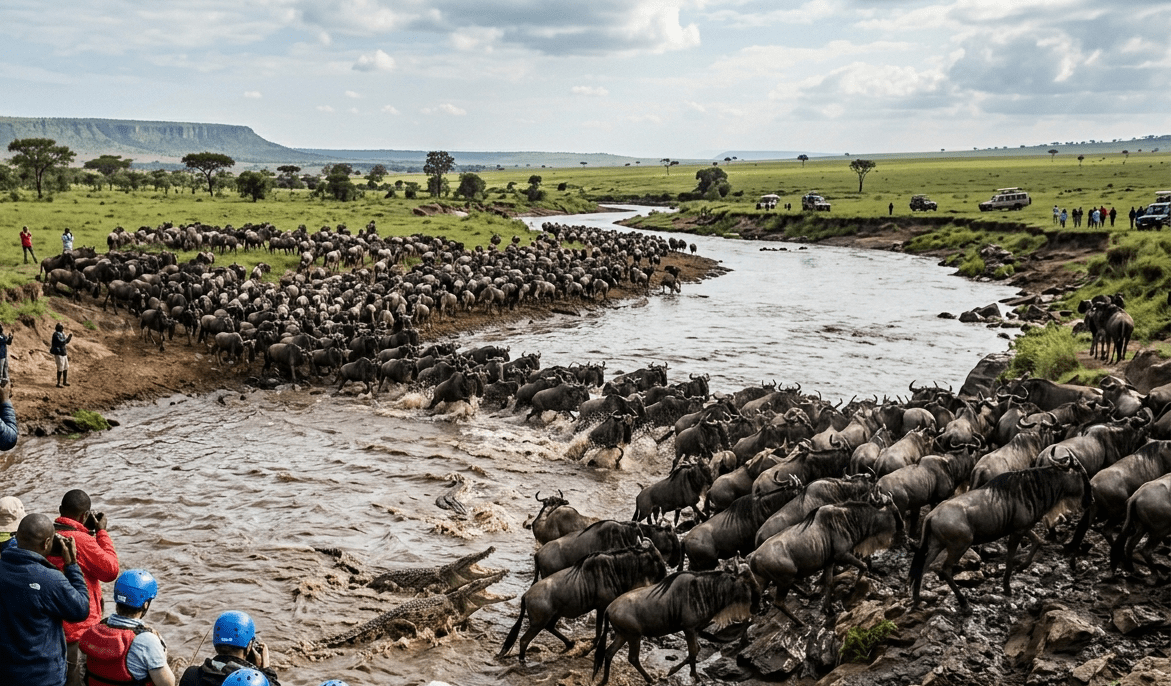
Each year, approximately:
- 1.5 to 2 million wildebeest
- 300,000 zebras
- 500,000 gazelles
move across the Serengeti and into the Maasai Mara.
Migration Cycle in Detail
December to March – Calving Season (Southern Plains)
This is one of the most dramatic periods of the migration. Thousands of calves are born daily, attracting predators such as lions, hyenas, and cheetahs. Despite the danger, the abundance of newborns ensures the survival of the species.
April to June – Movement Toward the West
As the rains end, herds begin moving northwest toward the Western Corridor. This phase is marked by long columns of animals stretching across the plains.
July to October – River Crossings (Northern Serengeti)
Perhaps the most iconic phase, animals cross crocodile-infested rivers such as the Mara River. These crossings are unpredictable and often chaotic, making them one of the most sought-after safari experiences.
November – Return South
With the onset of short rains, the herds begin their journey back to the southern plains, completing the cycle.
This migration is not just about movement, it is a survival strategy shaped by thousands of years of evolution.
5. Wildlife: Beyond the Big Five
The Serengeti is home to an extraordinary range of wildlife, making it one of the most biologically rich regions in Africa.
The Big Five
Visitors to the Serengeti can encounter all members of the iconic Big Five:
- Lion
- Leopard
- Elephant
- Buffalo
- Rhinoceros
The park supports one of the largest lion populations in the world, with prides often seen resting on kopjes or hunting across the plains.
Predators
The Serengeti is a predator-rich environment. In addition to lions, visitors may spot:
- Cheetahs, known for their speed and daytime hunting
- Leopards, often found in trees along riverbanks
- Spotted hyenas, powerful hunters and scavengers
- African wild dogs (rare but occasionally seen)
Herbivores
The plains are dominated by grazing animals, including:
- Wildebeest
- Zebras
- Gazelles
- Giraffes
- Topi and eland
Birds and Reptiles
With over 500 bird species, the Serengeti is a paradise for bird enthusiasts. From large ostriches to colorful lilac-breasted rollers, the diversity is remarkable.
6. Safari Experiences: How to Explore the Serengeti
A safari in the Serengeti is not a one-size-fits-all experience. Travelers can choose from a variety of activities depending on their preferences.
Game Drives
The most common and accessible way to explore the park. Morning and evening drives offer the best chances of spotting wildlife.
Hot Air Balloon Safaris
Floating above the plains at sunrise provides a unique perspective of the landscape and wildlife below. This experience is often followed by a bush breakfast.
Walking Safaris
Guided by experienced rangers, walking safaris allow visitors to connect with nature on a deeper level, focusing on tracks, plants, and smaller details often missed during drives.
Cultural Visits
Visits to Maasai villages offer insight into traditional lifestyles, customs, and the relationship between people and wildlife.
7. Best Time to Visit Serengeti National Park
The Serengeti is a year-round destination, but the experience varies depending on the season.
Dry Season (June to October)
This is the best time for wildlife viewing, as animals gather around water sources and vegetation is less dense.
Wet Season (November to May)
Although some roads may be challenging, this season offers lush landscapes, fewer crowds, and excellent birdwatching opportunities.
Migration Timing
Your travel dates should align with the migration phase you wish to witness—whether it’s calving season or river crossings.
8. Accommodation Options for Every Traveler
The Serengeti offers a wide range of accommodations, catering to different budgets and travel styles.
Luxury Lodges
High-end lodges provide exceptional comfort, fine dining, and prime locations for wildlife viewing.
Tented Camps
These range from mid-range to luxury and offer a more immersive safari experience.
Budget Campsites
Ideal for adventurous travelers, these provide basic facilities within the park.
Each type of accommodation allows visitors to experience the Serengeti in a unique way.
9. Getting to Serengeti National Park
By Air
Most travelers fly into Kilimanjaro International Airport near Arusha, then take a domestic flight to one of the Serengeti’s airstrips.
By Road
Overland safaris from Arusha or the Ngorongoro Conservation Area provide a scenic journey through Tanzania’s northern circuit.
10. Conservation and Environmental Challenges
Despite its protected status, the Serengeti faces several challenges:
- Poaching
- Habitat fragmentation
- Climate change
- Human-wildlife conflict
Conservation organizations and the Tanzanian government are actively working to preserve migration corridors and protect endangered species.
11. Why Serengeti Should Be on Your Bucket List
The Serengeti offers a rare opportunity to witness nature in its purest form. It is a place where:
- Wildlife roams freely across vast landscapes
- Natural cycles unfold uninterrupted
- Every moment feels authentic and unscripted
For many travelers, a visit to the Serengeti is not just a trip, it is a life-changing experience.
12. Practical Travel Tips
- Book early, especially during peak migration seasons
- Pack light, neutral-colored clothing
- Bring binoculars and a good camera
- Choose experienced safari operators like Feather Trail Safaris
The Timeless Magic of the Serengeti
Serengeti National Park remains one of the last great wilderness areas on Earth, a place where nature continues to operate as it has for millennia. Its landscapes, wildlife, and seasonal rhythms combine to create an experience that is both humbling and unforgettable.
Whether you are witnessing a lion hunt at dawn, watching herds stretch across the horizon, or simply soaking in the silence of the plains, the Serengeti leaves an indelible mark on every traveler.
For those planning an African safari, the Serengeti is not just a destination, it is the ultimate expression of the wild. Book With Us!