
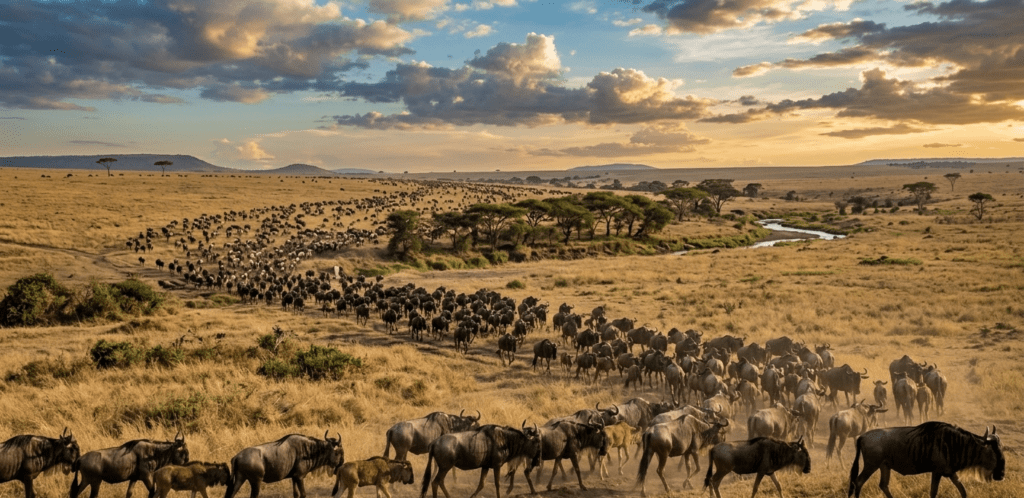
Great Migration River Crossings
The Great Migration river crossing is one of the most dramatic wildlife spectacles in Africa. Every year, huge herds of wildebeest, accompanied by zebras and gazelles, move across the plains in search of fresh grass and water. Among the most famous moments of this journey are the dangerous migration river crossings, where thousands of animals face powerful currents, steep riverbanks, predators, and crowded conditions.
What Is a Migration River Crossing?
A migration river crossing occurs when migrating wildebeest and other animals must cross rivers along their seasonal route. The Mara River is particularly famous for these crossings, especially in the northern Serengeti and Kenya’s Maasai Mara ecosystem.
The timing of a crossing is unpredictable. Herds may gather along the riverbank for hours or even days before finally entering the water. One animal may suddenly take the first step, triggering thousands of others to follow.
Why Are the River Crossings So Dangerous?
River crossings are among the most challenging stages of the Great Migration. Wildebeest must navigate deep water, slippery rocks, strong currents, and steep entry and exit points.
The greatest danger, however, often comes from predators. Nile crocodiles wait in the river, while lions, leopards, hyenas, and other predators may target exhausted or injured animals on the surrounding banks.
Panic can also create danger. When large numbers of wildebeest enter the river at once, animals can collide, become trapped, or struggle against the current. Despite these risks, the need to reach fresh grazing areas drives the herds forward.

When Do Migration River Crossings Happen?
The exact timing of a migration river crossing changes each year because the animals respond to rainfall, vegetation, and water availability rather than following a fixed calendar.
Generally, the most famous Mara River crossings occur during the dry-season migration months, often from around July through October. However, conditions can vary considerably, so there is never a guarantee that visitors will witness a crossing on a particular day.
This unpredictability is part of what makes the Great Migration so exciting. The waiting itself becomes part of the safari experience.
Where Can You See the Great Migration River Crossings?
The Mara River is one of the best-known locations for witnessing the migration. In Tanzania, the northern Serengeti provides opportunities to see herds approaching and crossing the river. In Kenya, the Maasai Mara offers another important viewing area.
Safari camps and guides familiar with the migration can help travelers identify where herds are gathering. Choosing the right location and allowing several days in the area can significantly improve the chances of seeing a crossing.
What Happens During a Crossing?
A typical crossing can unfold very quickly. Wildebeest may gather nervously at the top of a riverbank before one or several animals descend toward the water. Suddenly, the herd can surge forward.
The scene may include hundreds or thousands of animals swimming together while others climb over the riverbank behind them. Dust, splashing water, calling animals, and rushing currents create an unforgettable spectacle.
Not every crossing is successful, and some animals may turn back before entering the river. This is a natural part of the migration and demonstrates the difficult choices the herds face throughout their journey.
Tips for Experiencing a Migration River Crossing
If witnessing a migration river crossing is on your safari bucket list, flexibility is essential. Plan to spend several days in a migration area rather than expecting a crossing on a specific date.
Travel with experienced guides from Feather Trail Safaris Ltd, follow park regulations, and maintain a respectful distance from wildlife. Avoid loud noises or sudden movements, and remember that the crossing is a natural event not a performance.
Why the Great Migration River Crossing Matters
The Great Migration is more than an incredible wildlife spectacle. It is an essential ecological process that connects Tanzania’s Serengeti and Kenya’s Maasai Mara ecosystems. The movement of millions of grazing animals influences grasslands, predators, scavengers, and countless other species.
A migration river crossing represents one of the most powerful moments of this annual journey, a dramatic combination of instinct, survival, and nature’s remarkable rhythm. Book Now
Written By Harriet Adul, Editorial Team
29/08/2026