
Understanding Burundi ethnic groups is the single most important piece of context any visitor can bring to this country.
Burundi is a nation of approximately 13 million people inhabiting a territory smaller than the state of Maryland. Within that compact geography, three major ethnic communities, the Hutu, the Tutsi, and the Twa, have coexisted, competed, cooperated, and conflicted for centuries. Their relationships have shaped Burundian history, driven its most painful episodes, and produced a cultural landscape of remarkable complexity and richness.
This guide is not a political history. It is a cultural introduction, to who these communities are, what traditions they carry, and what a visitor who comes to Burundi with genuine curiosity can hope to understand and experience.
The Three Major Burundi Ethnic Groups: An Overview
Before the detail, a note on language. The categories “Hutu,” “Tutsi,” and “Twa” are both real and contested,real because they describe communities with distinct historical trajectories and cultural practices, contested because the colonial period fundamentally distorted and rigidified what had previously been more fluid social categories. The Belgian colonial administration’s decision to issue identity cards specifying ethnic group hardened distinctions that had previously been permeable and context-dependent, with consequences that shaped the region’s political history for the rest of the twentieth century.
Modern Burundian national identity actively de-emphasises ethnic categorisation, the constitution prohibits ethnic discrimination and the government discourages census-style enumeration by ethnicity. Broad estimates suggest the Hutu constitute approximately 85% of the population, the Tutsi approximately 14%, and the Twa approximately 1%.
The Hutu: Agricultural Heritage and Community Culture
The Hutu are Bantu-speaking agriculturalists whose ancestors migrated into the Great Lakes region from West Africa approximately 2,000 years ago. Their cultural identity is rooted in the land, in farming, in the cultivation of sorghum, beans, banana, and sweet potato, and in the community structures that organised agricultural labour and seasonal celebration.
Hutu cultural life is deeply communal. Traditional Hutu social organisation centres on the family and the hill-based community, the colline, the hillside settlement that is the basic unit of Burundian rural life. Decision-making was traditionally handled through community councils of elders, and the ethic of collective responsibility and mutual support (expressed in the concept of ubuntu, “I am because we are”) remains a recognisable characteristic of Hutu community culture.
Agricultural ceremonies mark the Hutu cultural calendar: planting festivals, harvest celebrations, and the great national sorghum festival Umuganuro, historically associated with the royal court but rooted in Hutu agricultural tradition. are all living expressions of this cultural heritage.
Hutu women have traditionally been the primary cultural transmitters, the keepers of oral history, the singers of ibihozo (lullabies and work songs), and the weavers of the distinctive coiled baskets that are among Burundi’s most celebrated craft forms. The weaving tradition remains a living art form. Moreover, cooperatives across the country produce baskets of extraordinary quality and export them internationally.
The Tutsi: Pastoral Traditions and Court Culture
The Tutsi also speak Bantu languages. However, their cultural identity has historically reflected pastoral traditions, cattle herding, cattle ownership, and the prestige attached to large herds. Historians believe they migrated into the Great Lakes region several centuries after the Hutu arrived. Consequently, the two communities developed complex and hierarchical social relationships.
In the pre-colonial Great Lakes kingdoms, including the Burundian kingdom centred at Gitega, the Tutsi aristocracy led the administration and military. Meanwhile, Hutu communities formed the agricultural base. This was not a system of simple oppression: it involved reciprocal obligations, complex patron-client relationships (ubugabire), and significant social mobility. But it was hierarchical, and the colonial period’s racialisation of these distinctions, the Belgian promotion of pseudo-scientific theories about Tutsi physical and intellectual superiority, transformed a complex social system into the basis for the political violence of the twentieth century.
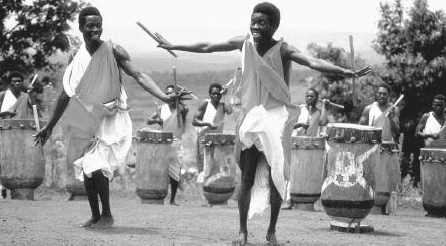
Tutsi cultural contributions include the royal court traditions, the drum tradition, the Intore warrior dance, the intricate conventions of court poetry and praise-singing (ibyivugo), that constitute the most internationally recognised elements of Burundian cultural heritage. The Tutsi cattle culture also produced distinctive material culture: the long-horned Ankole cattle whose distinctive silhouette appears throughout Great Lakes art and craft.
The Twa: Ancient Forest Heritage
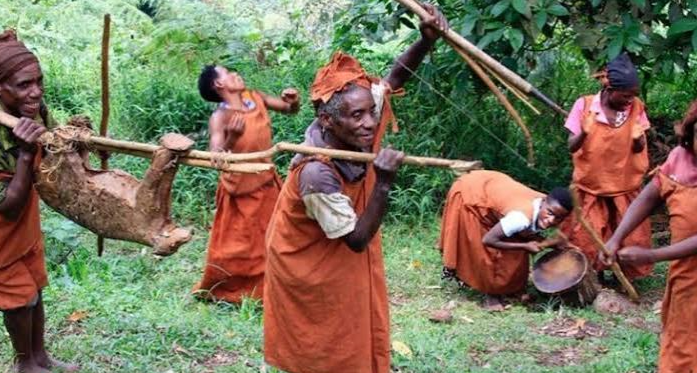
As covered in greater depth in our dedicated Twa Pygmy culture article, the Twa are the oldest documented inhabitants of the Great Lakes region. Their cultural traditions, hunter-gatherer forest knowledge, distinctive pottery, polyphonic singing and dance, are distinct from both Hutu and Tutsi culture and represent a genuinely ancient layer of the Burundian cultural landscape.
The Twa occupy a paradoxical position in Burundian society: simultaneously marginalised and culturally celebrated. Their pottery and performance traditions are recognised as national cultural assets. However, Twa communities remain among the country’s most economically disadvantaged groups.
Cultural tourism involving Twa communities, when conducted responsibly, with fair compensation and genuine community consent, offers one of the most significant opportunities to both experience and support this heritage.
Shared Cultural Elements Across Burundi Ethnic Groups
Despite their distinct historical trajectories, Burundi’s three ethnic groups share a remarkable amount of cultural common ground, an inheritance of centuries of coexistence in a small, densely populated territory.
Language: Kirundi is the first language of virtually all Burundians across ethnic groups. This linguistic unity is a genuine force for national cohesion and makes Burundi one of the rare African countries where a single indigenous language serves as the primary medium of national life.
Music and drumming: The royal drum tradition, while historically associated with the Tutsi court, is experienced as a national heritage by Burundians across ethnic lines. The UNESCO recognition of the drum tradition as an Intangible Cultural Heritage of Humanity is a source of national pride that transcends ethnic categorisation.
Oral literature: Burundian oral literature, proverbs (imigani), folktales (ibitito), and historical narratives, is shared across communities and transmitted in Kirundi. Many of the most beloved stories circulate across all three ethnic groups, with variations that reflect different community perspectives.
Agricultural festivals: The Umuganuro festival and the seasonal ceremonies that mark the agricultural calendar are observed by Burundians across ethnic backgrounds as expressions of shared national identity.
Visiting Burundi to Understand Its Ethnic Cultural Heritage
The best way to engage with the cultural complexity of Burundi’s ethnic landscape is through guided experiences that provide context alongside encounter. A community visit to a Twa pottery cooperative, a Hutu weaving workshop, and a Tutsi royal drum performance, experienced in sequence with a culturally literate guide, offers a more nuanced understanding of Burundian society than any reading can provide.
Feather Trail Safaris designs cultural itineraries specifically to engage with this complexity, not as a political exercise but as a human one. The people you meet in these communities are not representatives of ethnic categories but individuals with stories, skills, humour, and extraordinary generosity toward visitors who come with genuine curiosity.
FAQs
What are the three main ethnic groups in Burundi?
The three main Burundi ethnic groups are the Hutu (approximately 85%), the Tutsi (approximately 14%), and the Twa (approximately 1%). Each group has distinct cultural traditions while sharing the Kirundi language and many elements of Burundian national culture.
Is it safe to ask about ethnic identity in Burundi?
The current Burundian government actively discourages ethnic categorisation and promotes a unified national identity. Visitors should follow their guide’s lead when navigating these topics in community settings. Academic and cultural discussion of ethnic history is appropriate; asking individuals to identify their ethnicity as a tourist curiosity is not.
How did colonialism affect Burundi ethnic groups?
Belgian colonial administration institutionalised ethnic categories through identity cards, promoted pseudo-scientific racial theories, and transformed flexible social hierarchies into rigid ethnic classifications. The consequences shaped the political history of the region for the rest of the twentieth century.
Can I visit communities from all three ethnic groups on one tour?
Yes. A well-designed cultural itinerary can include Twa community visits, Hutu weaving cooperatives, and Tutsi royal drum and dance performances within a single trip. Contact Feather Trail Safaris to design a tour that engages with this full cultural breadth.