
Burundi Chimpanzees: Habitat, Behavior & Conservation Efforts
Burundi supports one of East Africa’s significant chimpanzee populations, a fact that most people outside the conservation community are entirely unaware of, partly because more famous neighbours have long overshadowed Burundi’s wildlife.
The chimpanzees of Burundi are Eastern chimpanzees (Pan troglodytes schweinfurthii), a subspecies found across a broad belt of Central and East Africa from the DRC east to Tanzania and north through Rwanda and Uganda. They are the most studied subspecies of chimpanzee in the world, much of what science understands about chimpanzee behaviour comes from long-term field sites in Uganda (Kibale), Tanzania (Gombe, Mahale), and the DRC, but Burundi’s population has historically received far less research attention than its size would warrant.
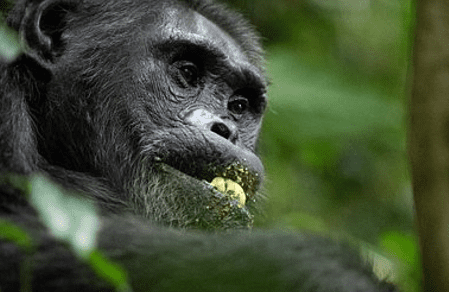
Current estimates place the total chimpanzee population in Burundi at somewhere between 750 and 1,000 individuals, distributed primarily across the forest areas of the northwest and southwest. The majority of this population, and the best-protected portion, lives in and around Kibira National Park.
Burundi Chimpanzees: Habitat
Understanding Burundi’s chimpanzees requires understanding three things in parallel: where they live, how they live, and what is threatening both. These three dimensions are inseparable, the habitat shapes the behavior, the threats attack both, and the conservation response must address all three simultaneously.
This is the framework that Dr. Nkurunziza and her colleagues work within every day, and it is the framework that gives Kibira’s conservation story its coherence and its urgency.
Where Chimpanzees Live in Burundi
Kibira National Park: The Primary Stronghold
Kibira National Park in the Albertine Rift highlands of northwestern Burundi is the most important chimpanzee habitat in the country. The park covers 40,000 hectares of montane rainforest at elevations between 1,600 and 2,670 metres and supports several distinct chimpanzee communities with non-overlapping home ranges within the park.
Kibira is contiguous with Rwanda’s Nyungwe Forest to the north, and the combined forest ecosystem, covering over 100,000 hectares, is one of the most significant remaining montane forest blocks in Africa. Chimpanzees move across this landscape without reference to the international border, and their presence in both parks links the conservation fortunes of Burundi and Rwanda directly.
The forest type preferred by chimpanzees in Kibira varies by elevation and season. During the dry season, communities tend to range at lower elevations where fruit production, particularly from fig trees, is most reliable. During the rains, they move higher, following the flush of new vegetation and the seasonal availability of different food sources.
Secondary Forest Areas
Beyond Kibira, chimpanzees are found in several smaller forest areas:
Rumonge Nature Reserve on the southwestern shore of Lake Tanganyika supports a small but important chimpanzee population in forest that descends to the lake’s edge. This habitat is distinctive, lower altitude, higher temperatures, and a different food availability profile from Kibira, and the communities here show behavioral adaptations that differ noticeably from their highland relatives.
Vyanda Bururi Forest Reserve in the south contains isolated chimpanzee communities in forest that has been significantly degraded by agricultural encroachment. The population here is small and fragmented, and individuals from this area occasionally move between forest patches, bringing them into contact with agricultural land and the conflict risks that this movement entails.
Teza and Bururi forest areas support small populations in a landscape of increasingly isolated forest fragments surrounded by tea plantations and farmland.
Habitat Preferences
Eastern chimpanzees are generalist forest dwellers, they are not strictly tied to any single forest type and can survive in a range of habitats from dense rainforest to more open woodland. However, their population density and reproductive success are strongly correlated with primary forest cover. Communities in Kibira’s intact montane forest are significantly healthier, larger, with higher infant survival rates, than those in fragmented secondary forests.
Key habitat requirements for Burundi chimpanzees:
Fruiting trees: Chimpanzees are primarily frugivores, and the availability of fruiting trees, particularly figs, which fruit asynchronously and provide a year-round resource, is the single most important factor determining habitat quality
Fresh water sources: Streams, springs, and seasonal watercourses within the home range
Sleeping tree availability: Large, stable trees with suitable branching structure for nest building
Sufficient range size: Individual community home ranges in Kibira are estimated at 5 to 30 square kilometres, requiring connected forest of sufficient extent
Understanding Chimpanzee Social Behavior
Chimpanzees are the most socially complex non-human primates on the planet, a bold claim, but one that decades of field research have consistently supported. Understanding the social behavior of Burundi’s chimpanzees requires understanding the fundamental structures that organise their lives.
The Fission-Fusion Society
Chimpanzees live in communities, typically 20 to 80 individuals, but they do not move through the forest as a single, cohesive group. Instead, the community constantly splits into smaller parties of variable size and composition, coming together and separating again throughout the day and across seasons. This fluid social arrangement, called a fission-fusion society, is one of the most complex social systems found in non-human animals.
Party composition changes depending on food availability, social relationships. Reproductive status, and the specific activities of the moment. A large fruiting tree will attract many individuals simultaneously. A more dispersed food resource will produce smaller, scattered parties. The constant negotiation of these groupings, and the social relationships that structure who travels with whom, constitutes the primary texture of chimpanzee social life.
Dominance Hierarchies
Male chimpanzees maintain a clear linear dominance hierarchy, with an alpha male at the top who has priority access to food, mates, and preferred social partners. Achieving and maintaining alpha status requires not only physical strength but political skill, the ability to form alliances, manage relationships, and navigate the complex social dynamics of a large community.
The alpha males observed in Kibira’s habituated communities exhibit the same coalition-building behavior documented at long-term field sites elsewhere. Alpha tenure is not permanent, ambitious challengers, and shifting alliance structures, mean that the top position changes hands over years, often with considerable social disruption during the transition.
Female chimpanzees also maintain dominance relationships among themselves, though the female hierarchy is generally less rigid and less studied than the male one. Female social relationships are more centred on mother-offspring bonds and on the relationships between closely related females within the community.
Communication and Tool Use
Chimpanzees communicate through an extraordinarily rich repertoire of vocalisations, gestures, facial expressions, and body postures.
The pant-hoot, a long, building call that rises from quiet hoots to loud screams, is the chimpanzee vocalisation that people most widely recognize and serves multiple functions: it advertises location to other community members, reinforces social bonds, and, in some contexts, intimidates rivals.
Tool use in chimpanzees is culturally variable, different populations have different tool traditions, and Kibira’s communities are the subject of ongoing research to document the specific tool-use behaviours present in the population. Tools recorded from Burundian and neighbouring Rwandan chimpanzees include the use of sticks to extract insects from bark, leaves used as sponges to extract water from tree holes, and stones used to crack hard-shelled fruits in areas where these food sources are available.
Reproduction and Life History
Female chimpanzees reach sexual maturity at around 10 to 12 years and first give birth typically between 13 and 15 years of age. Interbirth interval, the gap between successive births, is 5 to 6 years, one of the longest among mammals. This slow reproductive rate means that chimpanzee populations recover extremely slowly from any reduction in numbers.
A chimpanzee that survives to adulthood may live 40 to 50 years in the wild. The implications for conservation are significant: every individual matters enormously. The death of a reproductive female can represent a multi-decade loss of reproductive potential for the population.
Feeding Habits and Daily Activities
A chimpanzee’s day is, in broad structure, organised around food.
Dawn to mid-morning is the primary feeding period. Communities typically descend from their sleeping trees at first light, often with considerable noise, as individuals call to locate one another, and move directly to productive food sources. In Kibira, this typically means fruit, and the specific destination depends on what is currently fruiting in the home range.
Mid-morning to early afternoon involves a mix of continued foraging, social grooming, and rest. Social grooming, the careful, manual removal of parasites and debris from another individual’s fur, is the primary bonding behaviour among chimpanzees, and extended grooming sessions cement alliances, reduce social tension, and reinforce the relationships that structure community life.
Late afternoon brings another active feeding period before the final movement to sleeping trees.
Dusk: Each individual builds a fresh sleeping nest, a platform of bent branches and leaves constructed in a stable tree fork, every night. Nest building takes less than five minutes and is one of those chimpanzee behaviours that, observed at close range, powerfully evokes the distance and the similarity between chimpanzees and ourselves.
Beyond fruit, Burundi’s chimpanzees consume leaves, seeds, bark, insects, and, significantly, meat. Chimpanzees are active hunters, primarily of red colobus monkeys, and coordinated group hunts involving multiple males have been documented in Kibira’s communities. Meat, when obtained, is distributed selectively among community members in a pattern that reinforces social bonds and political alliances.
Threats Facing Burundi’s Chimpanzee Population
The conservation picture for Burundi chimpanzees is not reassuring when viewed in isolation from the efforts being made to address it. The threats are real, structural, and in some cases accelerating.
Habitat Loss and Fragmentation
Burundi is one of the most densely populated countries in Africa, with a population that has grown significantly over recent decades. Agricultural expansion, driven by population pressure, food insecurity, and lack of alternative livelihoods, is the primary driver of forest loss across the country.
Kibira National Park is legally protected, and the integrity of the park boundary has been largely maintained. But the forest outside the park, the secondary forest areas, the forest corridors that connect isolated patches, and the buffer zones around the park’s edge, has been subject to continuing clearance. This matters because chimpanzees are not contained by park boundaries. They range across landscapes, and the loss of connecting forest reduces genetic exchange between communities, increases human-wildlife conflict, and makes individual animals more vulnerable to isolated threats.
Agricultural Encroachment and Human-Wildlife Conflict
The communities living adjacent to Kibira National Park and Burundi’s other forested areas face genuine food security challenges. In this context, the presence of chimpanzees in or near agricultural land creates conflict that is both understandable and dangerous for the chimps.
Chimpanzees raiding crops, sweet potato fields are particularly vulnerable. Create direct economic losses for farming families who have no compensation mechanism. Retaliatory killing of individual chimpanzees has been documented in several areas of Burundi, though it remains uncommon around the better-monitored Kibira area.
More pervasive is the risk from wire snares set for other animals, bush pigs, duikers, and other bush meat species, that injure chimpanzees accidentally. Researchers have documented snare injuries to hands, feet, and limbs in multiple Kibira communities. The injuries represent a significant welfare and survival risk for affected individuals.
Disease
The shared genetic proximity of chimpanzees and humans, approximately 98.7% identical DNA, means that human diseases can jump to chimpanzees with devastating consequences. Respiratory infections, in particular, can sweep through a chimpanzee community rapidly, causing significant mortality.
This risk is most acute for habituated communities that have regular contact with humans during trekking operations. Rwanda and Uganda have developed strict health protocols for gorilla and chimpanzee trekking, including health screening of visitors, minimum distance rules, and exclusion of symptomatic visitors, and Kibira’s trekking programme applies similar standards.
Conservation Efforts Protecting Burundi Chimpanzees
Despite the severity of the threats, conservation efforts in Burundi are making a real and measurable difference, and the story of Kibira’s chimpanzee population over the past decade is genuinely one of cautious optimism.
Ranger Patrol and Anti-Poaching
The OBPE maintains a ranger force in Kibira that conducts daily patrols through the park’s core zones, removes snares, monitors chimpanzee community locations, and deters illegal entry. Ranger salaries and operational costs are funded through a combination of government allocation and tourism revenue.
The tracker teams, local community members with intimate knowledge of the forest and its wildlife, are central to the programme. Their daily monitoring of habituated communities provides both conservation data and the foundation for the tourism tracking operations that generate the revenue to sustain the programme.
Community Conservation and Alternative Livelihoods
The most effective long-term conservation tool available for Burundi’s chimpanzees is the conversion of local communities. This is from economic dependence on forest resources to economic benefit from forest protection.
Projects operating in the Kibira buffer zone include: community forestry programmes that provide legal timber and firewood. This are from managed woodlots outside the park. Agricultural improvement initiatives that increase crop yields on existing farmland. Reducing pressure to open new land; crop-protection fencing along sections of the park boundary most vulnerable to chimpanzee raiding; and tourism employment. This range from porter work and cultural guide roles to guesthouse and lodge operation, that links community income directly to the continued protection of the chimpanzees.
Research and Monitoring
Long-term scientific monitoring of Kibira’s chimpanzee communities, population counts, individual identification. The behavioral observation, and health monitoring, provides the data foundation for evidence-based conservation management. Dr. Nkurunziza’s work, and that of her colleagues at the University of Burundi and in partnership with international conservation organisations. This has generated an increasingly detailed picture of the population’s structure, health, and trends.
Additionally, this research also serves as an early warning system. For example, researchers can quickly detect changes in chimpanzee ranging behaviour. Moreover, they can identify unusual mortality patterns or evidence of new threats. As a result, they can respond before these issues become catastrophic.
How Responsible Tourism Supports Conservation
The connection between chimpanzee trekking tourism and chimpanzee conservation in Burundi is direct and financially significant.
Every trekking permit purchased generates revenue that funds rangers, trackers, and the operational costs of park protection. Every tourist who stays in a locally owned guesthouse, hires a community porter. Buying crafts from a local cooperative puts money directly into the hands of people. The economic well-being increasingly connects to the forest’s continued existence.
The habituation of chimpanzee communities for tourism is itself a conservation act.
Ranger-led groups regularly visit habituated communities and intensively monitor their health, movements, and membership. Providing early detection of threats and building a detailed behavioural record that has scientific value independent of the tourism operation.
Responsible tourism visitors, those who follow protocols, maintain distance. Follow ranger instructions, and treat the experience with the seriousness it deserves, actively contribute to the data record. Every observation of which individuals are present, which are absent. This appear unwell, is information that feeds into the management of the population.
FAQS
How many chimpanzees are in Burundi?
Current estimates place the total population at 750 to 1,000 individuals, with the majority in and around Kibira National Park. Researchers find precise counts difficult due to the forest terrain and the shy nature of unhabituated communities.
Are Burundi’s chimpanzees the same species as those in Uganda or Tanzania?
Yes, they are the same subspecies, Eastern chimpanzee (Pan troglodytes schweinfurthii), found across Central and East Africa. Furthermore, genetic connections link the populations across the region, making cross-border conservation cooperation particularly important.
How long do chimpanzees live in the wild?
Eastern chimpanzees can live 40 to 50 years in the wild. Dr. Nkurunziza’s 11-year relationship with her study individual is, in chimpanzee terms, less than a quarter of his potential lifespan.
Can I see chimpanzees outside Kibira National Park?
Small populations also exist in other forest areas (Rumonge, Vyanda, and Bururi). The tourism operators have not developed these sites, and visitors should not currently visit them. Kibira is the appropriate destination for chimpanzee trekking in Burundi.
What is the biggest threat to Burundi’s chimpanzees?
Habitat loss through agricultural encroachment is the primary long-term threat. Snaring, disease risk from human contact, and the slow reproductive rate that prevents rapid population recovery are significant secondary factors.
Dr. Nkurunziza showed me a photograph before I left the ranger station. A slightly blurry field image of a large male chimpanzee taken eleven years earlier. The left ear clearly visible, slightly torn at the tip.
“This was the first clear photograph I had of him,” she said. “He was maybe twenty years old. He didn’t know I existed. Now he barely glances at me when I come to observe.”
The relationship between researcher and subject, built over more than a decade of patient. Daily presence, is a small-scale version of the larger relationship that Burundi is slowly building between its communities and its wildlife. It takes time. It requires consistency and commitment. Then it produces outcomes in conservation data, population stability, and community livelihoods that no other approach can achieve.
Burundi’s chimpanzees, habitat, behavior, and conservation efforts weave a single, connected story.
Understanding that story is the first step toward ensuring it continues