
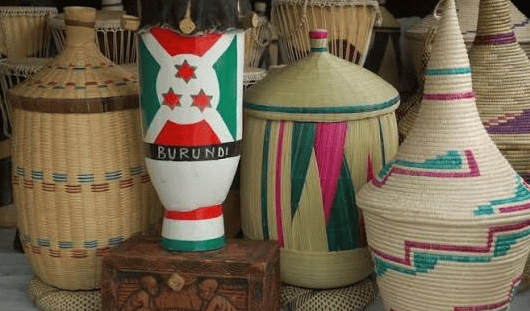
The basket stopped me completely.
I was walking through the Marché Central in Bujumbura on my second morning in Burundi, not specifically looking for anything, when I turned a corner in the craft section and found myself facing a display of coiled baskets that were, without any qualification, among the most beautiful objects I had ever seen. Not beautiful in the way that antiques are beautiful, carrying the prestige of age and rarity. Beautiful in the way that things made by skilled human hands are beautiful, which is a more democratic and more affecting kind of beauty.
Burundi arts and crafts deserve to be as internationally known as their Rwandan equivalents, which have received the international attention and market development that Burundian crafts are only now beginning to attract. What you can find in Burundi’s craft markets and artisan cooperatives represents centuries of accumulated skill in a range of materials and techniques that is genuinely remarkable.
This guide covers what to look for, where to find it, and how to buy in ways that put money in the right hands.
Traditional Coiled Basketry: Burundi’s Most Celebrated Craft
The coiled basket is the signature craft of the Great Lakes region, and Burundian baskets are among the finest produced anywhere in Africa. The technique is ancient: strips of natural fibres are coiled and stitched together using a bone or wooden needle, building the basket from base to rim in a continuous spiral. The geometric patterns, chevrons, diamonds, triangles, concentric circles, are created by varying the colour of the fibres, which are dyed using natural plant materials to produce a palette of reds, blacks, browns, creams, and oranges.
Skilled basketweavers, primarily women, can produce baskets of extraordinary precision, with patterns that maintain perfect symmetry across the full circumference of the vessel. A large, finely woven basket can take several weeks to complete and represents a significant investment of skill and time. The price of a good Burundian basket reflects this, expect to pay $20 to $80 for quality pieces depending on size and complexity, and it is entirely fair.
Baskets are made in a range of sizes and forms: shallow presentation plates, deep storage baskets with lids, small decorative pieces, and the large-bottomed agaseke form that is the most iconic shape in the tradition. All are functional as well as beautiful.
Where to buy: Women’s weaving cooperatives in Gitega, Kayanza, and the Bujumbura suburbs offer the best quality and the most direct community benefit. The Marché Central in Bujumbura has a good craft section. Ask your guide to take you to a cooperative rather than a hotel gift shop.
Twa Pottery: Functional Beauty from Ancient Hands
As discussed at length in our Twa Pygmy culture guide, Twa pottery is one of Burundi’s most significant craft traditions, technically accomplished, aesthetically distinctive, and historically important as the primary source of domestic ceramic ware across the Great Lakes region.
Twa pots are hand-built without a wheel, using a coiling technique developed over thousands of years. They are fired in open wood fires, not kilns, a process that produces the characteristic terracotta colours and occasional dark smoke-fire marks that distinguish traditionally fired pottery from kiln-fired equivalents. Decorative incised patterns, geometric lines, cross-hatching, chevrons, are applied before firing.
The pieces available for purchase at Twa community cooperatives and cultural centres range from small decorative bowls and cups to large cooking pots and storage vessels. The quality varies: look for even wall thickness (hold the piece up and look through it toward a light source), clean incised lines, and a ring that sounds clear when tapped. A well-made Twa pot purchased directly from a community cooperative costs $15 to $40 and is worth every cent.
Beadwork and Jewellery
Beadwork has a long history in Burundian material culture, associated particularly with ceremonial dress, royal adornment, and the decoration of cattle, which occupied a central place in the pastoral economy of the pre-colonial period. Contemporary Burundian beadwork draws on these traditions while producing pieces designed for the modern market: necklaces, bracelets, earrings, and decorative panels using glass beads in geometric patterns derived from traditional Burundian design vocabulary.
The quality of Burundian beadwork is variable, and the best pieces, those using traditional patterns and high-quality glass beads rather than plastic, are found at artisan cooperatives and cultural centres rather than tourist market stalls. Expect to pay $10 to $30 for good-quality beadwork jewellery.
Woven Textiles and Clothing
Burundian textile traditions include both woven and printed fabrics. The distinctive kitenge (also called pagne), bright, boldly patterned cotton fabric, is ubiquitous across Burundian daily life and is both beautiful and practical as a souvenir. A length of quality Burundian kitenge costs $5 to $15 and can be made up into clothing by tailors in Bujumbura’s markets at very reasonable prices.
More specialist woven textiles, including the banana fibre mats and wall hangings produced in some communities, are less widely available but worth seeking out through a specialist operator.
Wood Carving
Burundian woodcarving tradition produces both functional objects, drums, kitchen implements, furniture, and decorative sculptures. The most sought-after carved objects are the small drum replicas and figurative sculptures that reference royal court culture and the pastoral heritage of the Great Lakes region. Quality varies dramatically; genuine artisan pieces, carved by hand with traditional tools, are distinguishable from machine-turned tourist items by the tool marks on the surface, the asymmetry of hand-carving, and the overall aesthetic coherence of the piece.
Where to Shop for Burundi Arts and Crafts
Marché Central, Bujumbura: The most accessible and widest-ranging market for Burundian crafts. Quality is variable, but patient browsing rewards the visitor. Bargaining is expected but should be respectful, these are skilled artisans’ products, not mass-manufactured tourist goods.
Artisan cooperatives in Gitega and Kayanza: Higher quality, more direct community benefit, less bargaining culture. Your guide can facilitate introductions.
Hotel gift shops in Bujumbura: Convenient and reasonably curated. Higher prices than the market, but a percentage supports the artisans.
Community craft sales at cultural sites: When visiting Twa communities, royal drum performances, or cultural centres, crafts sold on-site come with the most direct community benefit.
How to Buy Responsibly
Buy directly from producers whenever possible. Ask your guide to take you to cooperatives rather than intermediary sellers. Pay fair prices, the instinct to bargain aggressively with rural artisans in developing countries reflects a power imbalance that ethical travellers should resist. Take business cards or contact information from cooperative managers and consider ordering additional pieces through the mail, several Burundian cooperatives now ship internationally.
FAQs: Burundi Arts and Crafts
What are the most popular Burundi arts and crafts souvenirs?
Coiled baskets, Twa pottery, beadwork jewellery, and carved wooden objects are the most popular. Quality baskets and pottery are the best investment for serious collectors.
Are Burundian crafts available internationally?
Some are available through fair trade retailers and online platforms, but the selection is limited. The best pieces are found in-country.
How do I know if a craft is genuinely handmade?
Look for the slight irregularities, tool marks, and asymmetry that characterise hand-production. Ask the seller directly. Buy from cooperatives rather than tourist stalls for greater confidence.
Plan a Burundi cultural tour including craft cooperative visits with Feather Trail Safaris