
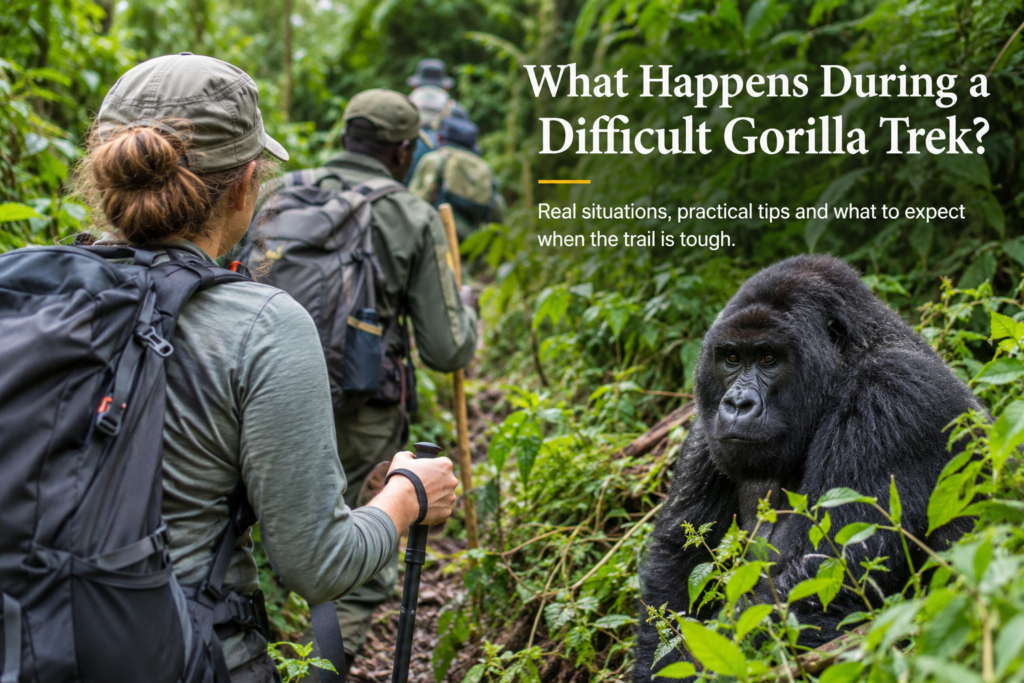
What Happens During a Difficult Gorilla Trek?
Gorilla trekking in Uganda is one of the most rewarding wildlife experiences in Africa. Walking through the forest, listening to birds and searching for mountain gorillas creates an adventure unlike any other. However, the trek can sometimes be more challenging than visitors expect.
The forest terrain can be steep, muddy and slippery, and gorilla families do not always stay close to the starting point. Some treks take only a few hours, while others require a longer walk through dense vegetation.
So, what happens when a gorilla trek becomes difficult? Will the guides help you? Can you take a break? And what if you find the hike too challenging?

Here is what you should know before booking your gorilla trekking safari in Uganda.
1. Why Can Gorilla Trekking Be Difficult?
Gorilla trekking takes place in natural forest environments rather than on prepared hiking trails. The difficulty depends on the location of the gorilla family, the terrain, weather conditions and your own fitness. Read More.
Some of the common challenges include:
- Steep slopes: Bwindi Impenetrable National Park has rugged terrain, with steep hills and valleys that can make walking demanding.
- Mud and slippery trails: Rain can make forest paths slippery, especially on downhill sections.
- Dense vegetation: Guides and trackers may need to navigate through thick vegetation to reach the gorillas.
- Long walking distances: The time spent trekking varies depending on where the gorillas are located that day.
- Humidity and fatigue: Warm, humid conditions and uneven ground can make the hike tiring, even for travellers who exercise regularly.
A difficult trek does not necessarily mean something has gone wrong. These conditions are part of exploring a wild mountain forest.
2. What Do Guides and Rangers Do When the Trek Becomes Difficult?
You do not have to navigate the forest alone. Gorilla trekking is conducted with authorised park guides and trackers who understand the terrain and help visitors follow the correct route.
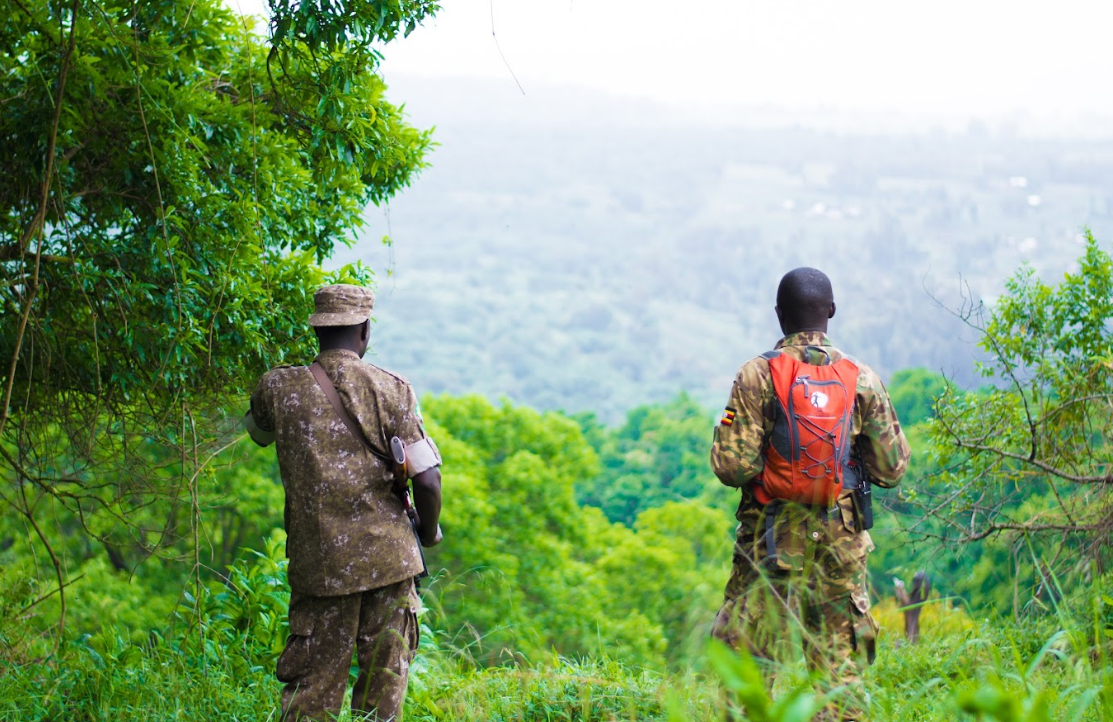
If the trail becomes difficult, tell your guide. They can assess the situation, suggest a suitable pace and identify opportunities to rest where conditions allow.
Your guide may:
- Allow the group to slow down and take breaks.
- Help you navigate slippery or uneven sections.
- Advise you on where to place your feet on steep terrain.
- Communicate with the tracking team about the gorilla family’s location.
- Assess whether continuing is appropriate if someone is struggling.
The important thing is to communicate early. If you are exhausted, feeling unwell or having difficulty breathing, do not wait until you can no longer continue before telling your guide.
3. Can You Rest During a Gorilla Trek?
Yes. You can ask for breaks when you need them, and your guide can help the group manage its pace.
Short rests allow you to drink water, catch your breath and prepare for the next section. However, the number and length of breaks may depend on the terrain, the group’s progress and the conditions along the route.
If you are travelling with older family members or people who have limited hiking experience, discuss their abilities with your safari operator before the trekking day.
It is also worth remembering that the return journey remains part of the experience. You need enough energy to walk back after visiting the gorillas.
4. What If You Cannot Keep Up With the Group?
If you find the trek harder than expected, tell your guide as soon as possible. The guide will assess the situation and explain the available options.
Depending on the circumstances, this may involve resting, adjusting the pace or arranging assistance where feasible. If you cannot safely continue, the guide and park staff will determine the appropriate course of action.
Do not assume that a separate guide or easy route will always be available. Group arrangements, terrain and park procedures can limit the options.
Travellers should also understand that stopping before reaching the gorillas does not automatically guarantee a refund or another trek. Permit conditions apply, so ask your safari operator about the current policy before travelling.
5. What Happens If the Gorillas Are Far Away?
Gorillas move freely through the forest to feed, rest and travel. Although trackers work to locate the assigned gorilla family, its position can make the trek longer or shorter on any given day.
If the family has moved farther into the forest, the group may need to walk for several hours before reaching it.
Once the gorillas are located, visitors normally have up to one hour with them under the standard trekking rules. The guide will explain where to stand, how to behave and how to maintain a safe distance.
Even when the walk is challenging, seeing mountain gorillas in their natural habitat can make the effort worthwhile.
However, a sighting cannot be guaranteed in every circumstance, and visitors should be prepared for the possibility that a trek may not go as planned.
6. Can You Hire a Porter for Gorilla Trekking?
Yes. Porters are available at trekking locations in Uganda, subject to local arrangements and availability.
A porter can carry your backpack and help you negotiate difficult sections of the trail when needed. Some porters also offer a steadying hand on challenging terrain.
Hiring a porter is worth considering even if you are reasonably fit. Carrying less weight can help you conserve energy for the hike.
Porter fees vary, so confirm the current rate with your safari operator or at the briefing point. Hiring a porter also provides income to people living around the national parks.
7. How Can You Prepare for a Difficult Gorilla Trek?
A little preparation can make a significant difference to your comfort and confidence.
Improve your fitness
In the weeks before your trip, practise walking regularly. Include hills or uneven ground where possible, and gradually increase your walking distance. You do not need to be an athlete, but basic stamina and balance are helpful.
Wear suitable hiking gear
Choose sturdy hiking boots with good grip and ankle support. Long trousers, a lightweight long-sleeved shirt and gardening gloves can help protect you from vegetation.
A waterproof jacket is useful because rain can occur even during generally dry periods.
Carry enough water and snacks
Bring drinking water and energy-giving snacks, following your operator’s advice. A small backpack is preferable to a heavy bag.
Use walking poles if helpful
Walking poles can improve balance on slippery ground and steep slopes. Ask your guide about using them safely in the forest.
Be honest about your physical abilities
Tell your safari operator about any limitations that could affect your ability to hike. This helps them discuss suitable arrangements and realistic expectations before your permit and itinerary are finalised.
Do not rely on a promise that a particular gorilla family will be easy to reach. Gorilla movements and forest conditions can change.
8. Is Bwindi or Mgahinga Better for a Less Demanding Trek?
Uganda offers gorilla trekking in Bwindi Impenetrable National Park and Mgahinga Gorilla National Park.
Bwindi has several trekking sectors, including Buhoma, Ruhija, Rushaga and Nkuringo. The terrain and trekking conditions differ between sectors and from one day to another.
Mgahinga offers another setting in the Virunga volcanic landscape, where trails may involve substantial elevation changes.
Neither destination can guarantee an easy trek. A gorilla family’s location, the weather and the route taken can all affect the difficulty.
When planning your safari, discuss your fitness level, preferred accommodation and travel schedule with your operator. They can explain the available trekking options without promising a particular duration or level of difficulty.
9. What If You Have a Medical or Mobility Concern?
Gorilla trekking is physically demanding, and some routes may be unsuitable for travellers with particular mobility limitations or medical concerns.
If you have a condition that could affect your ability to walk on steep or slippery terrain, seek appropriate medical advice before booking. Share relevant practical limitations with your safari operator so they can explain the available options.
Do not assume that all trekking locations have wheelchair-accessible paths or that evacuation from the forest will be straightforward.
Where available and appropriate, specialised arrangements such as a sedan chair carried by porters may be possible, but these require advance confirmation with the park authorities and your operator. Availability, suitability, cost and safety should all be checked before making plans.
10. Is Gorilla Trekking Worth It Even When the Hike Is Difficult?
For many travellers, yes. The experience of observing mountain gorillas in the wild is a memorable highlight of visiting Uganda.
Watching a gorilla family feed, groom and interact with one another offers a rare opportunity to appreciate these remarkable animals in their natural habitat.
Still, it is important to approach the experience with realistic expectations. Trekking conditions are not fully predictable, and comfort levels vary from one traveller to another.
With suitable preparation, experienced guides and a realistic itinerary, you can give yourself a better chance of enjoying the adventure.
Plan Your Uganda Gorilla Trekking Safari With Feather Trail Safaris
At Feather Trail Safaris, we help travellers plan gorilla trekking experiences in Uganda according to their interests, travel schedules and accommodation preferences.
Whether you are visiting Bwindi Impenetrable National Park for the first time or combining gorilla trekking with wildlife viewing, birding or cultural experiences, we can help you understand the route, prepare for the trek and organise the key arrangements.
Contact Feather Trail Safaris to discuss your preferred travel dates, gorilla trekking destination and safari budget.
Ready to plan your gorilla trekking adventure? Visit our Uganda safari pages or contact our team to request a personalised itinerary.
Frequently Asked Questions
How long does a difficult gorilla trek take?
The duration varies depending on the gorilla family’s location, the terrain and the group’s pace. A trek may take several hours, and there is no guaranteed maximum duration for reaching the gorillas.
Do I need to be very fit to go gorilla trekking?
You do not need to be an experienced mountaineer, but reasonable stamina, balance and mobility are helpful. Regular walking and suitable preparation can make the experience more manageable.
Can I hire someone to carry my bag?
Yes. Porters are commonly available at Uganda’s gorilla trekking locations, subject to local availability and arrangements.
Can I get my money back if I cannot finish the trek?
Do not assume that you will receive a refund or another trek. Permit conditions and the circumstances of the trek determine what options, if any, are available. Confirm the applicable terms before booking.
Which month is best for an easier gorilla trek?
Weather can influence trail conditions, but no month guarantees an easy trek. Rain can occur throughout the year, and gorilla movements remain unpredictable.
Can older travellers go gorilla trekking?
Some older travellers complete gorilla treks successfully, but age alone does not determine suitability. Fitness, mobility, health and the route conditions matter. Discuss individual needs with your operator before booking.
Fill the Form Bellow to Talk to A Safari Consultant, or visit us Contact Us Page