

Chimpanzee Behavior Patterns in Burundi: Expert Research Guide
The high-altitude montane rainforests of East Africa host some of the most dynamic wildlife populations on earth. Most international adventurers visit the Albertine Rift primarily to observe large mammals across the standard savanna landscapes. However, exploring the dense, mist-covered green canopies reveals complex wildlife societies that mirror our own social dynamics. Studying Chimpanzee Behavior Patterns in Burundi provides an incredible, deeply educational pathway into primate conservation.
Feather Trail Safaris welcomes you to discover this beautifully protected mountain wilderness. We believe that global travel should always actively support scientific discovery and local community growth. Our specialized eco-itineraries connect you directly with research trackers and experienced park rangers. You will hike through pristine biological pathways while learning how field teams protect these intelligent apes.
A well-structured research safari allows you to understand complex primate behaviors intimately. Furthermore, it directly funds long-term habitat preservation efforts across northwestern Burundi. Let us explore the fascinating world of Chimpanzee Behavior Patterns in Burundi.
The Complex Social Structure of Canopied Primate Communities
Many modern eco-tourists look for deeper intellectual engagement when mapping out their international holidays. Standard commercial sightseeing packages rarely provide deep insights into the natural history of a destination. Fortunately, focusing your journey on the Chimpanzee Behavior Patterns in Burundi delivers an extraordinary scientific adventure.
You do not simply look at isolated animals from a distance. Instead, you observe highly sophisticated fission-fusion societies functioning in real time.
Chimpanzee communities do not stay permanently joined in one large, single group throughout the day. Instead, the main community constantly splits into smaller, flexible sub-groups for foraging. These smaller parties change composition frequently based on seasonal fruit availability and social alliances. Consequently, tracking these movements provides researchers with endless insights into evolutionary biology and animal intelligence.
Fission-Fusion Dynamics: Watch sub-groups separate to look for food and merge later for protection.
Alpha Male Governance: Observe how dominant males utilize strategic political alliances to maintain community leadership.
Maternal Bonds: Witness the deep, long-term emotional connections between mother chimps and their growing offspring.
Territorial Defense: Learn how large male patrolling parties secure forest boundaries against rival neighbors.
The History of Scientific Primate Research in Burundi
Effective ecological conservation requires a solid foundation of continuous, hands-on field research. In Burundi, the systematic study of wild primates has historically faced significant structural challenges.
The Burundian Office for Environmental Protection (OBPE) acts as the central custodian of the forest. They spearhead daily patrol coordination and manage international research permits.
Furthermore, regional research initiatives are actively supported by global conservation entities. Organizations like the International Union for Conservation of Nature (IUCN) provide vital tracking resources.
These joint tracking operations help map the exact home ranges of local chimpanzee communities. They provide invaluable data regarding how primates utilize different forest zones across changing seasons. Visiting eco-tourists directly fund this critical data collection through their official park permit purchases.
Key Observation Sectors and Active Research Habitats
Kibira National Park covers a vast, rugged mountain ridge spanning four distinct provinces. Each geographic sector features unique altitudinal zones and diverse forest vegetation. Specifically, three primary research zones stand out for studying Chimpanzee Behavior Patterns in Burundi.
| Research Sector | Primary Primate Community | Core Behavioral Focus |
| Rwegura Sector | The Mwumba Primate Group | Foraging efficiency around high-altitude bamboo zones |
| Teza Sector | The High-Canopy Community | Complex vocal communication across steep volcanic ridges |
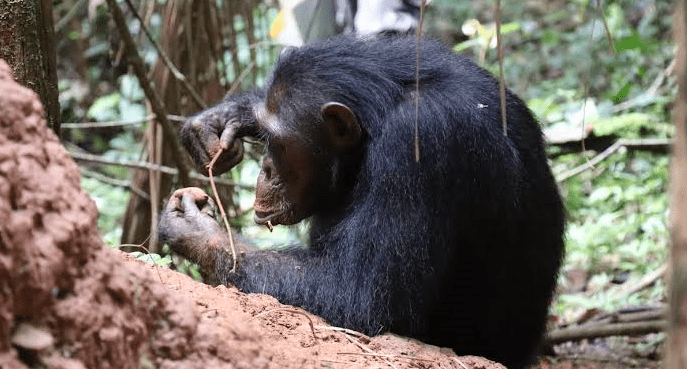
| Bugarama Sector | The Transition Valley Group | Ground-level tool use within secondary forest patches |
Each distinct sector requires specialized tracking methodologies due to varying terrain challenges. Therefore, structuring your safari itinerary depends heavily on your physical trekking comfort. Let Feather Trail Safaris guide you toward the perfect forest location.
Foraging Patterns in the Rwegura Bamboo Zones
The Rwegura sector represents the most accessible region for active primate research inside the park. This northern zone features beautiful pathways winding around a massive mountain reservoir.
Trackers here follow the movements of the well-studied Mwumba group closely. This specific community has undergone years of gentle habituation by local rangers.
Consequently, the individuals show remarkable comfort around quiet, respectful human observers. You can watch young juveniles practicing acrobatic leaps through the tree branches. Our expert guides ensure you maintain perfect positioning for safe, non-disruptive viewing. It is an unparalleled window into wild primate family life.
Vocal Communication Across the Teza Ridges
Alternatively, the Teza sector offers a much more rugged, adventurous tracking environment. Teza sits further south along the high backbone of the Congo-Nile Nile watershed divide.
The forest here features dramatic altitude shifts and dense secondary growth. This terrain means tracking the Chimpanzee Behavior Patterns in Burundi requires greater physical stamina.
However, the reward of finding a hidden valley troop here is genuinely incomparable. You will hear the intense, booming echoes of pant-hoots bouncing off the rock walls. These vocalizations signal that the dominant alpha male is gathering his family for an evening nest-building session. It offers a spectacular glimpse into the untamed raw power of the Albertine Rift.
Understanding Primate Communication and Body Language
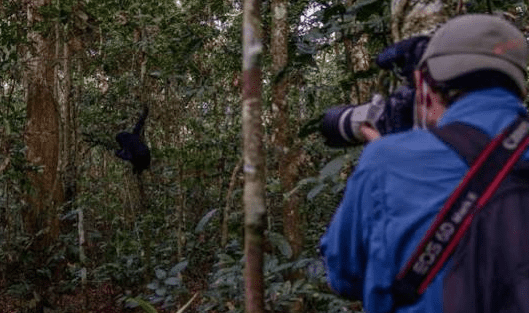
Deciphering the vocalizations and physical gestures of chimpanzees is the core of expert ethology work. Chimps communicate constantly through a diverse library of sounds, facial expressions, and body postures.
Rangers learn to identify individual voices within a community over long periods of study. They map these interactions to understand the changing political landscape of the troop. “A pant-hoot is not just noise. It is a highly complex broadcast of identity, location, and emotional state.”
First, low-frequency grunts usually signify satisfaction during feeding sessions on ripe figs. Next, sudden, high-pitched screams can indicate submissive behavior during a social dispute.
Furthermore, physical grooming acts as the social glue that seals critical political alliances between males. Trackers watch these grooming loops to see which younger males support the reigning alpha. Understanding these subtle cues turns your observation into a fascinating live drama.
Connecting Primate Research with Broader Regional Safaris
An educational research excursion works best when paired with comprehensive regional exploration. We highly recommend linking your primate tracking with our classic wilderness safaris. For example, you can spend two days learning from forest researchers. Afterward, you can enjoy a scenic wetland boat cruise.
To see how we naturally weave these elements together, explore our 3-Day Burundi Safari. This exceptional itinerary links urban cultural heritage highlights with the pristine delta of Rusizi. It serves as an excellent foundational template for multi-dimensional travel plans.
Furthermore, many global travelers choose to combine multiple East African nations on a loop. For instance, you could conclude your forest research tracking in Bujumbura. Next, you can easily book an extensive Uganda Safaris journey with our team.
Uganda offers world-class savanna game drives in legendary conservation areas. Alternatively, you can add a bucket-list gorilla trekking Uganda package to your holiday. Exploring multiple countries deepens your understanding of diverse regional primate habitats.
For additional ideas on ethical cultural exploration, check our comprehensive resources. We offer deep insights into Community-Based Tourism in Burundi. You can read our detailed guide on Burundi Village Homestays.
To learn about local food heritages, view our Cooking Classes in Burundi post. You can also explore artisan traditions with our Craft Workshops in Burundi guide. For tracking seasonal wildlife patterns, view our Seasonal Migration in Burundi guide. To learn about local commerce, look at our Burundi Market Tours article. Finally, explore local performing arts with our Music & Dance Lessons in Burundi guide. If you are traveling for academic purposes, read our Burundi Educational Tours overview. For volunteer opportunities, check out our Volunteer Tourism in Burundi guide. You can also review our Burundi Wildlife Conservation Programs entry. To explore general ethical travel guidelines, read our Responsible Tourism in Burundi handbook. If you need essential tracking safety rules, review our Safety Tips for Chimpanzee Trekking manual. Lastly, look into our guide on Chimpanzee Family Groups in Kibira Forest to see community case studies.
Our Unyielding Standards for Fair-Trade Eco-Tourism
At Feather Trail Safaris, we operate under the strict ethical guidelines of The International Ecotourism Society (TIES). Therefore, our research safaris prioritize direct financial support for independent forest guardians. We entirely avoid large, foreign-owned tour operations that exclude local stakeholders.
collaborate continuously with local community cooperatives recognized by national environmental authorities. We guarantee that all our tracking excursions follow rigid non-disturbance protocols strictly.
Furthermore, a significant portion of your tour permit fee goes into a village development fund. This fund buys clean energy cookstoves for families living near the forest boundary. Consequently, your presence helps eliminate wood collection and protects the integrity of the primate canopy. Your journey leaves a highly positive, permanent legacy across the entire region.
How to Customize and Book Your Research Safari
Are you ready to use your next vacation to explore the wonders of primate science? Planning your research itinerary with Feather Trail Safaris is incredibly simple.
We customize every single forest excursion based on your specific physical fitness levels and academic interests. We cater beautifully to university student groups, corporate green teams, and independent solo retirees.
Our team manages all ground logistics, private 4×4 transport, park permits, and local eco-guides. We guarantee your research adventure is safe, organized, and deeply enriching. Contact our travel consultants today to start designing your custom African holiday!
The Last Word on Primate Ethology
In conclusion, studying Chimpanzee Behavior Patterns in Burundi offers far more than just a typical vacation sightseeing choice. It is a powerful declaration of support for global wildlife conservation and scientific discovery.
You will share sweat and knowledge with inspiring local field rangers. You will watch wild families interact inside pristine habits you help protect. These profound, authentic memories will stay with you forever.
Do not settle for a superficial, detached mass-market holiday package. Choose Feather Trail Safaris for your next major journey. Let us guide you toward the most impactful research and tourism opportunities in East Africa. Your ultimate primate adventure begins right now!
This video showcases the incredible natural landscapes, dense forests, and wildlife heritages that await you across the country: The Pristine Wilderness and Nature of Burundi
FAQs
Why are Chimpanzee Behavior Patterns in Burundi unique?
The chimpanzees in Kibira Forest live at exceptionally high altitudes within isolated mountain ranges. Consequently, their foraging strategies and tool-use habits differ significantly from lowland forest populations.
Can I expect to see tool-use behavior during my research trek?
Tool use occurs frequently but requires immense patience to witness live in the field. You are most likely to observe individuals using cracked twigs to harvest wild honey or target forest termites.
How do field trackers distinguish between individual chimpanzees?
Researchers identify individual chimps by studying unique physical markers like facial scars, ear notches, and distinct hair patterns. Over time, these facial characteristics become highly recognizable to the tracking team.
What should I do if a chimpanzee displays aggressive behaviors?
If an individual displays defensive behavior like branch-shaking, always remain completely calm. Lower your eyes respectfully, avoid direct contact, and step back slowly following your ranger’s explicit hand signals.
Are research safaris limited to specific times of the day?
Yes, tracking sessions are scheduled strictly during the early morning hours when primate activity peaks. This timeline ensures you catch the group as they leave their night nests to forage.