
Rwanda and Burundi Combined Safari: 7 Days Trip
Rwanda and Burundi Combined Safari: While most travelers visit these two heart-of-East-Africa countries separately, few think to combine them. The country of Rwanda has long been a bucket-list staple for its iconic mountain gorillas, rolling hills, and vibrant Kigali. Conversely, neighboring Burundi remains a footnote country, briefly mentioned in guidebooks before moving on.
The Rwanda and Burundi Combined Safari changes that calculation completely.
In seven days, moving south from Kigali through the volcanic highlands to Volcanoes National Park and then across the border to Bujumbura and the shores of Lake Tanganyika, you can sit in a forest with mountain gorillas, hear the royal drums of a thousand-year-old kingdom thundering across the hills of Gitega, swim in one of the world’s deepest lakes, and eat fresh tilapia at a lakeside restaurant while the sun drops behind the Congo hills. You can do all of this without boarding a plane between countries. You can do all of this, in total, for a fraction of what a comparable multi-country safari in southern Africa would cost.
This is East Africa at its most concentrated and most human. This is the trip that people who’ve already done the obvious ones take when they want something realer.
Why Choose a Rwanda and Burundi Combined Safari?
The case for combining Rwanda and Burundi in a single itinerary is both practical and experiential, and the two dimensions reinforce each other.
Proximity without repetition. Rwanda and Burundi share a border and are separated by a road journey of less than 4 hours between Kigali and Bujumbura. Despite this proximity, they offer entirely different experiential profiles. Rwanda is highlands, volcanoes, mountain gorillas, and a national identity built around conservation and recovery. Burundi is lake shores, ancient drum culture, forest primates, and a quietly extraordinary cultural heritage that international tourism has barely discovered. Visiting both in a single week costs little more in time and logistics than visiting one, and delivers twice the depth.
Complementary wildlife and culture. The Rwanda and Burundi Combined Safari builds a narrative arc. Day one to three: the wildlife story, one of the planet’s most endangered great apes, in ancient volcanic forest, in a country that turned conservation into nation-building. Day four to six: the cultural story, royal drum traditions recognised by UNESCO, Twa community pottery cooperatives, the extraordinary human life of a lakeside African city. The two stories are separately extraordinary. Together, they constitute one of the most complete East African experiences available.
Value. Rwanda’s gorilla trekking permit ($1,500) is the largest single expense and is non-negotiable. But adding Burundi, with its dramatically lower accommodation costs, its affordable cultural attractions, and its permit prices a fraction of Rwanda’s, extends the trip significantly without proportionally increasing the budget.
Genuine discovery. Most Rwanda tourists follow a well-worn path. The Rwanda and Burundi Combined Safari takes you off it the moment you cross the border, into a country where the restaurants don’t have menus in five languages, where the craft markets aren’t designed for international visitors, and where being genuinely curious about where you are is still the most useful travel tool you possess.
Day 1: Arrival in Kigali, Rwanda
First Impressions of a Remarkable City
Most international flights into Kigali land in the early morning or late evening. Either way, the first thing you notice about Rwanda’s capital is the roads. They are smooth. The roundabouts are landscaped. The city moves with a purposefulness and a cleanliness that sets it apart from almost every other African capital, and that is not a casual observation but a reflection of deliberate national policy: Rwanda’s remarkable post-genocide transformation is physically visible in the infrastructure of its capital city.
Your Day 1 is oriented around arrival, orientation, and a first encounter with the city’s cultural and historical depth.
Morning/Afternoon: Transfer from Kigali International Airport to your city hotel. Depending on arrival time, a rest period before the afternoon programme is recommended, particularly for travellers arriving on overnight transatlantic or European connections.
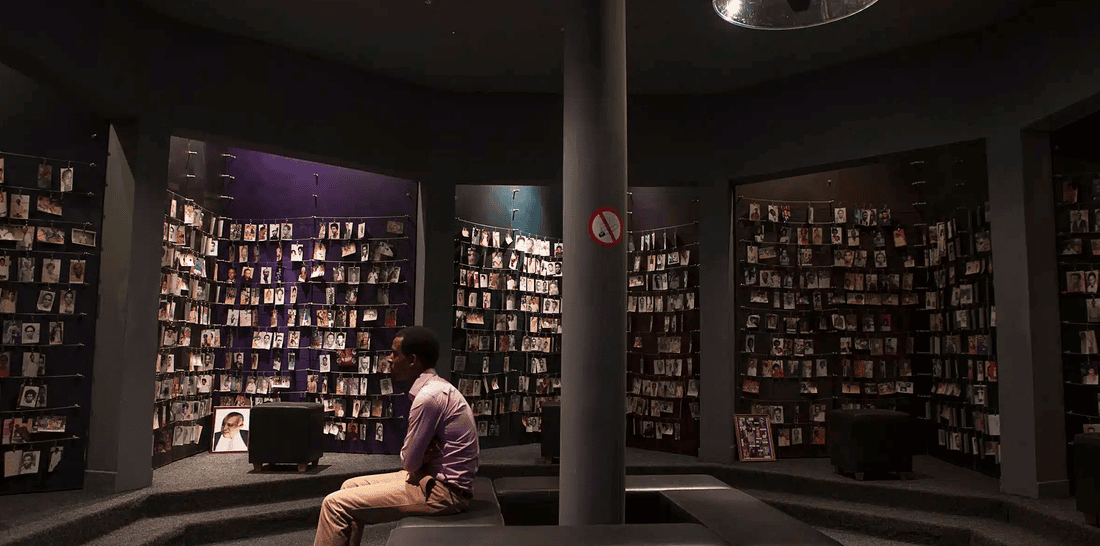
The Kigali Genocide Memorial: This is not a comfortable visit, but it is an essential one. The memorial documents the 1994 genocide against the Tutsi, the 100 days in which an estimated 800,000 people were killed, with honesty, dignity. An insistence that visitors understand what happened here before understanding what Rwanda has become. The memorial gardens, the exhibition halls, and the mass burial sites are handled with profound care. Allow 2 to 3 hours, and allow time afterwards to sit quietly.
Kigali city evening: Rwanda’s capital has a growing food and nightlife scene concentrated in the Kiyovu and Kimihurura neighborhoods. Restaurants serving both Rwandan and international cuisine are excellent; the rooftop bars overlooking the city’s hills make for a good first evening in East Africa.
Overnight: Kigali city hotel (options range from mid-range business hotels to the Kigali Marriott and Radisson Blu at the top end).
Day 2:Transfer to Volcanoes National Park
The Road North: Rwanda’s Most Scenic Drive
The 2.5-hour drive from Kigali to Musanze (the gateway town to Volcanoes National Park) is one of the most visually compelling road journeys in East Africa. The road climbs steadily through Rwanda’s famous terraced hillsides, a landscape so thoroughly cultivated, so completely organised up every slope, that it looks less like a natural terrain than like a vast human artwork.
As the road enters the northwest, the Virunga volcanoes come into view: five distinctive peaks ranged along the horizon, the highest (Karisimbi, 4,507m) capped with clouds or snow on cold mornings. You are looking at the most important mountain gorilla habitat on earth.
Cultural stop, Iby’Iwacu Cultural Village: Located near the park entrance, the Iby’Iwacu Cultural Village is a community tourism initiative that employs former poachers as cultural guides and performers. A 90-minute visit provides an introduction to Rwandan cultural traditions, traditional dance, storytelling, craft demonstrations, and a window into the conservation-community relationship that is central to Rwanda’s gorilla protection model. The irony of former poachers becoming the gorillas’ most committed protectors, because tourism has made protecting them economically rational, is one of the most instructive stories in modern conservation.
Twin Lakes viewpoint: The volcanic lakes of Burera and Ruhondo, visible from the road north of Musanze, are worth a brief stop. The lakes sit in ancient volcanic craters, and the view from the road above them, terraced hillsides falling to dark blue water, the volcanic ridgeline above, is one of those images that stays with you.
Gorilla trekking briefing: Your guide will brief you on the following day’s trek during the evening at your lodge, what to expect, what to wear, the rules around gorilla encounters, and the physical demands of different trail options.
Overnight: Lodge near Volcanoes National Park. Options include the full-luxury Bisate Lodge (which plants indigenous trees for every guest and employs exclusively locally) through to comfortable mid-range options in Musanze town.
Day 3: Mountain Gorilla Trekking in Volcanoes National Park
The Day That Changes Everything
The morning begins before 6am. This is not negotiable, and it is absolutely worthwhile.
You will be at the Volcanoes National Park headquarters in Kinigi for the 7am briefing. Rangers divide the day’s trekking groups, a maximum of 8 people per gorilla family, and brief each group on the specific family they will visit, the expected trekking duration, and the encounter protocols. Flash photography is prohibited. Minimum distance is 7 metres unless a gorilla approaches you. If a gorilla approaches, you hold still, look down, and do not run. The rangers will manage the situation.
Then the forest begins.
The trek: Duration is unpredictable, anywhere from 45 minutes to 5 hours depending on where the gorilla family has moved overnight. Trackers set out before dawn and radio positions to the ranger team; your group is guided directly to the gorillas’ current location. The terrain is steep, root-crossed, and can be muddy in all but the driest months. Hire a porter at the trailhead, $10 to $15, and the best value decision you will make all week.
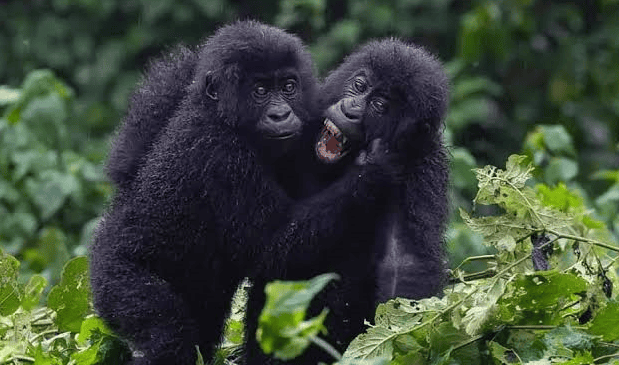
The encounter: You have one hour. The mountain gorillas of the Virunga, currently around 600 individuals, in a population that has grown from approximately 240 in the 1980s, are habituated to human presence through years of daily ranger contact. They will not flee. They may look directly at you. Juveniles may come closer than the 7-metre rule requires. The silverback may drum, display, and then settle back to whatever he was doing before you arrived.
The hour passes in approximately five subjective minutes. Every trekker describes it the same way.
The Rwanda Development Board’s conservation model, permit fees funding rangers, trackers, and the Revenue Sharing Programme that returns income to communities around the park, is the primary reason the mountain gorilla population is growing rather than declining. Your $1,500 permit is a meaningful contribution to that model.
Afternoon: Return to the lodge for lunch, rest, and the particular introspective mood that the morning’s encounter tends to produce. Optional afternoon activity: golden monkey tracking (an additional $100 permit) in the bamboo forest below the gorilla zone, a lively, colourful complement to the morning’s more solemn experience.
Overnight: Volcanoes National Park lodge area.
Day 4: Transfer from Rwanda to Burundi via Kigali
Crossing Into a Different Africa
The Day 4 transfer covers the most logistically complex element of the Rwanda and Burundi Combined Safari, the move from Rwanda’s northern highlands to Burundi’s capital city. The journey is done by road and takes most of the day.
Morning: Drive back to Kigali (2.5 hours). If time allows, a brief stop at the Caplaki Crafts Village on the Kigali outskirts is certainly worthwhile. Indeed, it offers the best concentration of quality Rwandan crafts and souvenirs in the country, featuring fixed prices and a genuinely good selection.
Kigali to Bujumbura: The border crossing at Nemba (Rwanda to Burundi) is the standard route for road travellers. The crossing itself is typically straightforward, both countries have relatively efficient border facilities, and takes 30 to 60 minutes depending on traffic and documentation. Your operator will manage the logistics; ensure you have all required documentation (passport with valid visas for both countries, yellow fever certificate) easily accessible.
The road from the border to Bujumbura descends from the Burundian highlands to the Rusizi River valley. Next, it winds down to the lake shore.
This dramatic 90-minute drive showcases a shifting landscape. Initially, you will pass green highland terracing. Then, the scenery transitions to drier, lower-altitude savannah. Finally, the urban sprawl of Bujumbura appears as the lake opens up ahead.
Bujumbura arrival: The first sight of Lake Tanganyika, wide as an inland sea, blue in the afternoon light, is one of the great geographical revelations of the trip. Bujumbura sits at the northern end of the lake, its urban waterfront lined with palm trees and beach clubs, its hills rising steeply behind the city.
Afternoon: Check in and rest, then an early evening walk along the Plage de Bujumbura, the lake beach, as the sun drops toward the Congo hills on the western shore. The light on Lake Tanganyika in the late afternoon is extraordinary.
Overnight: Bujumbura city hotel. Options include the comfortable Hotel Club du Lac Tanganyika (directly on the water) and several well-regarded city centre properties.
Day 5: Exploring Bujumbura and Burundian Cultural Sites
The City on the Lake
Bujumbura is not Kigali. That is not a criticism, it is a description of a genuine and interesting difference. Where Kigali has been aggressively modernised and systematically organised, Bujumbura retains the particular organised disorder of a city that is growing faster than it is planning. It is noisier, more tactile, more immediately alive. A city where the daily human business of buying, selling, arguing, cooking, and carrying on is conducted at full volume on the pavement.
It is also, for visitors willing to look beyond the surface chaos, a city of genuine cultural depth.
Morning, Livingstone-Stanley Monument: The monument marking the alleged meeting point of the explorers Henry Morton Stanley and David Livingstone stands on the Bujumbura waterfront. A colonial-era landmark that provides a physical anchor for the city’s complex relationship with the European encounter.
The Musée Vivant (Living Museum): The best single introduction to Burundian cultural heritage in the capital. The museum hosts craft demonstrations, cultural performances, and exhibits covering traditional Burundian material culture, pottery, basketry, dress, musical instruments, in an accessible outdoor compound. Allow 2 hours.
Afternoon, Marché Central: The central market is the emotional and commercial heart of Bujumbura, a vast, organised chaos of produce. Fabrics, crafts, street food, and human energy that rewards patient exploration. The craft section, with its stalls of Twa pottery, coiled baskets, beadwork jewellery, and carved objects, is the best place in the country to buy directly from artisans.
Lake Tanganyika evening: No visit to Bujumbura is complete without swimming in or at least sitting beside Lake Tanganyika. The lake is clean, safe, croc-free in the main swimming areas, and of a clarity that surprises visitors expecting murky urban water. The beach clubs that line the Bujumbura waterfront are social places on weekday evenings, a good opportunity to encounter Bujumbura residents in their leisure rather than their working mode.
Overnight: Bujumbura.
Day 6: Gishora Drum Sanctuary and Community Cultural Encounters
The Sound That Made a Kingdom
Moving forward, Day 6 takes you out of Bujumbura and into the Burundian interior to Gitega, the cultural capital. Specifically, you will head to the Gishora Drum Sanctuary, which not only stands as the most important site in the country for Burundian royal drum culture, but also remains one of the most powerful cultural experiences in all of East Africa.
Morning drive to Gitega (3 hours): The road climbs steadily from the lake shore into the highlands, the same dramatic altitude gain in reverse from the Day 4 descent. Gitega sits at approximately 1,600 metres, and the air quality and green landscape of the highlands are a pleasant contrast to Bujumbura’s lower-altitude heat.
Gishora Drum Sanctuary: The sanctuary at Gishora, near Gitega, is the sacred site where the royal drums (ingoma) of the Burundian kingdom were historically kept. The drums are treated as living presences, named, honoured, and housed in specific structures on the sanctuary grounds. The site includes the original drum houses, a performance space, and interpretive installations explaining the drum tradition’s cultural and political significance.
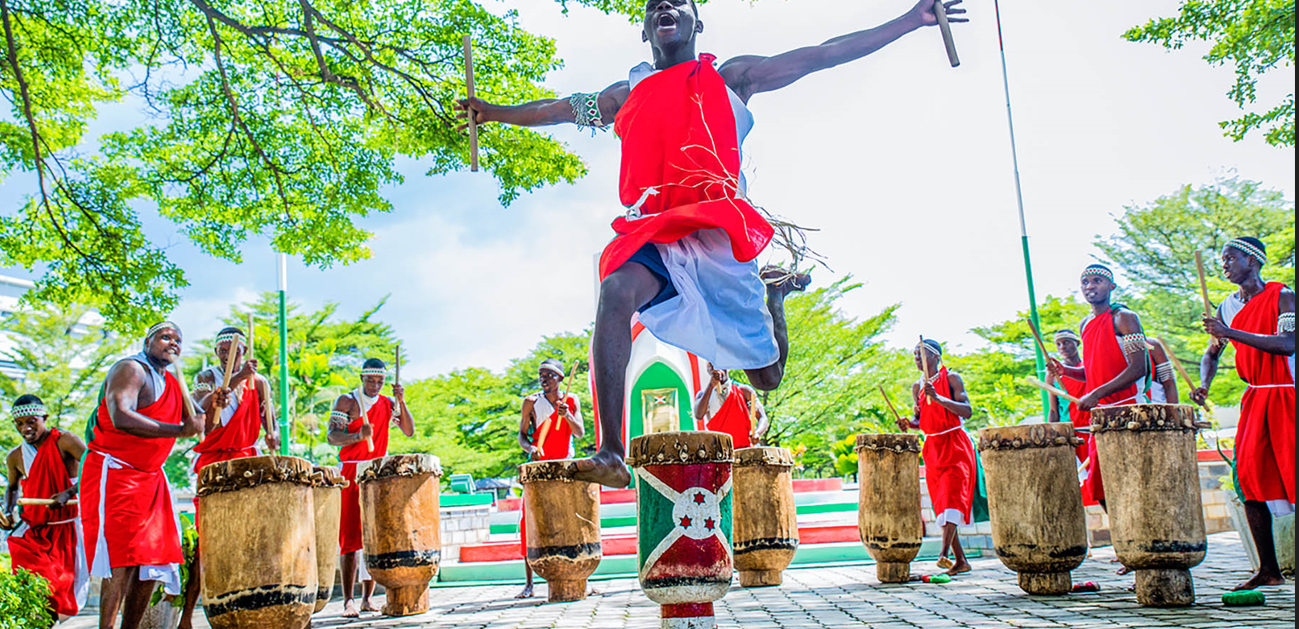
The Royal Drummers of Burundi performance at the sanctuary is the experiential centerpiece of the Burundian section. Consequently, it becomes one of the safari’s most memorable moments.
Furthermore, this UNESCO-recognized tradition involves multiple ensembles of drummers. These performers simultaneously play, dance, and execute an accelerating sequence. Ultimately, the performance builds to a physical and sonic climax unlike anything in conventional music.
If you have seen drumming before, you have not seen this drumming.
National Museum of Gitega: The country’s most important history and ethnography collection, located in the city centre. The drum collection, royal regalia, traditional dress, and ethnographic documentation of Burundi’s three ethnic communities make this a genuinely educational 90-minute visit.
Community cultural visit: Your guide will arrange a late-afternoon visit to a community near Gitega, typically a Twa pottery cooperative or a women’s basket-weaving group. This is a direct encounter with Burundian craft traditions. This is the Rwanda and Burundi Combined Safari’s most intimate cultural moment: sitting with a potter or a weaver, watching the skill operate at full speed, understanding that what you are seeing has been passed from hand to hand for generations.
Overnight: Gitega area guesthouse or return to Bujumbura (3 hours).
Day 7: Departure from Bujumbura (or Optional Extension)
Last Mornings, Optional Adventures
The final morning of the Rwanda and Burundi Combined Safari has the particular quality of endings that have been earned through full engagement. The slightly sad, deeply satisfied feeling of someone who has been somewhere real and is now leaving it.
Optional morning activities:
A final swim at Lake Tanganyika before the airport transfer
A morning visit to the Rusizi National Park, a small but rewarding wetland reserve just outside Bujumbura, accessible for a 2-hour game drive to see hippos, crocodiles, and exceptional birdlife
A last trawl of the craft market for anything you missed on Day 5
Airport transfer: Bujumbura International Airport is approximately 20–30 minutes from the city centre. Confirm departure time with your operator; international connections via Nairobi or Kigali require appropriate buffer time.
Optional extension: Kibira National Park (2–3 additional days): For travellers with more time. The natural extension of the Rwanda and Burundi Combined Safari is northward to Kibira National Park for chimpanzee trekking. The experience that completes the primate trilogy (mountain gorillas in Rwanda, chimpanzees in Burundi) and adds a third chapter to one of the finest wildlife narratives in Africa. See our dedicated Burundi travel guide for full Kibira planning information.
Best Time for a Rwanda and Burundi Combined Safari
Both Rwanda and Burundi experience two dry seasons and two wet seasons annually. For the combined safari, the key timing considerations are gorilla trekking conditions (Rwanda) and travel logistics (road conditions between the two countries).
Long dry season (June to September): The optimal window for the entire itinerary. Gorilla trekking trails in Volcanoes National Park are firm and manageable. Roads between Rwanda and Burundi are reliable. The cultural sites of Bujumbura and Gitega are accessible year-round, but the pleasant highland temperatures of June to September make the Burundian leg particularly comfortable.
Short dry season (December to January): The second-best window. Excellent gorilla trekking conditions, significantly lower visitor numbers than the June–September peak. The festive energy of Burundian Christmas celebrations adding an unexpected cultural dimension.
Rainy seasons (March–May, October to November): The trails are muddy, the gorilla trek is harder, and the roads between the countries can be challenging. Not recommended for a first Rwanda–Burundi combined trip. Experienced travellers who prefer the lush landscape and the intimacy of off-season travel may disagree.
Why Book Your Rwanda and Burundi Combined Safari with Feather Trail Safaris?
The logistics of a combined Rwanda–Burundi itinerary are more complex than a single-country trip. The quality of the experience depends heavily on the ground-level relationships and local knowledge that your operator brings.
Local expertise in both countries. Additionally, most safari operators are specialists in either Rwanda or Burundi. However, Feather Trail Safaris maintains active, experienced operations in both, with trained guides, established community partnerships, and the current logistical knowledge that this specific cross-border itinerary requires.
Permit management. Gorilla permits must be booked in advance and secured correctly. A process that requires established relationships with the Rwanda Development Board. We handle this as standard.
Community-connected cultural experiences. The Gishora drum performance, the Twa community visit, the basket-weaver cooperative, these are not generic cultural shows. They are genuine encounters that we can access because of relationships built over years. A new or inexperienced operator cannot replicate this.
Responsible tourism. Our itineraries are designed to direct visitor spending to local communities, community lodges, and artisan cooperatives. To that end, we can explain specifically how our tourism revenue flows and what particular conservation and community outcomes it supports.
Flexibility and customisation. The 7-day itinerary in this guide is a starting framework. We build every trip from scratch around the specific interests, fitness levels, and travel dates of the people taking it. Want to add Kibira chimpanzee trekking? Spend more time at Lake Tanganyika? Include a cooking class with a Burundian family? Tell us and we’ll design it
This is the trip. Rwanda and Burundi belong together on one itinerary, and once you’ve done it, you’ll wonder why more people haven’t figured that out.
Contact Feather Trail Safaris to start planning your Rwanda and Burundi Combined Safari. We’ll handle the permits, the border logistics, the cultural arrangements, and everything in between. Your job is to show up and be present for one of East Africa’s best-kept secrets.
Ready to Experience East Africa’s Best-Kept Secrets?
Combining Rwanda for gorillas with Burundi creates a unique East African safari greater than the sum of its parts.
Get a personalised Rwanda and Burundi safari quote from Feather Trail Safaris
To achieve this, we offer fully customisable packages for solo travellers, couples, families, and groups, along with expert guidance on permits, timing, accommodation, and cultural experiences in both countries.
FAQs
Is Rwanda and Burundi safe for tourists?
Rwanda is consistently ranked among Africa’s safest tourist destinations, low crime, well-policed roads, and excellent tourism infrastructure.
Historically, Burundi has experienced political instability. Therefore, current travel advisories should always be checked before booking your trip. Nonetheless, in spite of this precaution, the main tourist-relevant areas are ultimately safe, highly accessible, and, consequently, regularly visited. These include Bujumbura, Gitega, and the routes between them.
Meanwhile, Feather Trail Safaris maintains current ground-level security knowledge. Consequently, we will always advise you accordingly based on real-time updates.
How much does a Rwanda and Burundi Combined Safari cost?
Costs vary significantly by accommodation level, group size, and seasonal timing. As a baseline: the gorilla trekking permit ($1,500 per person) is the largest fixed cost. A complete 7-day mid-range package including permits, accommodation, transfers, and guided activities typically costs $3,500–$5,500 per person. Luxury packages run $7,000–$12,000. Budget-conscious travellers choosing mid-range accommodation and off-peak timing can do the itinerary for less. Contact us for a specific quote.
Do I need visas for both Rwanda and Burundi?
Yes. Rwanda visas are available on arrival or via e-visa ($50 USD for most nationalities). Burundi visas are available on arrival at the airport and at the Nemba land border crossing ($80 USD for most nationalities) or via e-visa in advance. Both countries require a yellow fever vaccination certificate for entry. Your operator will advise on current requirements for your specific nationality.
What is the best time to visit Rwanda and Burundi?
June through September (long dry season) is the optimal window for the entire combined itinerary. Best gorilla trekking conditions in Rwanda, good road conditions, and pleasant highland temperatures throughout. December–January is an excellent quieter alternative. The September/October Umuganuro festival in Burundi’s Gitega is a specific event worth timing a trip around.
How difficult is gorilla trekking in Rwanda?
Moderately challenging for most people. The terrain in Volcanoes National Park is steep, the altitude is significant (2,400 to 3,000m), and trek duration is unpredictable (45 minutes to 5 hours depending on gorilla location). A reasonable baseline of fitness, appropriate footwear, and a hired porter make it manageable for most travellers. See our full Rwanda gorilla trekking guide for detailed preparation advice.
Can I customise the itinerary?
Absolutely. The 7-day structure in this article is a starting framework. Rwanda and Burundi Combined Safari: Feather Trail Safaris customizes every private itinerary around your specific interests, fitness level. The dates, with options to add chimpanzee trekking, Lake Tanganyika excursions, extra gorilla tracks, or Akagera game drives.
What cultural experiences are available in Burundi?
Burundian cultural experiences on this itinerary include the legendary Gishora Drum Sanctuary royal performance. Additionally, travelers can explore history at the National Museum of Gitega. Next, you will visit a traditional Twa community pottery cooperative. Afterward, the journey continues to the Musée Vivant in Bujumbura. Finally, enjoy a local basket-weaving cooperative and immersive market experiences at Bujumbura’s bustling Marché Central. Extended itineraries can include cultural immersion homestays, cooking experiences with local families, and attendance at the Umuganuro festival.
How many days do I need for a Rwanda and Burundi Combined Safari?
Seven days is the practical minimum for a satisfying combined experience. This allows one full gorilla trekking day in Rwanda and two to three full days in Burundi. Ten days is the comfortable optimum, allowing a second Rwanda activity (golden monkey, Akagera game drive, or additional gorilla trek), a more relaxed Burundian programme. An optional Kibira chimpanzee trek. Shorter combinations (5 days) are possible but feel rushed.
Explore all East Africa safari tours with Feather Trail Safaris View Rwanda safari packages Explore Burundi cultural tours