
The first thing I noticed about the woman at the Bujumbura market was not the price she was asking or the quality of the baskets she was selling. It was her wrapper.
She was wearing a length of printed cotton, deep blue ground, a bold geometric pattern in yellow and white, tied around her waist and reaching her ankles, over a plain blouse of similar blue. Around her neck were two strings of red and white beads. Her hair was wrapped in a matching headtie. The whole composition had the quality of considered coordination, not expensive, but deliberate, individual, and exactly right for the person wearing it.
Burundi traditional clothing is not a frozen historical category. It is a living practice, continuously evolving, deeply meaningful, and one of the most immediately visible expressions of Burundian cultural identity that any visitor will encounter.
The Kitenge: Daily Life in Fabric
The kitenge (also called pagne or kanga in different regional contexts) is the most ubiquitous and most culturally significant garment in Burundian daily life. It is a length of printed cotton fabric,typically 2 to 3 metres, worn wrapped around the body in various configurations depending on gender, occasion, and regional custom.
The kitenge is worn by women as a full-length skirt, as a wrap-around dress, as a baby carrier (igitenge), as a headwrap, and as a multi-purpose cloth that serves simultaneously as garment, blanket, and carrying cloth. Men wear it less commonly but use it as a wrap garment in rural contexts and ceremonially.
The patterns on kitenge fabric are themselves communicative. Specific designs mark specific occasions. For example, mourning kitenge feature darker, more subdued patterns. In contrast, celebration kitenge display bold, bright colors and symbolic imagery. Moreover, some designs carry specific political or social messages. Across many African countries, designers create fabrics to commemorate specific events or public figures.
Burundian kitenge is produced both locally and imported from Central African printing centres. The locally produced fabrics,using designs and colour combinations with specifically Burundian cultural references, are worth seeking out as more authentic souvenirs than mass-produced regional designs.
Royal and Ceremonial Dress
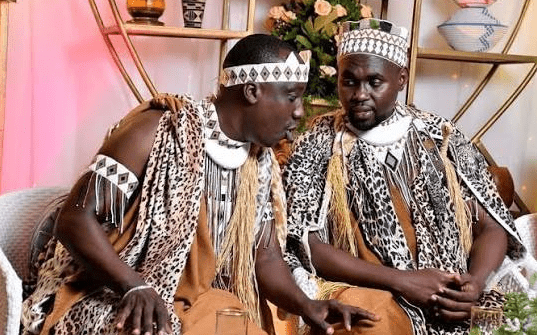
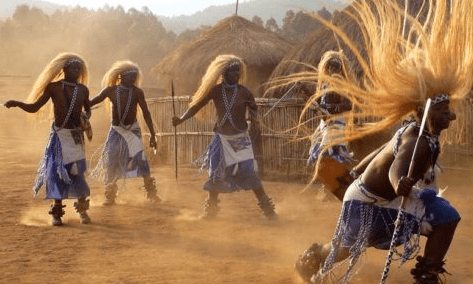
Royal and ceremonial contexts showcase the most elaborate expressions of Burundian traditional clothing. Moreover, the Intore warrior dancers wear distinctive traditional attire during their performances. Traditional chiefs and their courts also display ceremonial regalia. Likewise, people wear ceremonial clothing during major cultural festivals.
Intore warrior costume: The most internationally recognisable form of Burundian ceremonial dress. The white colobus fur headdress (umushanana), the animal-skin waistband, and the carrying of shield and spear create a visual ensemble that is both ancient in its symbolic vocabulary and immediately striking in its aesthetic impact. The headdress in particular, a cascade of white colobus fur that moves with the dancer, is one of the most distinctive visual elements in East African performance culture.
Royal court dress: Historical accounts and museum collections document the elaborate dress of the Burundian royal court, layered garments, intricate bead and shell work, cattle-horn ornaments, and the distinctive ceremonial objects carried by different ranks of courtiers. Contemporary performances and cultural re-enactments draw on these historical models while adapting them for modern performance contexts.
Twa Traditional Dress
Twa community dress reflects the community’s forest heritage and their historical positioning at the margins of the agricultural societies around them. Historically, Twa dress made greater use of natural materials, bark cloth, plant fibres, animal skins, than the woven and printed cotton that dominates Burundian dress today.
Contemporary Twa community members dress largely in the same kitenge-based style as their Hutu and Tutsi neighbours, with traditional elements maintained primarily for ceremonial performances. The distinctive beadwork jewellery of Twa communities, strings of small glass and seed beads in traditional patterns, remains a living craft tradition that is both worn and sold to visitors.
What Visitors Should Know About Dress in Burundi
Dress modestly in rural and community contexts. Burundian community culture is relatively conservative in dress expectations, particularly for women. Shorts and sleeveless tops are acceptable in Bujumbura’s tourist areas but inappropriate for village visits, community meetings, and cultural ceremonies. Loose trousers, long skirts, and tops that cover the shoulders are universally appropriate.
Kitenge is the ideal souvenir. A length of good-quality Burundian kitenge is beautiful, culturally authentic, infinitely useful, and affordable ($5–$15 per length). It can be made up into clothing by Bujumbura tailors at low cost or taken home as fabric.
Buying from the market is buying from the maker. The women selling kitenge and beadwork in Burundian markets are often the people who made or selected the items. Prices are fair and negotiation is gentle rather than aggressive.
FAQs: Burundi Traditional Clothing
What is the most common traditional garment in Burundi?
The kitenge (pagne) is the most widely worn traditional garment, a printed cotton wrap fabric worn by women in various configurations and used for multiple purposes in daily life.
Where can I buy traditional Burundian clothing?
The Marché Central in Bujumbura has the widest selection. Artisan cooperatives in Gitega and Kayanza offer higher-quality locally produced fabrics and beadwork.
Is there a dress code for visiting cultural sites in Burundi?
No formal dress code applies. However, visitors should wear modest clothing with covered shoulders and knees. This dress shows respect during community visits, cultural ceremonies, and religious sites.
Can I have clothing made in Burundi?
Yes. Bujumbura has many skilled tailors who can make up kitenge fabric into any garment style at very reasonable prices, typically $10 to $25 for a tailored item.
Explore Burundi cultural tours and craft shopping with Feather Trail Safaris