
Akagera National Park Rwanda: Big Five Safari Guide 2026
When most people think of Rwanda, their minds go straight to mountain gorillas. And fair enough — a morning in the misty forest of Volcanoes National Park is hard to top. But Rwanda has a second wildlife story that doesn’t get nearly enough attention, and it’s unfolding in the east of the country, on the border with Tanzania.
Akagera National Park is Rwanda’s only savannah reserve, a sweeping landscape of open plains, papyrus swamps, woodland, and lake systems that looks nothing like the Rwanda most visitors imagine. Here, instead of forest and volcanic peaks, you get big open sky, golden grass, and game drives that feel genuinely wild. Lions stalk through the long grass. Elephants move through the treeline. Hippos grunt from the shallows of Lake Ihema. And after years of careful conservation work, all five of Africa’s most iconic animals are back.
This is Rwanda’s Big Five story, and it’s one of the most compelling wildlife comebacks on the continent.
The Remarkable Conservation Story Behind Akagera
Before you understand what Akagera is today, you need to know what it went through to get here.
Akagera was originally gazetted as a national park in 1934, one of Africa’s oldest. At its peak it covered over 2,500 square kilometres. But decades of civil conflict, poaching, and post-genocide resettlement pressure in the 1990s reduced the park dramatically, wildlife was decimated, lions were eliminated entirely, and rhinos were poached to local extinction. By the early 2000s, Akagera was a park in name but barely in practice.
The turnaround came in 2010 when the Rwanda Development Board partnered with African Parks, a conservation nonprofit with a track record of rescuing failing parks across the continent. The results have been extraordinary. Poaching dropped to near zero. The park was partially fenced to reduce human-wildlife conflict. Lions were reintroduced from South Africa in 2015. Black rhinos followed in 2017 and again in 2019. Today Akagera is home to all of the Big Five, and the park’s wildlife numbers are growing every year.
It’s one of Africa’s great conservation success stories, and visiting in 2026 means you’re witnessing it while it’s still unfolding.
The Big Five in Akagera: What to Expect
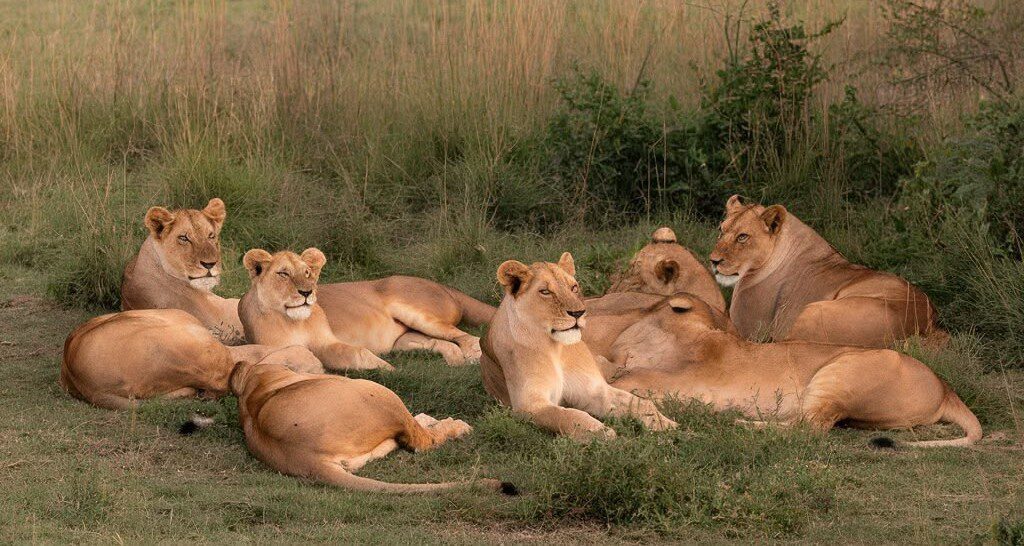
Lions
Lions were completely absent from Rwanda for roughly 20 years before their reintroduction. Today Akagera has a small but established pride — numbers that continue to grow as the population stabilises. Sightings aren’t guaranteed, as is true anywhere in Africa, but the northern sector of the park gives you the best odds. Early morning game drives, when lions are most active, are your best window.
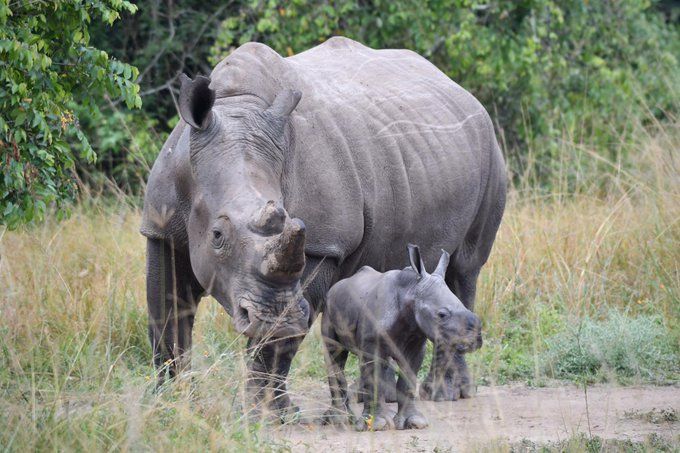
Black Rhinos
Akagera is home to one of East Africa’s few remaining black rhino populations. These are critically endangered animals, fewer than 6,000 remain in the wild globally, and seeing one in Akagera is a genuinely rare privilege. The park’s dedicated rhino monitoring team tracks individuals closely, and guided rhino tracking experiences (separate from standard game drives) give you the best chance of a sighting. The rhino population has been growing steadily since reintroduction, which is exactly the kind of conservation news worth celebrating.
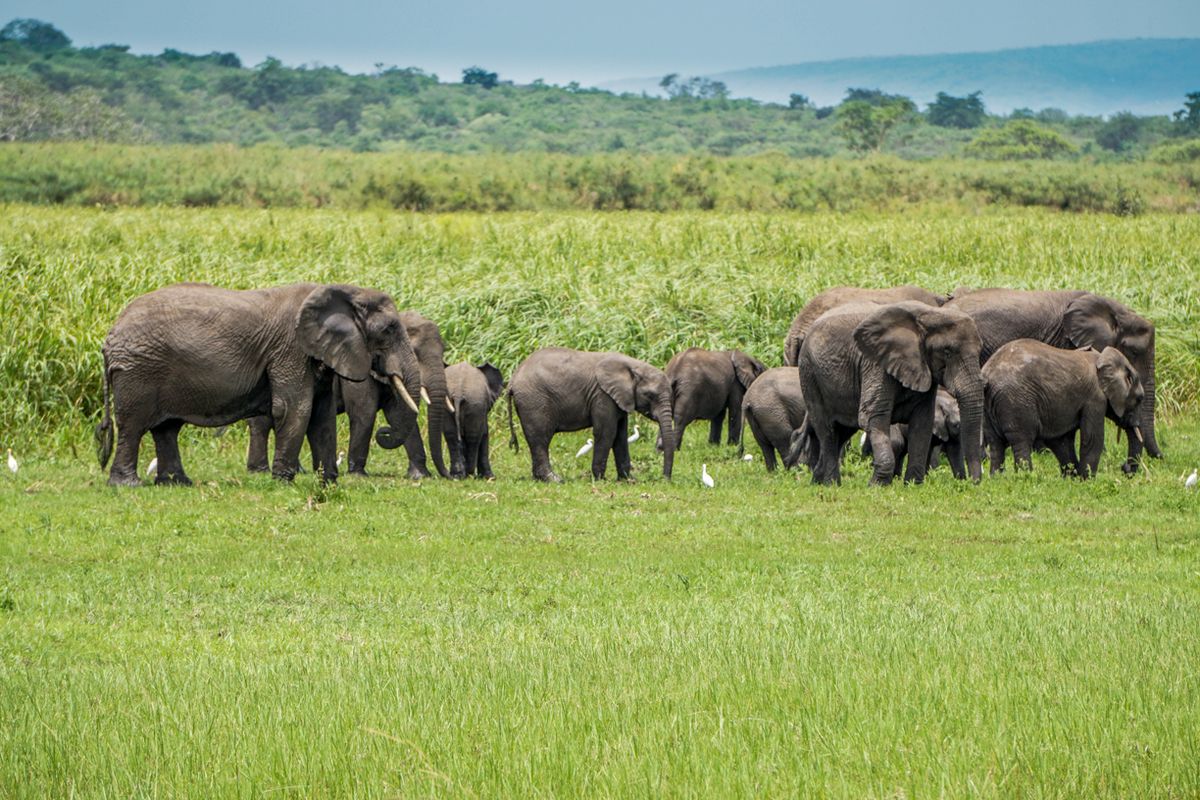
African Elephants
Akagera’s elephants are a confident, well-established presence. Herds move through the woodland and along the lakeshore, and encounters during game drives are relatively common. The northern sector tends to host larger concentrations. Elephants here have a reputation for being somewhat bold around vehicles — a reminder that you’re the visitor in their space.
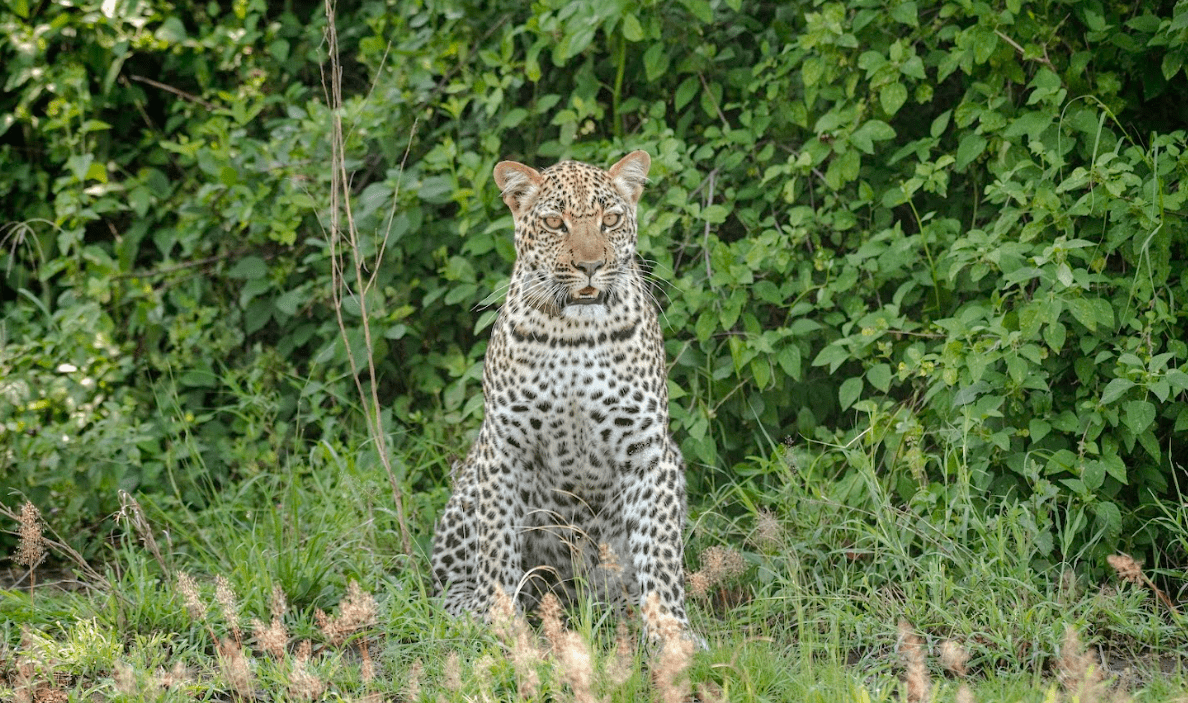
Leopards
Leopards are in Akagera, but as anywhere, they’ll let you find them on their terms. They favour the rocky outcrops and dense thickets in the central and northern parts of the park. Your guide’s knowledge of the terrain makes an enormous difference — this is not an animal to stumble across by luck. Early morning and late afternoon drives, when light is low and leopards are on the move, give you the best chance.
Cape Buffalo
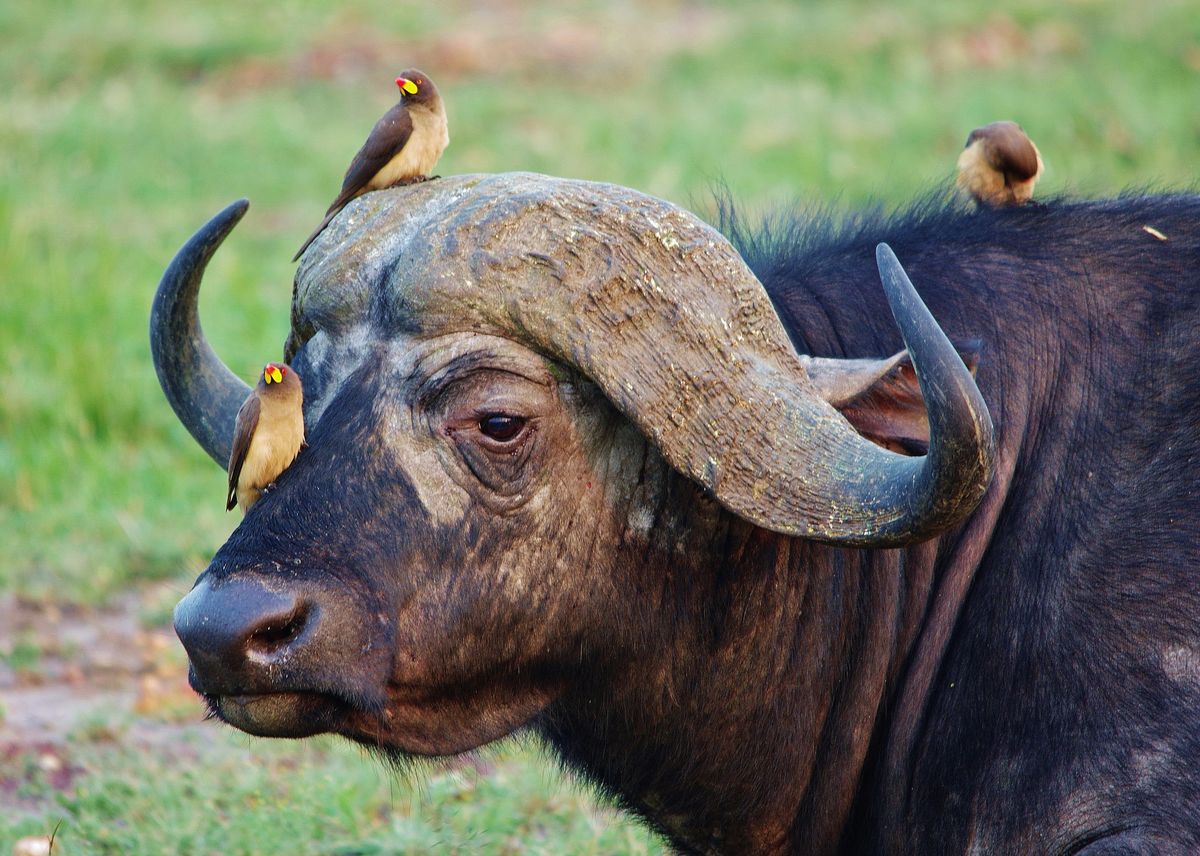
Buffalo are perhaps the most reliably spotted of Akagera’s Big Five. Large herds move across the open grasslands, and the sight of several hundred buffalo moving as a single mass is one of those game drive moments that stops the conversation in the vehicle. They’re also found near the lake systems, where water and grazing converge.
Beyond the Big Five: What Else Is Out There
The Big Five draws people to Akagera, but the park offers far more than that label suggests.
Giraffes are a constant presence — Rwanda’s only wild population lives here, and they’re a beautiful sight against the savannah backdrop. Plains zebras, topi, waterbuck, bushbuck, reedbuck, eland, roan antelope, and sable antelope all roam the park in good numbers. Spotted hyenas and jackals are regularly seen on night drives.
Then there’s the water. Akagera contains central Africa’s largest protected wetland system, a chain of lakes fed by the Kagera River. Lake Ihema is the largest and most accessible, and a boat safari here is one of the park’s unmissable experiences. Enormous pods of hippos lounge in the shallows. Nile crocodiles watch from the banks. The birdlife along the lake is spectacular — over 500 species have been recorded in the park, including the notoriously difficult-to-find shoebill stork, one of Africa’s most sought-after birds.
For birding enthusiasts, Akagera deserves serious consideration as a destination in its own right. If birding is part of your East Africa plans, our Uganda birding safaris can be combined with an Akagera extension for a truly exceptional avian itinerary.
Safari Activities in Akagera National Park
Day Game Drives
The classic and most popular way to experience the park. Game drives run in the morning and afternoon, with early starts giving the best light and most active wildlife. The northern circuit is generally considered the richest for wildlife density. Your guide’s knowledge of current animal movements is invaluable — the difference between a good drive and a great one is usually the person sitting in the front seat.
Night Game Drives
Night drives are available in Akagera and are a genuinely different experience. The park’s nocturnal cast — civets, genets, bush babies, porcupines, and the occasional leopard or hyena — emerge after dark. Maximum seven people per vehicle. Book in advance as spaces go quickly, especially in peak season.
Boat Safari on Lake Ihema
If you do one activity in Akagera beyond the standard game drive, make it this. The boat cruise on Lake Ihema runs along the shoreline and around the lake’s islands, offering close encounters with hippos and crocodiles that you simply can’t get from a vehicle. The birdlife is extraordinary — herons, kingfishers, fish eagles, and with luck, the shoebill. Sunset cruises are particularly atmospheric. Maximum 11 people per boat.
Guided Rhino Tracking
This is a specialist activity run by the park’s rhino monitoring team and is separate from standard game drives. You’ll track rhinos on foot with an armed ranger — an experience that brings you into real proximity with one of the world’s most endangered animals in a way a vehicle simply can’t replicate. This needs to be arranged in advance and spaces are extremely limited.
Sport Fishing
Lake Ihema holds tiger fish and other species, and catch-and-release sport fishing is available with advance booking. A quieter, more contemplative way to spend time on the water.
When to Visit Akagera National Park
Akagera can be visited year-round, but the experience varies significantly by season.
June to September is the dry season and widely considered the best time for game drives. Vegetation is lower, water sources concentrate animals at predictable points, and roads through the park are at their most passable. This is peak season, so accommodation books up quickly and prices are at their highest.
December to February is the short dry season — another excellent window for wildlife viewing, with good conditions and slightly less visitor pressure than the main high season.
March to May brings the long rains. The park turns intensely green, which is beautiful but makes wildlife harder to spot in the dense vegetation. Roads in the northern sector can become difficult after heavy rain. That said, this is when birdlife is at its richest, with migratory species present and breeding behaviour on display. Accommodation rates are lower, and you’ll often have the park largely to yourself.
If you’re also planning gorilla trekking at Volcanoes National Park, the same seasonal logic applies — our Rwanda Safari Prices guide breaks down how seasonality affects costs across both parks.
How to Get to Akagera National Park
Akagera sits in eastern Rwanda, on the border with Tanzania. From Kigali, it’s roughly a 2.5 to 3 hour drive via the main road east through Kayonza. The roads are in good condition for most of the journey.
The park has two entry gates — the southern gate near Ryabega and the northern gate, which gives faster access to the wildlife-rich northern sector. Most safari itineraries enter through the south and exit through the north (or vice versa), allowing you to cover the full length of the park in a single day.
Flying directly into Kigali International Airport is the most straightforward option. Direct flights connect Kigali with Amsterdam, London, Brussels, Dubai, and Istanbul, among others. Once in Kigali, we handle all your ground logistics from there. View our Rwanda safari packages to see how an Akagera visit can fit into your broader itinerary.
Where to Stay in Akagera National Park
There’s a small but excellent selection of accommodation inside and around the park.
Akagera Game Lodge (now managed as Mantis Akagera Game Lodge) sits on the shores of Lake Ihema in the southern section, arguably the most scenic lodge location in the park, with hippos in the water below and sunsets that stop you mid-sentence. It caters to mid-range and comfort-seeking travellers with a good mix of rooms, a pool, and direct access to boat safaris.
Ruzizi Tented Lodge offers a more intimate tented camp experience in the southern sector, closer to the water’s edge. It’s a smaller, quieter property for travellers who want a more immersive bush feel.
Magashi Camp in the northern sector is Akagera’s luxury option, a remote, high-end tented camp managed by Wilderness Safaris, with exclusive access to the northern areas where lion and rhino sightings are most likely. It’s one of the finest camp experiences in East Africa.
We work with lodges across all these tiers and can match you to the right property for your travel style and budget. Get in touch with our team and we’ll put something together.
Combining Akagera With the Rest of Rwanda
The beauty of Rwanda as a safari destination is its compact size. Everything is within reach of everything else without the multi-hour flights you might need in other East African countries.
A very popular itinerary we recommend is a 5 to 8 day Rwanda circuit combining:
- Kigali — a city that surprises almost every visitor with its cleanliness, energy, and excellent food scene
- Volcanoes National Park — for mountain gorilla trekking and golden monkey trekking (which you can read more about in our Golden Monkey Trekking blog)
- Akagera National Park — for the Big Five savannah experience
You can also extend into Uganda — Bwindi Impenetrable Forest for a second gorilla experience, or Queen Elizabeth National Park for savannah wildlife and chimpanzees. Our Uganda safaris connect seamlessly with Rwanda itineraries. Some travellers add Kenya or Tanzania at the end for the classic Maasai Mara or Serengeti component. We handle all of it. See our full list of destinations.
Practical Things to Know Before You Go
Park entry fees vary by category, international visitors, East African residents, and East African citizens each have different rates. Children aged five and under enter free. Fees cover self-drive day game drives, with boat cruises, night drives, and specialist activities charged separately.
Vehicles — you can self-drive in Akagera, but we’d strongly recommend going with a driver-guide, particularly if Big Five sightings are important to you. Local knowledge of animal movements, terrain, and seasonal patterns makes a meaningful difference to what you see.
What to bring — light clothing in neutral colours, a good pair of binoculars, a camera with a decent zoom, sunscreen, and a hat. Mornings can be cool, so a light layer for early game drives is worth packing. Our full safari packing list covers everything you need.
Visas — most nationalities can obtain a Rwanda visa on arrival or online in advance. East African citizens travel freely. We can advise on current requirements when you book.
Why Akagera Deserves Its Own Trip
There’s a tendency to treat Akagera as an add-on, something to squeeze in after the gorillas before heading home. And while it works beautifully as part of a wider Rwanda itinerary, Akagera is genuinely worth coming for in its own right.
The conservation story here is one of the most remarkable in Africa. The landscape is varied and genuinely scenic. The lack of crowds, you can go an entire day without seeing another vehicle is increasingly rare in East African safari parks. And the chance to watch lions and rhinos in a park that had neither just a decade ago is the kind of wildlife travel that means something beyond a checklist.
Rwanda has done something extraordinary in Akagera. And 2026 is a wonderful time to see it.
Ready to start planning your Akagera safari?
View Rwanda Safari Packages | Book a Safari Lodge | Contact Our Team
+256 757 622 988 | info@feathertrailsafaris.travel