
What Happens During Rwanda Gorilla Trekking Experience, A Complete Guide
Gorilla trekking in Rwanda is not just a wildlife activity, it’s a deeply immersive journey into one of the last remaining habitats of endangered mountain gorillas. For many travelers, it is the highlight of an African safari, combining adventure, conservation, and an emotional connection with nature.
If you are planning your trip, you are probably wondering: what actually happens during Rwanda gorilla trekking? From the early morning briefing to the magical one-hour encounter with gorillas, every step of the experience is carefully structured and unforgettable.
In this detailed guide by Feather Trail Safaris, we walk you through exactly what happens during Rwanda gorilla trekking, so you know what to expect, how to prepare, and how to make the most of your adventure.
Introduction to Gorilla Trekking in Rwanda
Most gorilla trekking experiences in Rwanda take place in Volcanoes National Park, a lush rainforest located in the Virunga Mountains along the border with Uganda and the Democratic Republic of Congo.
This park is home to several habituated gorilla families, meaning they are accustomed to human presence under strict conservation guidelines. Visitors are allowed to spend one hour with a gorilla family once they are located.
Unlike traditional safaris, there are no vehicles involved, you will trek on foot through dense forest, guided by expert trackers and rangers.
Early Morning Start: The Beginning of Your Adventure
Your gorilla trekking day begins early, usually around 6:00 AM. Most travelers stay in lodges near the park or in Musanze, which is the main gateway to the park.
After breakfast, you will head to the park headquarters in Kinigi for registration and briefing.
What to Expect in the Morning
- Early wake-up call
- Breakfast at your lodge
- Transfer to park headquarters
- Registration and permit verification
The Pre-Trek Briefing: Essential Information
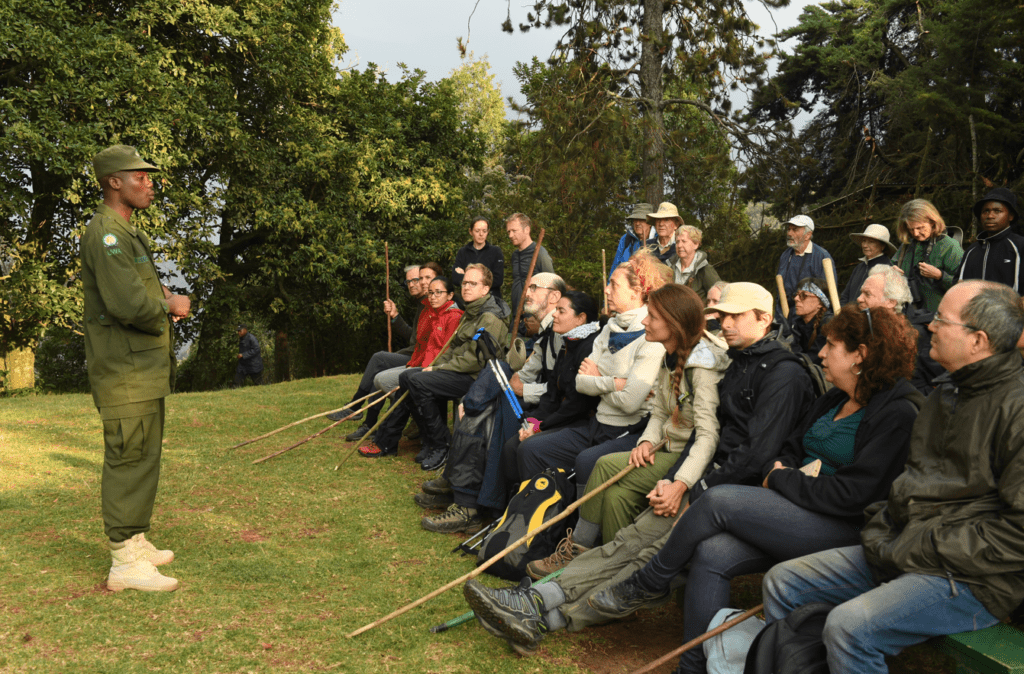
At the headquarters of Volcanoes National Park, all trekkers gather for a briefing conducted by park rangers.
This is where your experience officially begins.
What Happens During the Briefing
You will receive:
- Safety instructions
- Gorilla behavior guidelines
- Trekking rules and etiquette
- Group assignment (based on fitness level)
Groups are typically limited to 8 people per gorilla family, ensuring a low-impact and intimate experience.
Group Allocation: Matching You to a Gorilla Family
One important part of what happens during Rwanda gorilla trekking is the assignment process.
You are placed in a group based on:
- Your fitness level
- Your age
- Your preferences (if communicated in advance)
Some gorilla families are closer to the starting point, while others require longer hikes.
Meeting Your Guides, Rangers, and Porters
After group allocation, you will meet:
- Your professional guide
- Armed park rangers (for safety)
- Optional porters (highly recommended)
Why Porters Are Important
Hiring a porter is one of the best decisions you can make:
- They carry your backpack
- Help you navigate difficult terrain
- Provide physical support on steep sections
This not only makes your trek easier but also supports local communities.
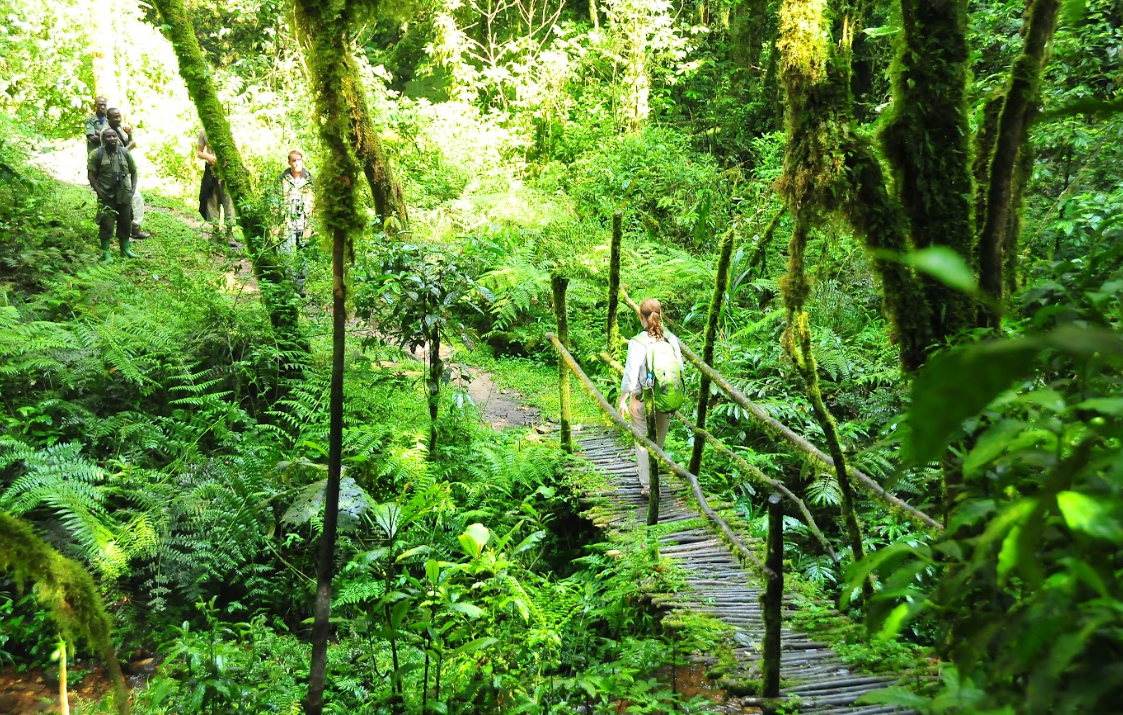
The Trek Begins: Entering the Forest
After the briefing, you will drive to the starting point of your assigned trail. This could take anywhere from 10 minutes to 1 hour, depending on the gorilla family location.
Once you arrive, the real adventure begins.
What Happens During the Trek
You will:
- Walk through farmland at the park’s edge
- Enter dense rainforest
- Follow trails or create paths through vegetation
The trek can last anywhere from 1 to 6 hours, depending on where the gorillas are located that day.
Navigating the Terrain
The terrain in Virunga Mountains is diverse and sometimes challenging.
You may encounter:
- Muddy and slippery paths
- Steep slopes
- Thick vegetation
- High altitudes
Your guide will set a manageable pace, with regular breaks to rest and hydrate.
Tracking the Gorillas
While you are trekking, another team called trackers is already ahead in the forest.
How Tracking Works
- Trackers locate the gorilla family early in the morning
- They communicate with your guide via radio
- Your group is directed toward the gorillas’ location
The Final Approach: A Moment of Excitement
As you get closer to the gorillas, your guide will ask you to:
- Lower your voice
- Leave unnecessary items behind
- Prepare your camera
This is one of the most exciting parts of what happens during Rwanda gorilla trekking—the anticipation builds as you realize you are about to encounter wild mountain gorillas.
The Gorilla Encounter: One Magical Hour
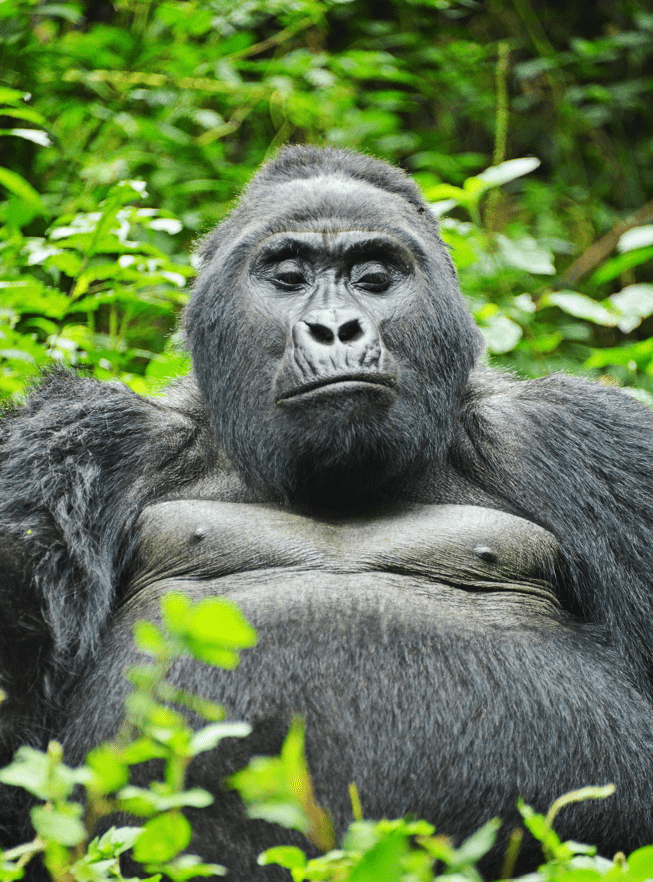
Finally, you reach the gorilla family.
You are allowed one hour to observe them at a safe distance (usually about 7 meters).
What You Will Experience
During this hour, you may see:
- Gorillas feeding on vegetation
- Mothers caring for infants
- Juveniles playing
- Silverbacks watching over the group
The experience is शांत, powerful, and deeply emotional.
Many travelers describe it as life-changing.
Gorilla Behavior and Interaction
Although gorillas are wild animals, they are generally calm and gentle.
Important Rules During the Encounter
- Do not touch the gorillas
- Avoid direct eye contact with the silverback
- Stay quiet and calm
- Follow your guide’s instructions
If a gorilla approaches you, remain still, this is normal behavior.
Photography During Gorilla Trekking
Capturing the moment is important, but it must be done responsibly.
Photography Tips
- Turn off flash
- Use natural light
- Keep a steady hand
- Respect the distance guidelines
The forest lighting can be challenging, so patience is key.
After the Encounter: The Return Journey
Once your one hour is over, your guide will signal it’s time to leave.
What Happens Next
- Begin the trek back
- Enjoy scenic views along the way
- Celebrate your achievement
The return journey can be easier or just as challenging, depending on the terrain.
Receiving Your Gorilla Trekking Certificate
After completing your trek, you will receive a certificate recognizing your participation.
This is a great souvenir and a reminder of your incredible experience.
Physical and Emotional Impact
What happens during Rwanda gorilla trekking is not just physical—it’s emotional.
Many travelers report:
- A deep appreciation for wildlife
- Increased awareness of conservation
- A sense of accomplishment
Conservation and Community Impact
Gorilla trekking plays a crucial role in conservation.
Revenue from permits supports:
- Wildlife protection
- Local communities
- Anti-poaching efforts
By participating, you are directly contributing to the survival of mountain gorillas.
Tips to Make the Most of Your Experience
1. Be Physically Prepared
Moderate fitness helps you enjoy the trek.
2. Dress Appropriately
Wear:
- Long sleeves
- Hiking boots
- Rain gear
3. Stay Hydrated
Carry enough water and snacks.
4. Hire a Porter
This greatly improves your comfort.
5. Keep an Open Mind
Every trek is unique—embrace the experience.
Why Choose Feather Trail Safaris?
At Feather Trail Safaris, we ensure your gorilla trekking experience is seamless and unforgettable.
We provide:
- Permit booking assistance
- Tailored itineraries
- Professional guides
- Comfortable accommodations
- Personalized support
Frequently Asked Questions
Is gorilla trekking safe?
Yes, it is well-organized and guided by trained professionals.
How long does the experience last?
The entire activity can take half a day to a full day.
What is the minimum age?
15 years.
Lastly
So, what happens during Rwanda gorilla trekking?
It is a journey that begins with anticipation, builds through physical adventure, and culminates in one of the most profound wildlife encounters on Earth.
From the early morning briefing to the unforgettable hour with gorillas in Volcanoes National Park, every moment is meaningful.
With the right preparation and guidance from Feather Trail Safaris, your experience will not only meet expectations—it will exceed them.
Start Your Gorilla Trekking Journey Today
Don’t just read about it, live it.