
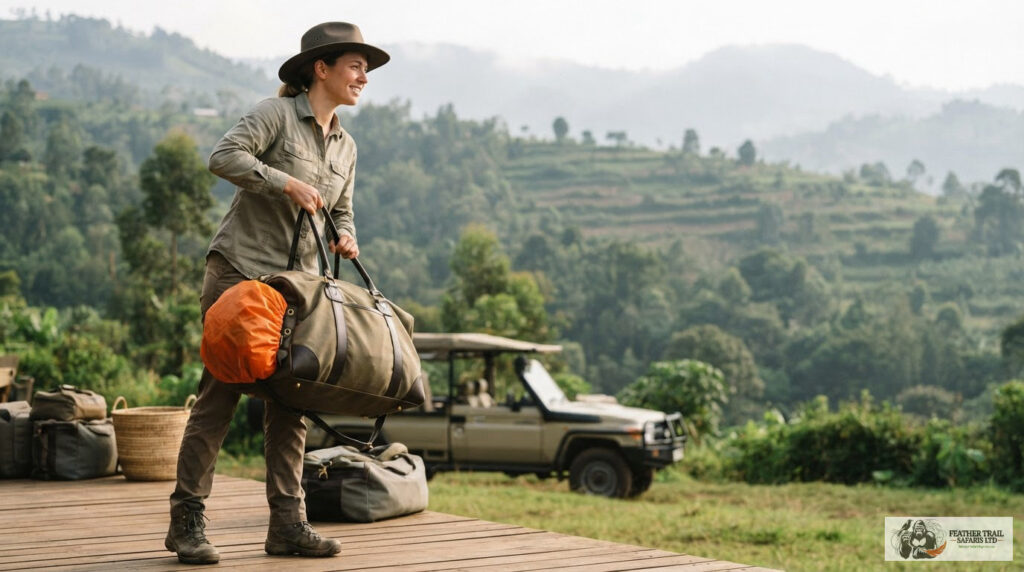
- Luggage: Use soft-sided duffel bags to comply with bush plane cargo holds and a 15 kg (33 lbs) weight limit.
- Clothing: Stick to neutral earth tones (khaki, tan, olive) to avoid attracting tsetse flies and spooking wildlife.
- Gorilla Gear: Waterproof hiking boots, long gaiters, and gardening gloves are essential for navigating dense natural forest habitats.
- Prohibited Items: Do not pack camouflage patterns or single-use plastic bags, as both are subject to legal restrictions.
- Health: Bring a Yellow Fever certificate, DEET-based repellent, and personal medications in their original packaging.
Deciding what to pack for a safari in Rwanda and Uganda is the most important part of planning your mountain gorilla trek or multi-destination wildlife holiday. Understanding these specific travel requirements is the first step toward ensuring you have a successful and comfortable journey through East Africa.
Rwanda and Uganda offer some of the most profound wilderness encounters on the planet, ranging from the misty slopes of the Virunga Mountains to the vast savannah plains of Queen Elizabeth National Park.
However, the environmental diversity of these regions means your suitcase must perform multiple roles: keeping you cool in the equatorial sun, dry in the tropical rainforest, and warm during high-altitude evenings.
The answer depends on what you want from your trip, but for most travelers, the goal is to balance performance gear with strict weight limitations. Unlike a standard holiday, much of the country’s best scenery unfolds in remote areas accessed by light aircraft, where rigid suitcases are impractical. This guide provides a structured safari packing list East Africa experts recommend, ensuring you are prepared for every terrain while staying compliant with local regulations and airline rules.
The Art of Packing: Luggage Rules and Restrictions
To pack effectively for Rwanda and Uganda, you must use a soft-sided duffel bag and limit your total weight to 15 kg (33 lbs), including hand luggage. This restriction is strictly enforced by bush plane operators because the cargo pods on light aircraft, such as the Cessna Caravan, cannot accommodate rigid, hard-shell suitcases. Soft bags allow pilots to maneuver luggage into oddly shaped spaces, ensuring safety and weight balance during flight.
When selecting your main bag, look for a durable canvas or nylon duffel without a rigid internal frame. Modern “base camp” style duffels often feature backpack straps, which are highly beneficial when moving between safari vehicles and lodges. If your itinerary includes Fly-In Gorilla Safaris, remember that every gram counts. Small aircraft weight limits are not merely a suggestion; they are a critical safety requirement for operating on short, unpaved bush airstrips.
Optimizing Space with Packing Cubes
Because soft-sided bags lack internal structure, packing cubes are essential for organization. These fabric containers allow you to compartmentalize your clothing for Uganda safari activities, separating your muddy trekking gear from your evening attire. Furthermore, since Rwanda and Uganda have strict bans on single-use plastic bags, packing cubes serve as the legal alternative for keeping your belongings tidy and dry.
The Importance of a Functional Daypack
A 20 to 30-liter daypack is your most used piece of equipment. During a mountain gorilla trekking holiday, this pack will carry your water, lunch, rain gear, and camera. Ideally, choose a water-resistant model or one with a dedicated rain cover.
For the trek itself, try to keep the loaded weight under 3 kg.
If the terrain becomes too difficult, you can hire a porter at the park headquarters to carry your pack, which not only assists you but also provides vital income to the local community.
Clothing for East African Climates
The best clothing strategy for Rwanda and Uganda is a versatile layering system that uses moisture-wicking synthetic fabrics or lightweight merino wool. Temperatures in East Africa can fluctuate by as much as 20°C (36°F) in a single day, moving from chilly 10°C (50°F) mornings in the highlands to 30°C (86°F) heat on the savannah by mid-afternoon. Layers allow you to adapt quickly without returning to your lodge.
When selecting your safari packing list East Africa wardrobe, prioritize earth tones like khaki, tan, olive, and sage. These colors help you blend into the natural forest habitat and are less likely to startle wildlife. More importantly, specific colors attract different pests. Avoid bright white, which shows dust immediately, and steer clear of dark blue or black, as these shades are known to attract tsetse flies, which have a painful bite.
| Item Type | Recommended Quantity | Key Feature |
|---|---|---|
| Long-sleeved Shirts | 3–4 | Sun & insect protection |
| Convertible Pants | 2 pairs | Zip-off for heat |
| Fleece/Windbreaker | 1 | Morning insulation |
| Moisture-wicking Socks | 5 pairs | Prevents blisters |
The Ban on Camouflage
It is important to note that camouflage clothing is illegal for civilians in many East African countries, including Uganda and Rwanda. This includes hunting camo patterns, military-style hats, and even bags with camo accents. Authorities may confiscate these items or prevent you from entering certain areas. Stick to solid neutral colors to ensure you remain compliant with local laws.
Managing Dust and Sun
A lightweight neck gaiter or “Buff” is a highly recommended accessory. During game drives in places like Akagera or Murchison Falls, the roads can become extremely dusty. A gaiter can be pulled over your nose and mouth to provide respiratory protection. Additionally, a wide-brimmed safari hat with a chin strap is vital; the equatorial sun is intense, and open-top vehicles offer little shade while moving across the plains.
Dedicated Gorilla and Chimpanzee Trekking Gear
Your gorilla trekking gear list Rwanda must focus on protection from moisture, thorns, and insects while navigating steep, slippery terrain. Unlike a standard walk, trekking for primates often involves following rangers through thick undergrowth where there are no established paths. High-quality waterproof hiking boots with excellent ankle support are the single most important investment for this activity.
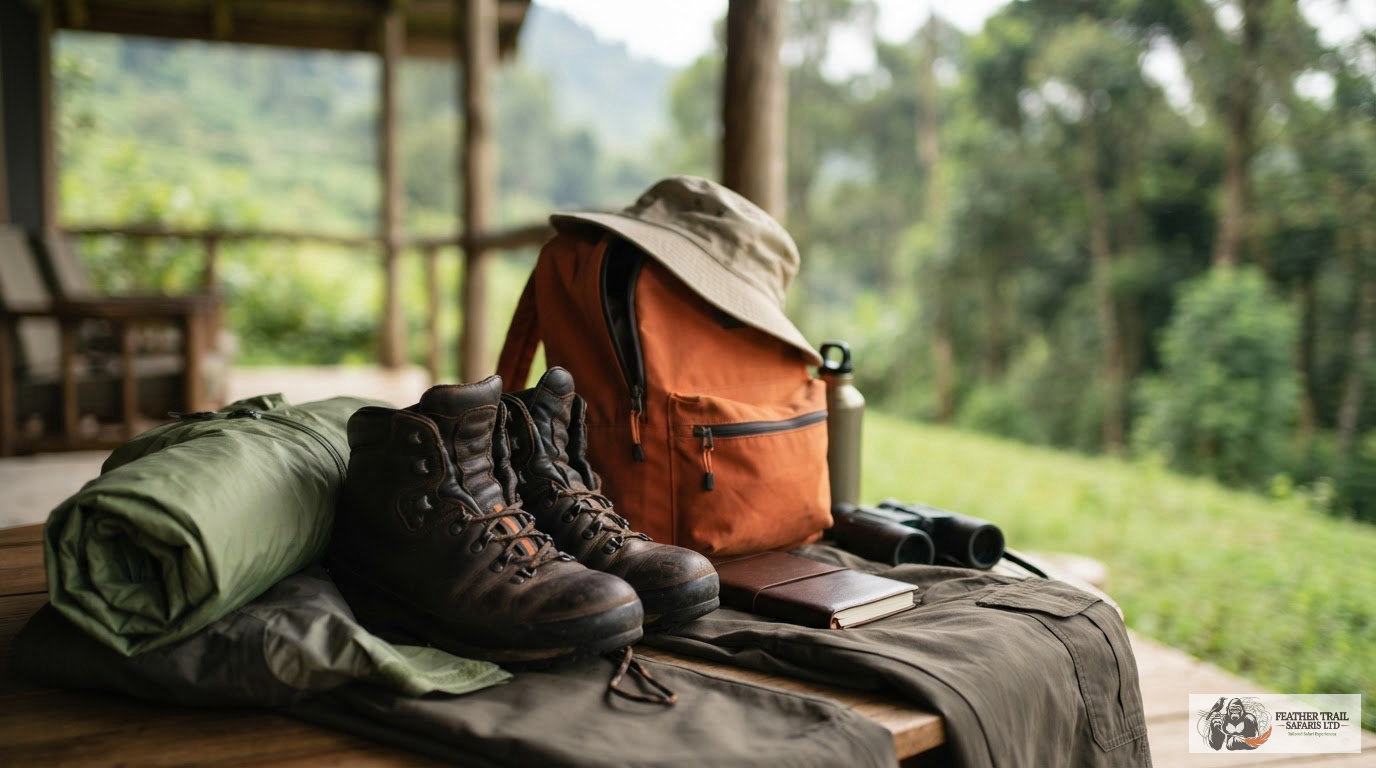
The best shoes for gorilla trekking are those that have been “broken in” at least a month before your trip. Blisters can ruin a once-in-a-lifetime encounter. Ensure your boots are truly waterproof, as you may encounter small streams or deep mud. Pair these with tall gaiters, which prevent mud and water from entering the top of your boots and offer an extra layer of protection against stinging nettles and fire ants.
Hand and Ankle Protection
One of the more unusual but essential items on a gorilla trekking gear list Rwanda is a pair of sturdy gardening gloves. When climbing through the natural forest habitat, you will frequently need to grab onto vines and branches for balance.
Many of these plants have sharp thorns or stinging nettles. Protective gloves allow you to move safely through the foliage.
Additionally, remember to tuck your long trousers into your socks to prevent insects from crawling up your legs—a simple but effective bush craft technique.
Waterproof Layers for the Rainforest
Rain is a constant possibility in the Volcanoes National Park and Bwindi Impenetrable Forest. A breathable, high-quality waterproof rain jacket with a hood is mandatory. Avoid cheap plastic ponchos, which tear easily in the thick brush and offer little breathability in the humid forest environment. Some travelers also pack lightweight rain pants to ensure they stay completely dry during the hours spent tracking the gorilla families.
Essential Documentation and Pre-Trip Preparation
Before departing for East Africa, you must ensure your travel documents are organized in a secure, waterproof wallet. This includes a passport valid for six months beyond your departure date, a Yellow Fever vaccination certificate, and printed copies of your gorilla or chimpanzee trekking permits. While digital copies are useful, many park headquarters still require physical paperwork for verification.
If you are visiting both countries, the East African Tourist Visa is often the most efficient choice, allowing multiple entries between Kenya, Rwanda, and Uganda. Check the latest requirements on official government portals like the East African Community travel guidelines to ensure your specific nationality is covered under these agreements. Always keep a digital backup of your documents on a secure cloud service and a physical copy hidden in your main luggage.
Currency and Payments
While credit cards are increasingly accepted at major lodges in Kigali and Kampala, cash remains king in the bush. Clean, recent-issue US Dollar notes (printed after 2013) are the preferred currency for tips, local markets, and park fees. Banks and currency exchanges in East Africa often reject older bills or those with tears, marks, or heavy folds. Bring a mix of large bills for exchanges and small denominations ($1, $5, and $10) for tipping your driver-guide and lodge staff.
Health and Medical Kits
Health preparation is as vital as gear selection. Consult a travel clinic regarding malaria prophylaxis, as both Rwanda and Uganda are malarial zones. Your personal medical kit should include DEET-based insect repellent, high-SPF sunscreen, anti-diarrheal medication, and basic first-aid supplies like blister plasters. If you are prone to motion sickness, be aware that whether you are self-driving or arranging a driver-guide, the roads can be winding and bumpy, so bringing a reliable remedy is highly recommended.
Wildlife Observation and Photography Equipment
To truly appreciate the biodiversity of East Africa, you should bring a dedicated pair of binoculars and a camera with a versatile zoom lens. While your guide will likely have a pair of optics to share, having your own 8×42 or 10×42 binoculars ensures you never miss a sighting, especially during Birding Safaris in Uganda where small, colorful species move quickly through the canopy.
For photography, the challenge lies in balancing lens power with the 15 kg luggage limit. A mirrorless camera with a 100-400mm lens is a popular choice for wildlife, providing enough reach for lions on the savannah while remaining portable enough for forest treks.
If you are focused on the “Big Five,” you may find more information in our guide to Big 5 Safaris in East Africa.
Remember to bring extra memory cards and spare batteries, as the cold, damp forest air can drain battery life faster than expected.
Protecting Your Electronics
The tropical environment can be harsh on sensitive electronics. Bring several dry bags or heavy-duty reusable zip-style bags to shield your camera and phone from sudden downpours.
In the rainforest, humidity is as much an enemy as the rain itself; including a few silica gel packets in your camera bag can help absorb excess moisture.
If you plan to use a smartphone for photography, a waterproof pouch with a lanyard is a smart addition to keep your device accessible but safe.
Navigating Local Regulations and Etiquette
Rwanda and Uganda have specific environmental and social regulations that travelers must respect to avoid fines or cultural misunderstandings. The most prominent is the strict ban on single-use plastic bags. Customs officers at Kigali International Airport and land borders often search luggage for these items. Ensure your clothing for Uganda safari and other gear is packed in reusable fabric bags or silicone containers instead of plastic grocery bags.
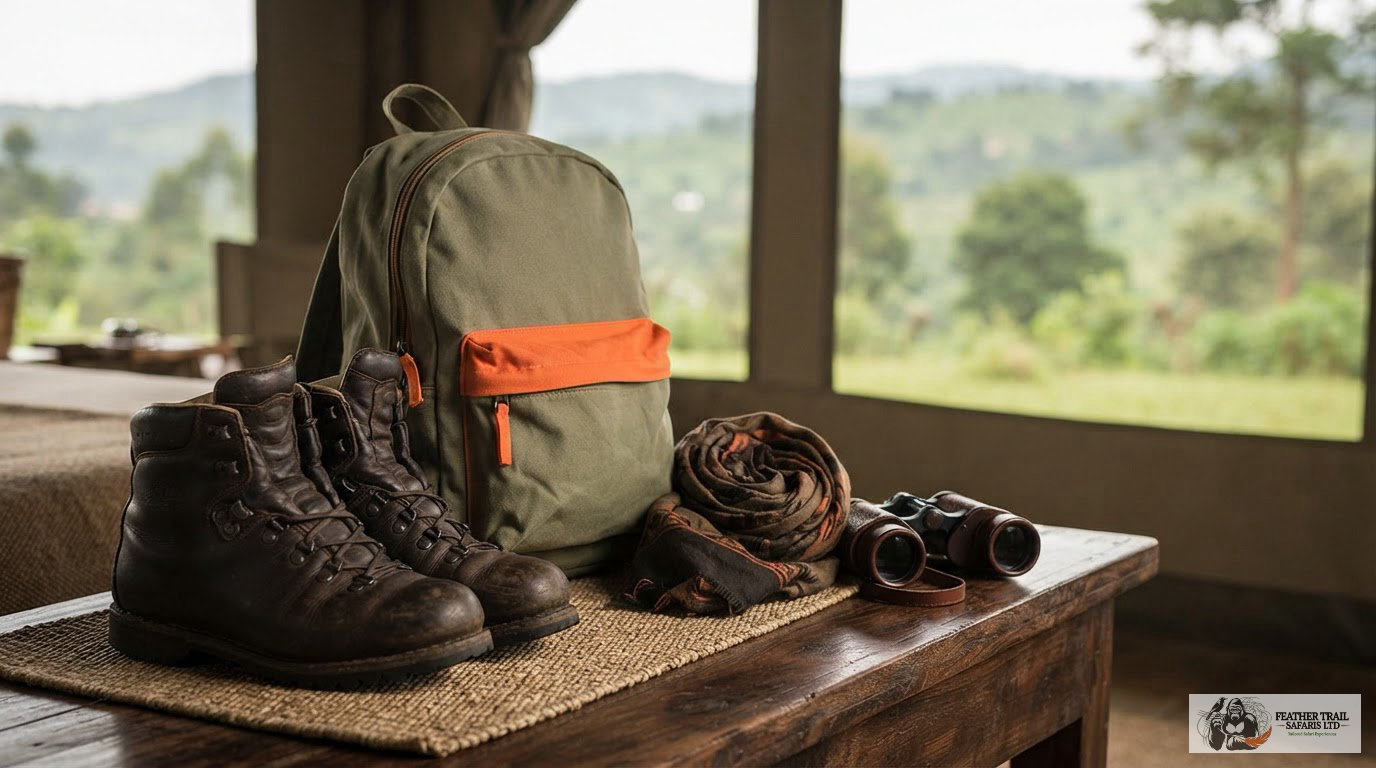
Respecting local dress codes is equally important, particularly when visiting local communities or religious sites. While casual wear is acceptable at safari lodges, modest dress (covering shoulders and knees) is expected in rural villages and towns. This cultural sensitivity helps foster positive interactions with the local people, who are renowned for their hospitality. A lightweight sarong or “kanga” is a versatile item that can be used as a modesty wrap, a sun shield, or an emergency towel.
“The success of a safari often lies in the details. By respecting local bans on plastics and adhering to modest dress codes, travelers not only protect the environment but also enrich their own cultural experience.” — Feather Trail Safaris Expert Guide
Sustainable Travel Practices
To reduce your environmental footprint, bring a reusable water bottle. Most lodges provide safe, filtered water for refilling your bottle, which significantly reduces the consumption of disposable plastic. Furthermore, consider the ethics of your packing; choose reef-safe sunscreens if your trip includes a water-based extension, and opt for biodegradable toiletries. Many high-end lodges provide environmentally friendly shampoo and soap, allowing you to leave these items at home and save weight for your 15 kg limit.
Power and Connectivity in the Bush
Managing your electronic devices in remote safari camps requires preparation, as power may only be available during specific hours when generators are running. You should pack a universal travel adapter (Type G for Uganda and Rwanda) and a high-capacity power bank to ensure your phone and camera stay charged during long days in the field. Some remote lodges may not have high-quality reading lights, making a small LED headlamp a practical necessity.
While Wi-Fi is common in city hotels and main lodge areas, it can be intermittent in deep forest locations. If you need to stay connected, consider purchasing a local SIM card at the airport upon arrival.
However, many travelers find that the lack of connectivity enhances the safari experience, allowing them to fully immerse themselves in the sounds of the African bush.
If you do use devices, remember to set them to silent during game drives and treks to avoid disturbing the wildlife and other guests.
Flashlights and Headlamps
A headlamp is significantly more useful than a standard flashlight because it keeps your hands free for navigating tent zippers or walking along unlit paths at night. Look for a model with a “red light” mode; red light does not attract insects and preserves your night vision, which is ideal for spotting nocturnal animals around the camp. Always pack spare batteries in your carry-on luggage, as these are often difficult to source in rural East Africa.
Practical Tips for Efficient Travel
Efficiency is key when working within a 15 kg weight limit. One of the best ways to reduce your luggage size is to utilize the laundry services offered by most safari lodges. Because clothes can be washed and dried within 24 hours, you only need to pack enough for three to four days, regardless of the total length of your trip. This allows you to prioritize high-quality performance gear over quantity.
When selecting your safari packing list East Africa essentials, remember that many camps will not launder delicate items or undergarments for cultural reasons. Bringing a small travel-sized bottle of biodegradable detergent allows you to hand-wash these items in your room if necessary. This self-sufficiency is a hallmark of the experienced East African traveler, ensuring you always have clean, dry clothes even in the most remote locations.
Sustainable Porter Support
During your mountain gorilla trekking holiday, the option to hire a porter is a win-win for both the traveler and the local community.
For a modest fee (usually around $15–$20 plus tip), a porter will carry your daypack and provide physical assistance on steep slopes.
This support is invaluable if the trek lasts longer than expected, and the income helps provide for families living near the national parks. It is one of the most direct ways to ensure your tourism dollars benefit the local economy.
Frequently Asked Questions
What do I need to know about the gorilla trekking gear list for Rwanda and Uganda?
The most critical items are waterproof hiking boots with ankle support, long-sleeved shirts, and long trousers to protect against stinging nettles. You must also bring sturdy gardening gloves for hand protection and a high-quality rain jacket. Remember that single-use plastic bags are banned, so use reusable dry bags for your camera and lunch.
How should I choose the best shoes for gorilla trekking?
The best shoes for gorilla trekking are waterproof hiking boots that cover the ankle and have a deep tread for grip on muddy slopes. It is essential to break these boots in for several weeks before your trip to prevent blisters. Pair them with long moisture-wicking socks and gaiters for maximum protection against insects and mud.
Are there specific clothing rules for an Uganda safari?
Yes, you should prioritize neutral earth tones like khaki and olive. Avoid dark blue and black, as they attract tsetse flies, and bright colors that might spook wildlife. Most importantly, camouflage patterns are illegal for civilians and should never be packed. The layering system is recommended to handle temperature swings between morning and afternoon.
What are the most important items on a general safari packing list for East Africa?
Beyond clothing, essential items include a 15 kg soft-sided duffel bag, a universal power adapter, DEET-based insect repellent, and recent-issue US Dollar cash. A pair of 8×42 binoculars and a wide-brimmed sun hat are also highly recommended to enhance your wildlife viewing and protect you from the equatorial sun.
Can I bring a drone for photography in Rwanda or Uganda?
Drone use is strictly regulated in both countries and generally requires advance permits from the civil aviation authorities and national park management. Operating a drone without these permits can lead to confiscation and heavy fines. If you are a professional photographer, ensure all paperwork is completed months before your arrival.
What medical documents are required for entry?
A Yellow Fever vaccination certificate is a mandatory requirement for entry into both Uganda and Rwanda. You should also carry proof of travel insurance that includes emergency medical evacuation. It is wise to bring a personal medical kit containing malaria prophylaxis and any prescription medications in their original, labeled packaging.
Final Preparation for Your Adventure
Preparing for an East African safari is an exercise in thoughtful selection. By focusing on high-performance fabrics, protective trekking gear, and adhering to strict luggage rules, you ensure that your focus remains on the incredible wildlife encounters rather than logistical frustrations. Much of the country’s best scenery unfolds in areas where being well-prepared is the difference between a challenging trek and a comfortable adventure.
The choice ultimately rests on your specific travel priorities, whether you are seeking the thrill of a mountain gorilla trekking holiday or the quiet beauty of a birding tour. This guide walks through what to know before you book your trip, ensuring every item in your duffel bag serves a purpose. As you finalize your preparations, remember that the most important thing you can bring is a sense of wonder and respect for the natural world.
Ready to start your adventure? Request your personalized quotation from Feather Trail Safaris today and let our experts handle the details of your dream trip. Whether you are navigating the misty forests or the sun-drenched savannah, we are here to ensure your East African journey is seamless and unforgettable.