
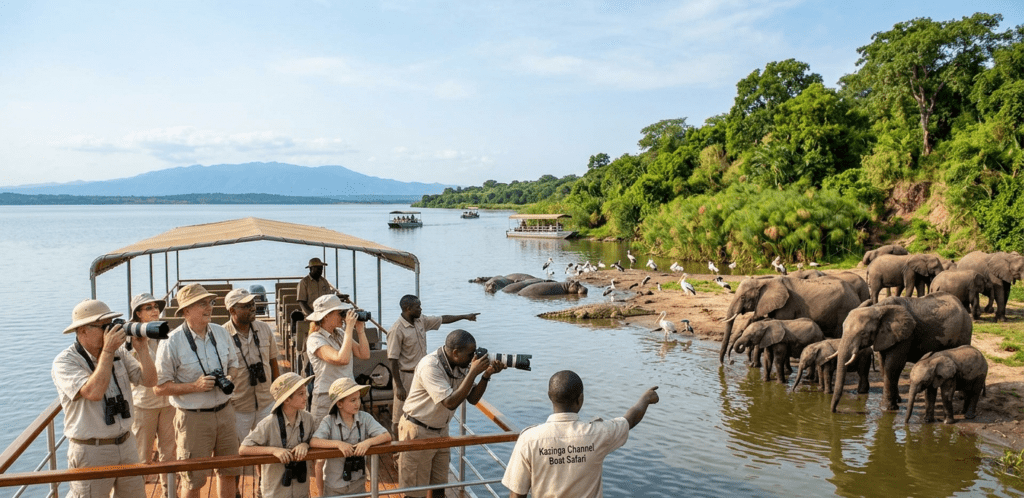
Boat Cruise Experience at Kazinga Channel
I still remember the gentle hum of the engine as the boat slowly drifted away from the shore. The air felt warm, slightly humid, and carried with it the subtle scent of water mixed with earth and vegetation. I had just arrived at one of the most anticipated experiences in Queen Elizabeth National Park—a boat cruise along the famous Kazinga Channel.
By the time I reached this point in Uganda, I had already experienced game drives, forest treks, and long scenic journeys across the countryside. But this was different. This was water. Calm, reflective, and full of life in ways I hadn’t yet encountered.
As I stepped onto the boat and found a seat along the edge, I felt a quiet sense of anticipation. I didn’t know exactly what I would see but I knew I was about to experience something special.
Setting Off on the Kazinga Channel
The boat began to move slowly, creating gentle ripples across the surface of the water. On either side of the channel, the landscape stretched out in a peaceful blend of green vegetation and open skies.
There was a sense of stillness, but it wasn’t empty. It was alive.
Our guide welcomed us warmly and began explaining the significance of the Kazinga Channel, a natural waterway that connects Lake Edward and Lake George. He spoke about how this channel supports a wide variety of wildlife, acting as a vital source of water for animals in the surrounding areas.
As he spoke, I leaned slightly forward, scanning the banks, eager to spot the first signs of wildlife.
I didn’t have to wait long.
First Encounter: Hippos in Their Natural Habitat
Not far from where we started, the first group of hippos came into view.
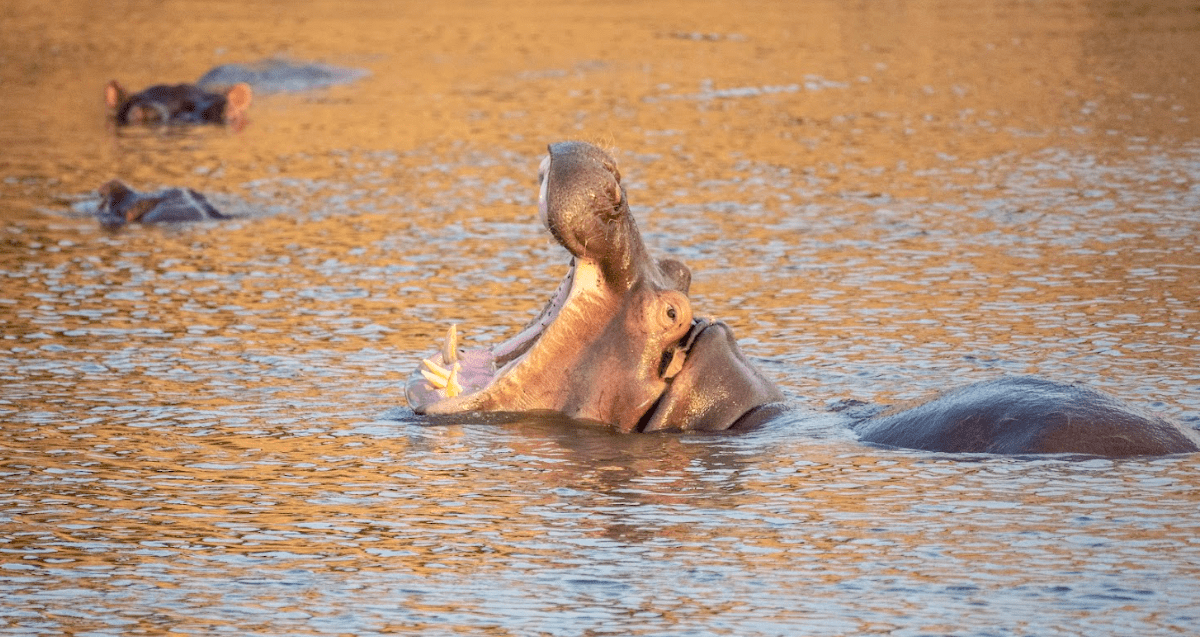
They were partially submerged in the water, their rounded backs rising and falling gently as they moved. From a distance, they looked calm, almost motionless. But every now and then, one would lift its head, revealing its eyes, ears, and nostrils above the surface.
It was fascinating to watch how comfortably they existed in the water.
Our guide explained that hippos spend most of their day submerged, coming out mainly at night to graze. Seeing them in their natural habitat, so close to the boat, gave me a deeper appreciation for their behavior and lifestyle.
At one point, one of the hippos opened its mouth wide in a display that seemed both intimidating and intriguing. The sheer size of its jaws reminded me that despite their calm appearance, hippos are powerful animals.
Crocodiles Along the Banks
As we continued along the channel, I began to notice movement along the shoreline.
At first, they looked like logs resting on the ground.
But then one of them shifted slightly.
It was a crocodile.
Lying still along the banks, these reptiles blended perfectly into their surroundings. Their ability to remain motionless made them difficult to spot unless you looked carefully.
Some of them were partially submerged near the edge of the water, while others rested fully on land, basking in the warmth of the sun.
The guide pointed out that crocodiles rely on the sun to regulate their body temperature, which explains why they spend so much time resting along the banks.
Watching them from the boat felt both exciting and humbling. These were ancient creatures, existing quietly in a habitat they had mastered over time.
Birdlife: A Moving Canvas of Colors
One of the most striking aspects of the Kazinga Channel boat cruise was the abundance of birdlife.
As we moved along the water, birds appeared in every direction, perched on branches, gliding across the sky, or resting near the shoreline.
Kingfishers darted quickly over the water, their vibrant colors catching the light as they moved. African fish eagles perched high above, scanning the water below with sharp focus. Herons stood still near the edges, waiting patiently for movement beneath the surface.
At times, it felt like the entire channel was alive with motion.
Even for someone who doesn’t consider themselves a bird enthusiast, the diversity and visibility of these species made the experience deeply engaging.
The calm pace of the boat allowed me to observe these details without rush, appreciating the delicate balance of the ecosystem around me.
Elephants at the Water’s Edge
As we rounded a gentle curve in the channel, a group of elephants came into view.
They stood near the shoreline, their massive forms contrasting beautifully with the surrounding vegetation. Some were drinking water, while others stood nearby, observing their environment.
One elephant, in particular, approached the water slowly. It used its trunk to draw water, lifting it and pouring it into its mouth with a fluid, almost graceful motion.
There was a quiet dignity in the way they moved.
Unlike the more distant sightings during game drives, seeing elephants from the water offered a different perspective. The proximity made the experience feel more intimate, as if we were sharing the same space without disturbing their routine.
For a moment, everything felt perfectly aligned, the boat, the water, the animals, and the environment.
A Moment of Stillness
As the boat continued drifting along the Kazinga Channel, there were moments when nothing seemed to happen.
No sudden movements, no dramatic sightings, just the steady flow of water and the occasional sound of birds in the distance.
At first, I thought these moments were simply pauses between wildlife encounters. But gradually, I began to appreciate them as part of the experience itself.
The stillness allowed me to reflect, to observe, and to simply exist in the moment.
In a world that often feels fast-paced and noisy, being surrounded by such natural calm felt refreshing.
It wasn’t just about what I saw, it was about how I felt.
The Role of the Guide and Crew
Throughout the cruise, the guide and boat crew played an important role in shaping the experience.
Their knowledge of the channel, wildlife behavior, and the surrounding ecosystem added depth to everything we observed. They pointed out animals that might have otherwise gone unnoticed and shared insights that helped us understand what we were seeing.
Their calm and professional approach also contributed to a sense of safety and comfort throughout the journey.
Being guided by individuals who understand the environment so well made the entire experience more meaningful.
The Changing Light Over Water
As the boat continued its journey, the light began to shift.
The reflection of the sky on the water created a soft, glowing surface that changed with every passing moment. Shadows lengthened slightly, and the colors of the landscape became more pronounced.
It was during these subtle changes that I realized how dynamic the Kazinga Channel truly is.
No two moments felt exactly the same.
The water, the animals, the light, all of it was constantly evolving, creating a living scene that never remained static.
Connecting with Nature in a Unique Way
Unlike game drives, where movement is focused on land-based exploration, the Kazinga Channel boat cruise offered a completely different way of experiencing wildlife.
Being on the water allowed for closer, more stable observation of animals that depend on the channel for survival.
It also created a sense of separation from the noise and movement of land vehicles, offering a quieter and more reflective environment.
In many ways, the boat cruise felt like a bridge between land and water ecosystems, bringing together different aspects of the park into one continuous experience.
Lastly as the boat slowly made its way back toward the dock, I took one last look at the channel.
Hippos were still partially submerged, birds continued to move across the sky, and the shoreline remained active with wildlife.
The experience had been more than just a sightseeing activity, it had been an immersion into one of the most vibrant ecosystems within Queen Elizabeth National Park.
I left the boat with a deeper appreciation for the balance of nature, the importance of water ecosystems, and the quiet beauty that exists in moments of stillness.
Plan Your Safari with Feather Trail Safaris
If you are planning a visit to Uganda, the Kazinga Channel boat cruise is an experience you should not miss.
With Feather Trail Safaris, your journey can be seamlessly organized to include guided boat cruises, game drives, and other unforgettable experiences across Uganda’s most iconic destinations.
Because sometimes, the most memorable moments come not from rushing to see everything, but from slowly drifting through it, one moment at a time.