

Wildlife Experience for Serious Birders and Safari Enthusiasts
Uganda occupies a rare position in the world of wildlife travel. It is one of the very few countries on Earth where a single well-designed itinerary can combine over 1,090 recorded bird species, Africa’s Big Five, endangered mountain gorillas, chimpanzees, dramatic waterfalls, wetlands filled with prehistoric-looking Shoebills, and some of the continent’s most biodiverse tropical forests.
For the serious birder, Uganda is already legendary. For the classic safari traveler, it is increasingly recognized as one of Africa’s most rewarding and less crowded wildlife destinations. But when these two experiences are thoughtfully combined, something exceptional happens. The result is not just a safari. It becomes a comprehensive biodiversity expedition.

Birding and safari combinations in Uganda are not an afterthought or a marketing add-on. They are a natural fit. The country’s compact geography, ecological diversity, and conservation success stories make it uniquely suited for travelers who want depth, diversity, and genuine field immersion.
This guide explores in detail how birding and classic safari experiences merge seamlessly in Uganda, which destinations deliver the most rewarding combinations, how seasons affect planning, and why this integrated approach offers one of Africa’s richest wildlife journeys.
Why Uganda Is Perfect for Birding and Safari Integration
Many African destinations excel in one area but are limited in another. Some countries are renowned for large mammal concentrations but offer moderate bird diversity. Others provide exceptional birding but lack iconic megafauna or habitat variety.
Uganda is different.
Within a relatively small geographic footprint, Uganda contains wetlands, papyrus swamps, tropical lowland forest, montane rainforest, alpine zones, savannah plains, crater lakes, river systems, and high-altitude mountain ecosystems. Each of these habitats supports distinct bird communities and wildlife assemblages.
The integration works so well because these habitats are not isolated from one another by extreme distances. It is possible to move from a wetland Shoebill excursion to savannah lion tracking, then into forest chimpanzee trekking, and finally to mountain gorilla encounters without spending excessive time in transit.
For serious birders, this means access to Albertine Rift endemics, Congo biome species, Palearctic migrants, and iconic African waterbirds within a single country. For safari enthusiasts, it means lions, elephants, buffalo, giraffes, hippos, crocodiles, and primates all feature prominently in the same journey.
The true strength of Uganda’s birding and safari combo lies in ecological continuity. You are not jumping between disconnected experiences. You are traveling through a living biodiversity corridor.
Shoebill and Wetland Ecosystems: The Perfect Beginning
For many international birders, the Shoebill is the defining species that draws them to Uganda. This enormous, prehistoric-looking bird is not simply rare, it is symbolic of Africa’s wild wetlands.
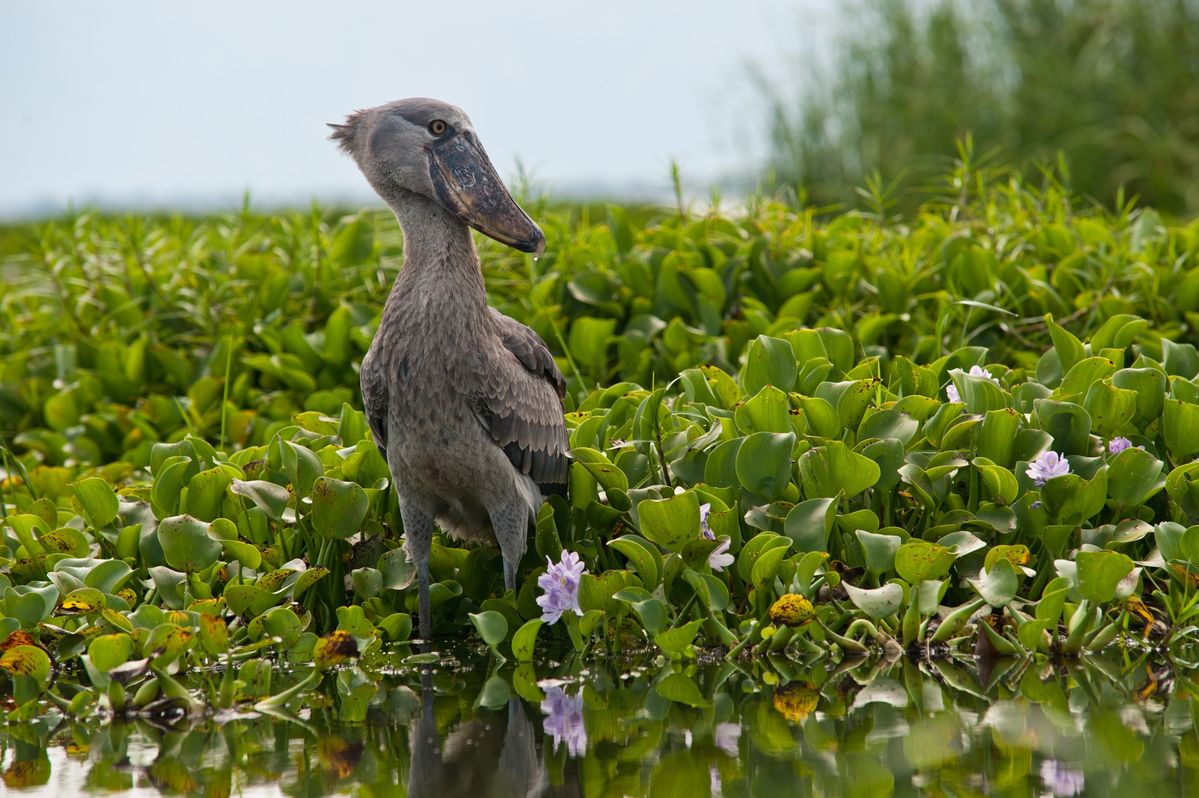
Mabamba Swamp, located along the northern shores of Lake Victoria, offers one of the most reliable Shoebill tracking experiences in Africa. Early morning excursions by canoe through papyrus channels provide intimate, quiet access to feeding territories. The stillness of dawn, broken only by paddles cutting through water and distant bird calls, creates a setting that feels timeless.
Shoebills are patient hunters. They stand motionless for long periods before striking swiftly at lungfish or tilapia. Observing this behavior at close range is unforgettable. For photographers, the opportunity to capture eye-level portraits in soft morning light is extraordinary.
Yet Mabamba is far more than a Shoebill destination. Papyrus Gonolek, Malachite Kingfisher, African Jacana, Blue-breasted Bee-eater, White-faced Whistling Duck, and Yellow-billed Duck are frequently recorded. Pied Kingfishers hover dramatically before plunge-diving. African Fish Eagles call overhead. The wetland system introduces travelers to Uganda’s aquatic biodiversity in a way that immediately establishes ecological context.
Beginning a safari with Shoebill tracking sets the tone. It signals that this is not a standard game-drive-focused trip. It is a biodiversity expedition.
Murchison Falls National Park: Riverine Birding Meets Classic Safari
Moving northward, Murchison Falls National Park offers one of the most impressive integrations of birding and large mammal safari experiences in East Africa.

The park is bisected by the Nile River, which forces its way through a narrow gorge before plunging dramatically into a thunderous cascade. The river system creates prime habitat for waterbirds and raptors, while the surrounding savannah supports traditional African wildlife.
Boat cruises toward the base of the falls combine mammal observation with birding in a seamless way. Along the riverbanks, Giant Kingfishers perch on exposed branches. African Spoonbills sweep their bills methodically through shallow water. Rock Pratincoles cling to riverside rocks. Palm-nut Vultures patrol overhead. Pectoral Sandpipers, when present during migration, probe muddy edges.

Meanwhile, elephants descend to drink. Hippos crowd sandbanks. Nile crocodiles bask along shorelines.
On game drives across the northern sector of the park, giraffes move gracefully across open plains. Lions rest in scattered shade. Secretary Birds stride through grasslands in search of prey. The fusion of birding and mammal observation feels organic here, not forced.
For travelers who appreciate ecological storytelling, Murchison demonstrates how river systems support both avian and mammalian communities in dynamic interaction.
Kibale Forest: Primates and Forest Specialists
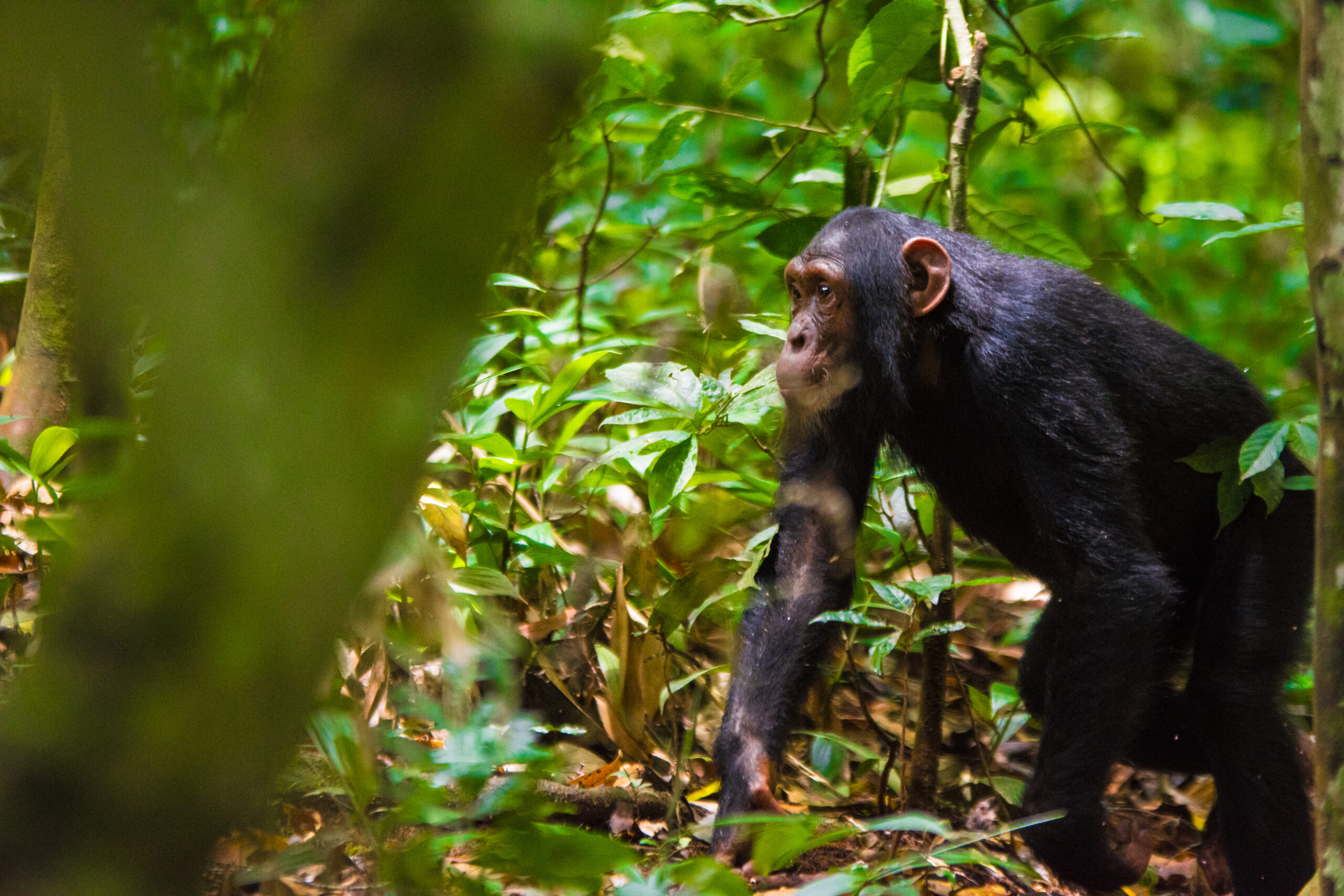
Kibale Forest National Park is often described as the primate capital of the world. While chimpanzee tracking is the flagship experience, forest birding here is equally rewarding.
The dense canopy shelters Black-and-white Casqued Hornbills whose wingbeats echo audibly as they glide between treetops. Great Blue Turacos move gracefully through mid-canopy layers. Grey-headed Kingfishers perch on exposed forest edges. Black-capped Apalises join mixed-species feeding flocks that move methodically through understory vegetation.
Chimpanzee trekking adds a kinetic, immersive element to the experience. The forest becomes alive with vocalizations as groups move through the canopy. Observing primate social behavior at close range adds depth to the overall safari.
For birders, forest habitats require patience and attentiveness. Sightings can be brief, often requiring sharp listening skills and expert guidance. The reward, however, is access to species not visible in open-country ecosystems.

Kibale’s integration of primate tracking and forest birding reinforces Uganda’s versatility. Few destinations allow travelers to shift so fluidly between taxa without changing countries.
Queen Elizabeth National Park: Savanna, Waterbirds, and Tree-Climbing Lions
Queen Elizabeth National Park offers one of the most balanced birding and safari combinations in the country.
The Kazinga Channel, which connects Lake Edward and Lake George, is a birding treasure. Pink-backed Pelicans gather in large numbers. African Fish Eagles call from prominent perches. Pied Kingfishers hover with precision before diving. Red-necked Francolins call from grassland edges. Northern Carmine Bee-eaters gather in colonies along riverbanks.

The Ishasha sector of the park is globally recognized for its tree-climbing lions. Seeing lions draped across fig tree branches is an unforgettable sight. Yet while searching for these predators, birders frequently encounter Black-headed Gonoleks, Bronze Sunbirds, Hadada Ibises, and Helmeted Guineafowl.
The blending of experiences is particularly evident here. A morning might begin with birding along wetlands and transition into tracking large mammals across open plains. There is no need to sacrifice one interest for the other.
For couples or small groups where interests vary, Queen Elizabeth National Park offers balance. The birder can remain engaged while mammal enthusiasts are equally rewarded.
Bwindi Impenetrable Forest: Gorilla Trekking and Albertine Rift Endemics
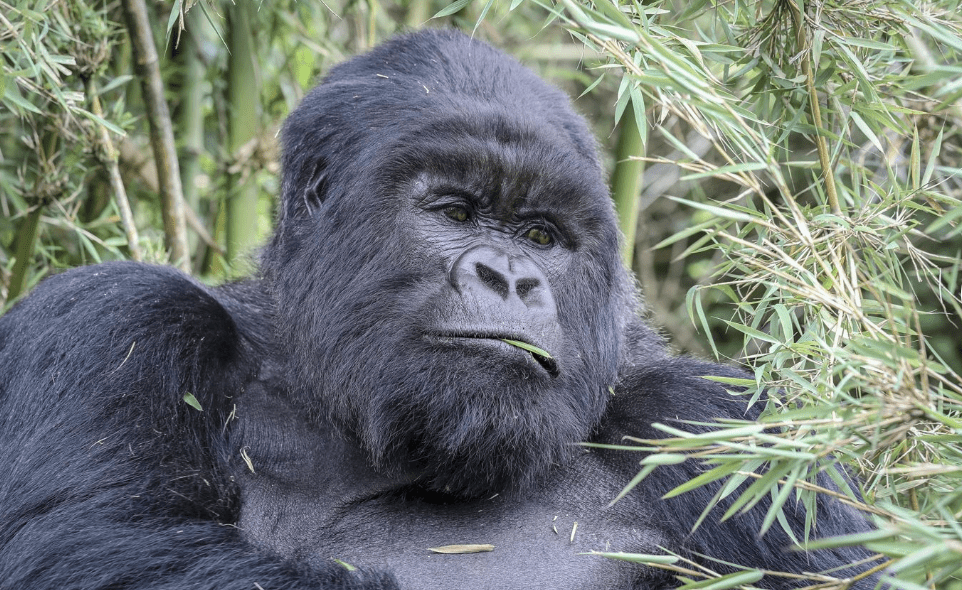
Bwindi is often the emotional highlight of a Ugandan safari. Gorilla trekking through mist-laden forest slopes culminates in an intimate hour with one of humanity’s closest relatives.
Yet Bwindi is equally renowned among serious birders. It is one of Africa’s premier sites for Albertine Rift endemics. Rwenzori Turaco flashes vibrant plumage through canopy gaps. African Green Broadbills call from dense understory. Shelley’s Crimsonwing requires persistence and local expertise to locate. Grauer’s Rush Warbler inhabits swampy clearings.
The forest demands effort. Trails can be steep and muddy. But the biodiversity payoff is immense.
Combining gorilla trekking with forest birding enhances both experiences. The trek introduces visitors to terrain, vegetation structure, and forest acoustics that later improve bird detection. Birders often find that returning to the forest after a gorilla trek deepens appreciation for its complexity.
Bwindi represents the pinnacle of Uganda’s integrated wildlife model: primates, endemic birds, forest ecology, and conservation all intertwined.
Semuliki and Congo Biome Specialists
Semuliki National Park lies in the western Rift Valley and provides access to species more typical of Central Africa’s Congo Basin.
The forest is humid, lowland, and ecologically distinct from Bwindi and Kibale. Birders seeking Nkulengu Rail, White-crested Hornbill, Piping Hornbill, and other Congo biome species find Semuliki essential.

The park’s remoteness adds a sense of exploration. Birding here feels like frontier fieldwork rather than mainstream tourism.
When integrated into a broader safari, Semuliki expands species diversity significantly. It transforms an already productive itinerary into something truly comprehensive.
Rwenzori Mountains and High-Altitude Specialists
The Rwenzori Mountains introduce high-altitude habitats where endemic and near-endemic species thrive. Rwenzori Turaco, Archer’s Robin-Chat, and other montane specialists inhabit forest edges and alpine zones.
Including the Rwenzori’s in a birding and safari combination appeals to experienced travelers seeking depth and challenge. The shift from lowland wetlands to alpine slopes within a single country highlights Uganda’s ecological breadth.
Seasonal Considerations for Birding and Safari Combos
Uganda’s equatorial position allows for year-round birding. However, drier periods from December to February and June to August generally offer easier road conditions and more predictable wildlife movement.
Migratory species from Europe and Asia arrive between November and April, increasing diversity.
Shoebill sightings are often most accessible during drier months when water levels drop.
Forest birding can be productive year-round, though heavy rains may affect trail conditions.
Careful seasonal planning enhances both mammal and bird experiences without compromising comfort.
The Value of Expertise and Small Groups
Birding and safari combinations require knowledgeable guides who understand habitat transitions and species behavior.
Licensed specialist bird guides significantly increase detection rates of shy forest species and improve identification accuracy. Small group sizes allow flexibility and minimize disturbance.
Vehicle choice also matters. A well-equipped Land Cruiser with a pop-up roof provides elevation for savannah viewing while remaining comfortable for long transfers.
Conservation and Community Impact
Integrated wildlife tourism strengthens conservation efforts. Revenue supports gorilla protection, wetland preservation, forest management, and community livelihoods.
Bird tourism, in particular, incentivizes the protection of habitats that may otherwise be overlooked.
Travelers who choose birding and safari combinations contribute directly to maintaining Uganda’s biodiversity.
A Complete Wildlife Narrative
Uganda’s birding and safari combination is not about quantity alone, though species counts are impressive. It is about narrative continuity.
From prehistoric Shoebills in papyrus wetlands to roaring lions on savannah plains, from chimpanzees in tropical forest to gorillas in misty mountains, the journey unfolds as a coherent ecological story.
Few countries allow travelers to experience so many dimensions of biodiversity without crossing borders. Even fewer deliver this diversity with such intimacy and accessibility.
For serious birders, Uganda offers depth.
For safari enthusiasts, it offers authenticity.
For those who appreciate ecosystems as interconnected systems rather than isolated attractions, it offers something rare: completeness.
Uganda does not ask you to choose between birds and mammals. It invites you to experience both – fully, thoughtfully, and in harmony. Book Now!