
Gishwati-Mukura National Park: Mountain Gorillas & Chimpanzees
The rolling green hills of Rwanda offer incredible alternatives to crowded commercial travel paths. For modern experiential travelers, independent wildlife photographers, and heritage enthusiasts, this region represents a true frontier of authentic travel. From standing before dramatic forest vistas to tracking wild primates through deep volcanic valleys, the area delivers unforgettable adventures. However, because its geographic highlights are spread across multiple high-altitude zones, planning your route requires a strategic approach. Utilizing our comprehensive field overview, Gishwati-Mukura National Park: Mountain Gorillas & Chimpanzees, is a vital first step. This guide ensures your vacation remains seamless, immersive, and perfectly managed from start to finish.
When organizing an East African safari, travelers often assume that small countries can be crossed in rapid single-day loops. In reality, moving between nearby destinations like Tanzania, Uganda, or the Democratic Republic of the Congo reveals diverse infrastructure realities. While some destinations feature flat savannah paths, Rwanda operates within a dramatic, mountainous topography where winding passes dictate a slower pace. Failing to dedicate proper time can lead to long hours in vehicles or missed wildlife windows. Before diving in, let’s clarify an important geographic detail. While this park is a premier haven for wild chimpanzees, the mountain gorillas actually reside just north in Volcanoes National Park. By analyzing how to combine these two nearby sanctuaries, you can build your itinerary with absolute confidence. Let’s explore the essential rules, seasonal timeframes, and geographical factors that define an exceptional vacation.
The Rebirth of a Rare Montane Ecosystem
To understand this unique wilderness, you must look closely at the history and layout that govern local travel.
The Inspiring Story of Forest Restoration
Gishwati-Mukura National Park stands as a symbol of successful environmental conservation. Originally, this vast forest block covered a massive area across the western highlands. Regrettably, decades of cattle ranching, illegal mining, and resettlement caused severe deforestation over time.
Subsequently, the local government stepped in with a bold restoration plan to protect the remaining wilderness. In 2015, officials officially merged the Gishwati and Mukura reserves into a unified national park.
Today, thousands of indigenous hardwood trees have been replanted across the landscape. Consequently, the lush canopy has regenerated beautifully, welcoming back native wildlife species. This incredible turnaround makes the park a favorite destination for eco-conscious guests booking our Burundi Tours.
The Ridge of the Congo-Nile Divide
The park sits directly along the rugged ridge that divides the Congo and Nile water catchment areas. This high-altitude topography creates a unique microclimate characterized by cool mountain air and frequent morning mists.
Because of this specialized climate, the forest supports an incredible density of ancient ferns and rare orchids. Furthermore, these protected highlands serve as a vital water source for local rivers feeding Lake Victoria.
Exploring this beautiful rainforest environment requires navigating steep grades and muddy mountain trails. Therefore, we always integrate robust 4×4 transport into our premium Primate Safaris.
2: Chimpanzee Tracking in the Misty Canopies
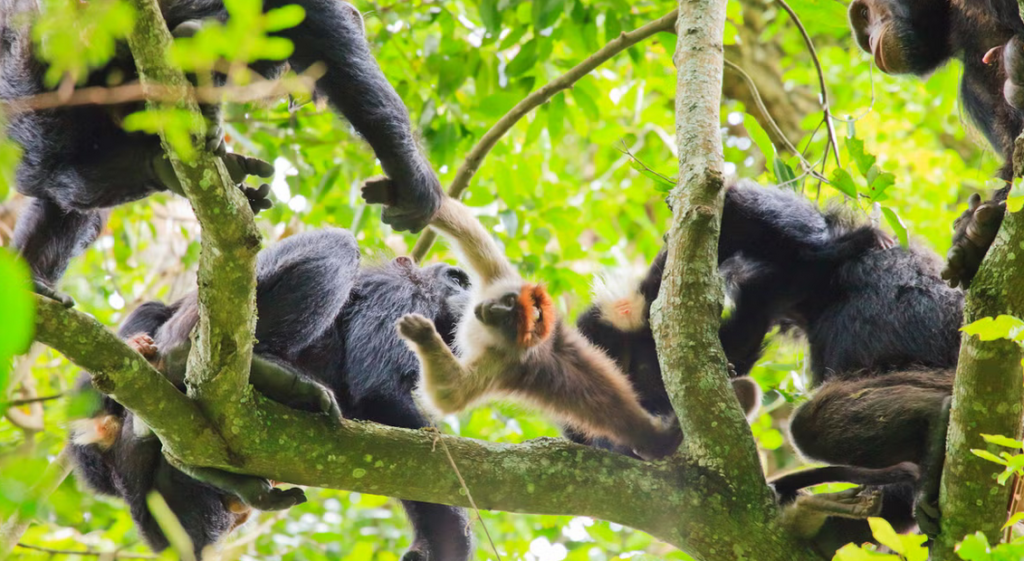
The primary wildlife attraction within the boundaries of this restored park is its thriving community of eastern chimpanzees.
Navigating the Forest Trails
To start, your morning begins early at the main park office for a safety briefing. Following that, you will follow experienced park rangers into the thick jungle undergrowth.
The park is home to a habituated group of roughly 20 eastern chimpanzees. Fortunately, these primates have become fully accustomed to human presence over years of careful monitoring.
As you hike, rangers will look for fresh nests, cracked nut shells, and vocal calls. Eventually, you will hear their loud pant-hoots echoing through the dense canopy above you.
Watching the Troop Interact
Once you locate the troop, you are allowed one full hour to observe their daily behavior. You can watch adult females grooming each other or young infants playing on low branches.
Meanwhile, dominant males will patrol the area to protect their family structure. Because the chimpanzees move quickly, capturing clear photographs requires patience and rapid camera adjustments.
This intimate, crowd-free wildlife encounter offers an exceptional alternative to larger, busier safari hubs. This focus on authentic wilderness travel is a core principle of our Cultural Tours.
3: Mapping the Nearby Mountain Gorilla Expeditions
While Gishwati protects chimpanzees, the legendary mountain gorillas live in the high volcanic peaks just a short drive away.
Connecting to Volcanoes National Park
Crucially, Volcanoes National Park sits just 55 kilometers north of the Gishwati forest boundaries. This close proximity allows travelers to combine both iconic primate encounters into a single trip.
Specifically, the drive between the parks takes roughly one hour along smooth, newly paved mountain roads. Therefore, you can track chimpanzees one morning and see mountain gorillas the next day.
Volcanoes National Park hosts ten habituated gorilla families available for daily tourist tracking. This seamless combination is a popular feature built into our premium East Africa Safaris.
Exploring the Bwindi and Mgahinga Alternatives
Alternatively, some travelers choose to cross the northern border to track gorillas inside Uganda. Bwindi Impenetrable National Park and Mgahinga National Park offer incredible tracking opportunities in dense, ancient forests.
Crossing the international border is straightforward when utilizing an East African Tourist Visa. Consequently, you can experience Rwanda’s newest forest before diving into Uganda’s legendary gorilla strongholds.
Our professional guides handle all border logistics, permit collection, and regional transport on your behalf. This comprehensive service ensures a stress-free transition between these world-class destinations, a standard across our Rwanda Tours.
4: Other Primates and Avian Treasures
Beyond its famous chimpanzees, this unique cloud forest shelters an incredible variety of smaller wildlife species.
Tracking the Vibrant Golden Monkeys
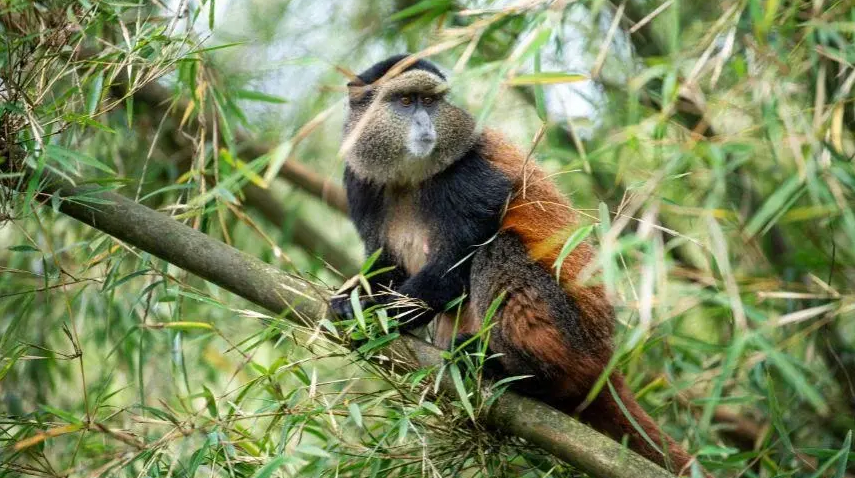
In addition to chimpanzees, the park protects a thriving population of endangered golden monkeys. These beautiful, playful primates live primarily within the dense bamboo zones along the forest edges.
To see them, you will hike through gentler terrain compared to the deeper chimpanzee trails. Once located, you can watch them leap effortlessly between bamboo stalks to feed on young shoots.
Their bright orange coats create a stunning visual contrast against the deep green foliage. Accordingly, this excursion is highly recommended for families, casual hikers, and professional wildlife photographers alike.
An Undiscovered Haven for Bird-Watchers
For dedicated birding enthusiasts, the park serves as an exceptional, crowd-free paradise. To date, researchers have recorded over 230 distinct bird species within the Gishwati and Mukura forest blocks
Notably, this total includes 20 unique species endemic to the Albertine Rift montane ecosystem. Watch for the colorful Ruwenzori Turaco, the Regal Sunbird, and the striking Strange Weaver.
Additionally, look closely along forest streams to spot the elusive Red-throated Alethe foraging in the shade. The lack of large crowds ensures an extraordinarily peaceful and rewarding bird-watching experience.
5: Cross-Border Planning and Entry Guidelines
To ensure a smooth journey through East Africa, you must follow specific regional travel regulations carefully.
Make sure your passport is valid for at least six months past your dates of travel. Always check current entry guidelines with the Burundi Immigration Authorities and Rwanda Immigration Services before arriving.
Travelers must present a physical Yellow Fever International Certificate of Vaccination card at all border checkpoints. Additionally, remember that single-use plastic bags are strictly illegal across the region to protect local ecosystems.
Any plastic bags will be confiscated at airport customs. Therefore, we highly recommend using reusable canvas dry bags to pack your camera gear.
Why Design Your Journey with Feather Trail Safaris
Coordinating a seamless holiday across East Africa involves balancing many specific details. Specifically, you must secure rare primate permits, lease reliable 4×4 vehicles, and track shifting border rules.
Attempting to arrange these complex logistics independently can easily lead to booking errors or unexpected expenses. Fortunately, the team at Feather Trail Safaris specializes in organizing premium, thoroughly vetted regional tours.
We handle every single detail of your itinerary on your behalf from start to finish. Specifically, we cover your lodge fees, secure hard-to-get tracking permits, and provide immaculate 4×4 land cruisers.
Furthermore, we pair you with the most experienced local driver-guides in the industry. Our deep regional knowledge, strict safety standards, and premium travel network ensure you enjoy an unforgettable adventure.
Ready to secure a perfectly timed African safari with expert support every step of the way? Which specific wildlife encounters or cultural landmarks are you most excited to include in your custom itinerary? Let us know, and our team will craft your tailored blueprint.
FAQ
When is the ideal season to plan a primate trekking safari here?
The dry season months from June to September offer the clearest trails and stablest trekking conditions. Nevertheless, the wet season remains excellent for bird-watching and fruit-foraging chimpanzee encounters.
Is a Yellow Fever vaccination certificate required at the border?
Yes, presenting a valid, physical Yellow Fever International Certificate of Vaccination card is a mandatory entry requirement checked by border officials.
How do I book an all-inclusive safari covering both chimpanzees and gorillas?
You can easily secure a custom, worry-free safari with all lodging, private 4×4 transport, driver-guides, and park permits pre-arranged by submitting an inquiry through our website’s main contact form.
What is the Gishwati-Mukura National Park: Mountain Gorillas & Chimpanzees guide?
This official planning guide offers an expert evaluation of the park’s history, local chimpanzee tracking protocols, and adjacent mountain gorilla expeditions.
Are there mountain gorillas living directly inside Gishwati-Mukura National Park?
No, mountain gorillas do not live inside this specific park. Instead, they reside just north within the volcanic peaks of Volcanoes National Park.
How far is the drive between Gishwati and Volcanoes National Park?
The driving distance between these two premium conservation areas is roughly 55 kilometers. Consequently, the journey takes about one hour along smooth, paved highways.
Can I track chimpanzees inside Gishwati-Mukura National Park?
Yes, chimpanzee tracking is the premier wildlife activity offered inside the park. Currently, visitors can track a fully habituated community of roughly 20 chimpanzees.