
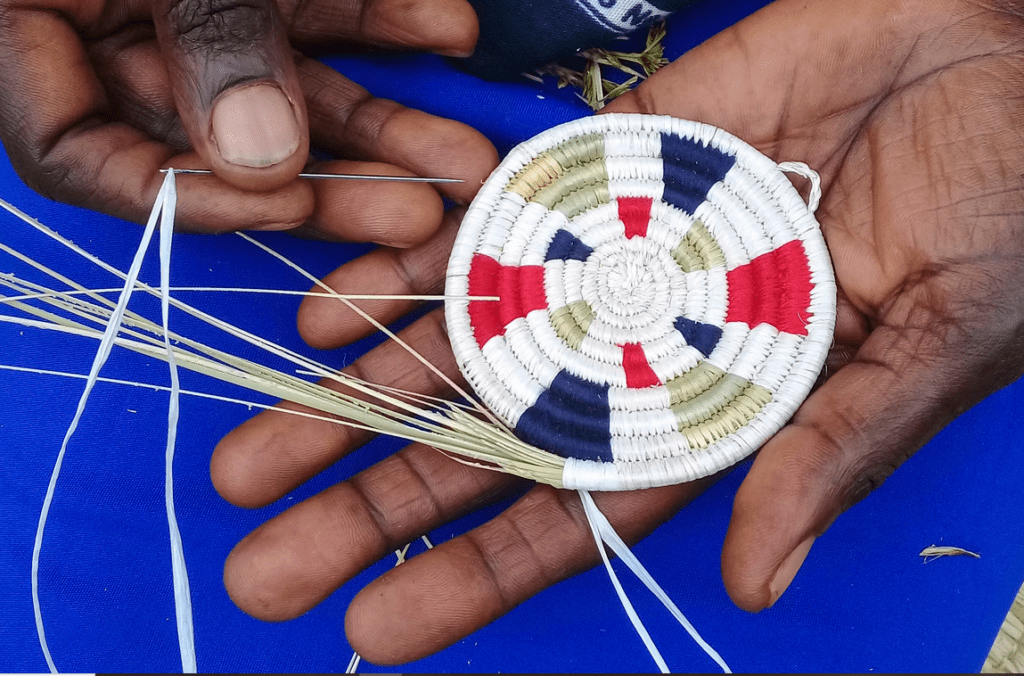
Watch a skilled basket-weaver for five minutes and you will understand immediately that traditional Burundi craftsmanship is not a hobby. A folk art, or a tourist industry. It is a professional practice, a discipline requiring years of apprenticeship, daily exercise of sophisticated manual skills. An aesthetic sensibility refined through generations of collective tradition.
The woman at the Gitega cooperative had been weaving for thirty-two years. She knew this because she started at age ten, watching her mother, and she is now forty-two. In those thirty-two years she had made approximately 2,500 baskets, she calculated this without much effort, as if it were obvious arithmetic. Her work is sold through the cooperative to buyers in Europe and North America who pay several hundred dollars per piece. She earns a modest but reliable income.
“The pattern is harder than people think,” she said, demonstrating the tight, even coiling with one hand while maintaining the tension of the emerging design with the other. “It looks simple because I don’t have to think about it anymore.”
Basketry: The Signature Craft of the Great Lakes
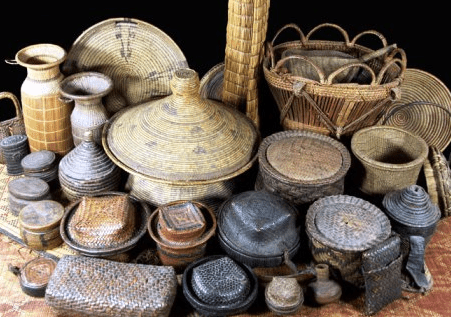
Coiled basketry is the most celebrated and most widely exported form of traditional Burundi craftsmanship. The technique is shared across the Great Lakes region, similar traditions exist in Rwanda, Uganda, and Tanzania, but Burundian baskets are distinguished by specific design vocabularies, colour combinations, and finishing techniques that identify their origin.
The process begins with the collection and preparation of natural fibres. Weavers typically use dried grass or stripped plant stems for the core coiling material. They use palm leaf strips or other flexible plant fibers for the binding and pattern material, coloring them with natural pigments. Specific root dyes produce the red tones, while charcoal or mud creates the black. The natural cream of undyed fiber completes the classic Burundian palette.
Weavers coil the materials by hand. They use no tools beyond a bone or wooden needle for the stitching. They build the pattern entirely from memory. Experienced weavers carry dozens of traditional designs in their mental repertoire and execute them without a template. They occasionally develop new designs, but they always maintain the traditional vocabulary. These designs include chevrons, lozenges, concentric circles, diagonal grids, and the distinctive triangular motifs of the Great Lakes basketry tradition.
A medium-sized basket takes 3 to 5 days of full-time work. A large, complex piece can take 2 to 3 weeks. The resulting objects justify every hour of that investment.
What to look for when buying: Even thickness of coiling throughout; consistent spacing of the binding stitches; sharp definition of the pattern edges (blurry pattern lines indicate less careful binding); a firm, stable base that doesn’t rock; and the right “ring” when tapped, a dull thud suggests loose construction, a clear ring suggests tight, even coiling.
Pottery: Ancient Skills in Living Hands
Twa pottery tradition is the second great pillar of traditional Burundi craftsmanship, and the one with the longest documented history. The Twa have been the primary potters of the Great Lakes region for thousands of years, producing the domestic ceramic ware, cooking pots, water vessels, storage jars, that agricultural communities depended on.
The technique is entirely hand-based. Clay is collected from specific known sources, different clay bodies have different working properties. The experienced potters know which clay produces the best results for each vessel type. The clay is cleaned, wedged to remove air pockets, and then built up by hand using a coiling technique: ropes of clay are layered and blended to form the walls, which are then smoothed and thinned by paddling and scraping.
Decoration is applied to the leather-hard pot before firing, geometric incised lines cut with a wooden tool. The impressed patterns made with cord or carved stamps. The firing takes place in an open fire rather than a kiln: The pots are placed on a bed of fuel, covered with more fuel. The fired at relatively low temperature. The result is the characteristic terracotta colour of traditional pottery, with the occasional dark marks where smoke penetrated the clay during firing, considered beautiful rather than flawed by potters and collectors alike.
Beadwork: History Worn on the Body
Beadwork has a deep history in Burundian material culture. Before the availability of glass beads through trade, Burundian beadwork used seeds, shells, bone, and other natural materials. The introduction of trade beads, small glass beads imported from Europe and Asia. These are right from the eighteenth century onward transformed the craft while maintaining the design traditions built with earlier materials.
Burundian beadwork design draws on the same geometric vocabulary as basketry, triangles, chevrons, diagonal lines, concentric patterns, applied to the different medium of strung beads. The colour combinations are distinctive: red, white, and black dominate the traditional palette, with blue and green used as accents.
Ceremonial beadwork, the elaborate necklaces, bracelets, and anklets worn at weddings, initiations, and royal events, represents the most complex and technically demanding work in the tradition. Everyday beadwork jewellery, designed for daily wear and sale to visitors. This simplifies the ceremonial forms while maintaining the essential design vocabulary.
What to look for when buying: Consistent bead sizing (mixed sizes indicate lower quality work); even tension in the stringing (too loose and the piece will sag; too tight and it will break easily); clean, symmetric pattern execution; and secure finishing at the clasp or closure.
Woodcarving and Metalwork
Traditional Burundi craftsmanship extends beyond textiles and ceramics. Woodcarving, of drums, furniture, architectural elements, and figurative sculpture, is practised by specialist craftspeople whose skills are transmitted through family apprenticeship. The best woodcarvers in Burundi work primarily on commission for musical instrument makers and cultural institutions. The decorative pieces for sale to visitors can be found at cultural centres and artisan markets.
Traditional metalwork, iron-smelting, spear and tool forging, jewellery casting. This has largely given way to manufactured equivalents, but revival craft workshops in Gitega and Bujumbura are working to document and transmit the traditional techniques.
Where to Find and Buy Traditional Burundi Craftsmanship
Gitega women’s cooperative: The highest quality basketry in the country. Prices reflect the quality; pieces start at $20 and rise significantly for large, complex work.
Twa pottery cooperatives in Kayanza and Rutana: Authentic hand-built, open-fired pottery at fair prices. Visit fee applies for community visits.
Marché Central, Bujumbura: Widest range, variable quality. A rewarding two-hour browse for the patient shopper.
Cultural centre gift shops (Gitega, Bujumbura): Curated selection, slightly higher prices, more reliable quality control.
FAQs: Traditional Burundi Craftsmanship
How can I tell if a Burundian basket is handmade?
Hand-coiled baskets have slight irregularities in the coil spacing and pattern edges that machine production cannot replicate. The feel of a hand-coiled basket is also distinctive, slightly irregular but firmly constructed.
Are Burundian crafts exported internationally?
Some are, through fair trade cooperatives and international retailers. The selection available in-country is significantly wider and more authentic than what reaches international markets.
How much should I pay for a good Burundian basket?
For a medium-sized, well-made basket from a cooperative, $30 to $60 is fair and appropriate. Larger or more complex pieces command higher prices.
Book a Burundi craft cooperative visit with Feather Trail Safaris