
The old woman’s hands moved without her watching them.
She was talking, through my guide’s translation, about the time before the park boundaries were drawn, when her family’s territory extended from the fig grove by the stream all the way to the ridge that is now inside Kibira National Park. Her hands, meanwhile, were coiling clay with the automatic confidence of someone who has performed this action ten thousand times. The pot took shape as she spoke: base, walls, the gentle flaring of the rim. Beautiful, and made without looking.
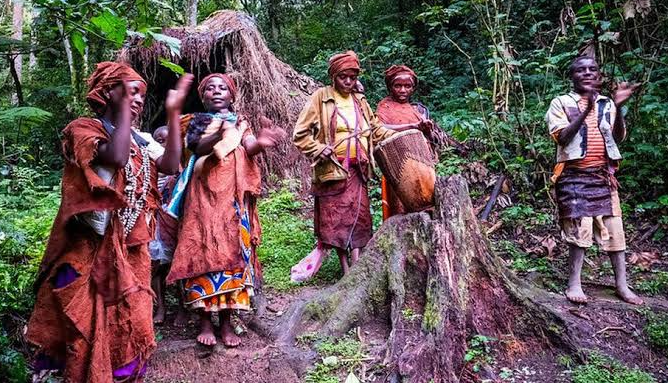
Twa Pygmy culture in Burundi is one of Central Africa’s oldest living cultural traditions, and one of the most misunderstood. These are not museum people. They are not relics. They are a community whose knowledge of the forests and wetlands of the Great Lakes region pre-dates every other human presence here by thousands of years, and whose cultural practices, pottery, music, ecological knowledge, oral literature, represent an irreplaceable thread in the fabric of Burundian heritage.
This guide covers who the Twa are, what their culture encompasses, and how to visit Twa communities in Burundi in a way that is genuinely respectful and genuinely beneficial.
Who Are the Twa Pygmies of Burundi?
The Twa (Batwa) are the oldest documented inhabitants of the Great Lakes region. Archaeological and genetic evidence suggests their ancestors have lived in and around the forests and wetlands of Central Africa for at least 60,000 years, making them one of the oldest continuous human populations on the planet.
In Burundi, the Twa number approximately 80,000 to 100,000 people, roughly 1% of the national population. International frameworks, including the African Commission on Human and Peoples’ Rights, legally recognise the Batwa as an indigenous people and formally protect their cultural rights under several international instruments.
The word “Pygmy” is used in some contexts, including occasionally by Twa people themselves, but carries colonial associations that many scholars and Twa advocacy organisations prefer to avoid. “Twa” or “Batwa” is the preferred designation in most contemporary contexts.
A History of Displacement and Resilience
For most of the past century, the story of the Twa in Burundi has been one of loss, loss of forest territory, loss of legal recognition, loss of the ecological base on which their traditional way of life depended.
The colonial period’s conservation policies excluded Twa communities from forest areas they had managed sustainably for millennia. Agricultural expansion, driven by population pressure, further reduced the secondary forest. The wetland areas that had served as partial refuge after the primary forest exclusions. By the post-independence period, most Burundian Twa communities had been reduced to agricultural margins. The landless or near-landless, dependent on casual labour and craft sales, and largely invisible to the policy processes that shaped their circumstances.
The past three decades have seen significant, though incomplete, progress. Twa advocacy organisations, supported by international indigenous rights bodies including the Forest Peoples Programme. Always have secured land rights for some communities, improved access to education and healthcare, and begun the process of political recognition that is a prerequisite for further progress.
Cultural tourism has contributed to this recovery. When traditional Twa skills, pottery, music, forest knowledge, are used to generate income. They acquire practical value for younger generations who might otherwise dismiss them. When international visitors seek out Twa communities with genuine curiosity and respect. They shift the political calculus around indigenous rights in ways that domestic advocacy alone cannot always achieve.
Traditional Twa Culture: What Survives and Thrives
Pottery
Twa pottery is the craft tradition most widely encountered by visitors, and it is extraordinary. The technique, hand-coiling without a wheel, open-fire kiln, incised geometric decoration, has been refined over thousands of years and produces vessels that are simultaneously functional and beautiful.
The women who practise pottery in Twa communities today are the inheritors of a tradition. Their roots predate the agricultural communities around them. The specific forms, the wide-bellied cooking pot, the narrow-necked water vessel, the shallow presentation bowl, have been adapted over generations to the needs of the communities that used them, and the decorative patterns carry cultural meaning that skilled practitioners can read.
Music and Dance
Twa vocal music, particularly the polyphonic singing tradition that involves complex overlapping melodic lines, is technically distinctive and culturally significant. The specific harmonic techniques used in Twa singing are related to traditions found in forest-dwelling communities across Central Africa and represent a performance practice of genuine antiquity.
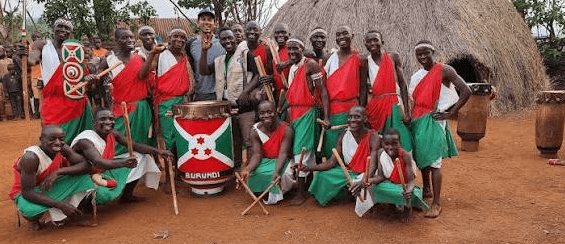
Twa dance combines athleticism and musicality in ways that reflect the physical demands and aesthetic values of forest culture. Moreover, performances combine percussion, singing, and movement simultaneously, while the entire community actively participates instead of relying on a separate class of performers, making this communal dimension one of their most distinctive features.
Ecological Knowledge
Perhaps the most profound and least visible Twa cultural tradition is the body of ecological knowledge accumulated over tens of thousands of years of forest habitation. Twa community members know the forests of the Great Lakes region in extraordinary depth. The medicinal properties of specific plants, the seasonal behaviour of forest animals, the indicators of forest health or degradation, the micro-geography of water systems.
This knowledge is increasingly recognised by conservation organisations as valuable for biodiversity monitoring and forest management. Several conservation NGOs operating in the Kibira area have established partnerships with Twa communities specifically to access this knowledge in service of park management.
What to Expect on a Twa Village Tour
A Twa village tour organised through a responsible operator follows a respectful, structured sequence:
Welcome and introduction: Community leaders welcome the group. Your guide introduces you, explains the purpose of the visit, and establishes the protocol, where you can go, what you can photograph, how the day will proceed.
Craft demonstration: Pottery is the most commonly demonstrated craft. A skilled potter works clay by hand while your guide explains the technique, the materials, and the cultural significance of specific vessel forms. Visitors are usually invited to try.
Cultural performance: Song and dance, often accompanied by percussion. The performance is not a set-piece designed for tourists but an expression of the community’s living cultural practice. The quality and energy of the performance reflects the community’s genuine engagement.
Community walk: A guided tour of the settlement and, in some cases, the surrounding landscape, with community members pointing out plants, explaining land use, and sharing aspects of daily life.
Conversation and exchange: The most valuable part of any community visit. Facilitated by your guide, genuine conversations with community members about daily life. The history, and cultural change are possible, and are consistently the most lasting memory that visitors carry home.
Responsible Tourism with Twa Communities
This cannot be overstated: Twa communities have been the objects of external curiosity, sometimes benign, often exploitative, for a long time. The obligations of responsible tourism here are significant.
Choose operators with genuine community relationships. Ask specifically: has this community been consulted about these visits? How is the visit fee distributed? Who negotiated the arrangement?
Pay fair prices for crafts. Pottery and other Twa crafts represent skilled labour. Pay what is asked.
Do not photograph sacred or private moments. Ask before you photograph individuals, especially elders and children.
Engage with genuine curiosity. The most respectful posture is the same one you’d want a visitor to your own home to adopt: interested, attentive, willing to follow the host’s lead.
FAQs
Are Twa communities open to visitors?
Communities that have established tourism programmes, working with responsible operators, are open and welcoming to visitors. Unannounced visits to Twa settlements are not appropriate and should not be attempted.
How much does a Twa village tour cost?
Visit fees vary, but expect $30 to $60 per person for a half-day community visit organised through a specialist operator. These fees go directly to the community.
Can I buy Twa pottery on a village tour?
Yes. Pottery purchased directly from the community cooperative provides the most direct economic benefit. Prices are typically $15 to $40 per piece.
How do I ensure my visit is ethical?
Book through Feather Trail Safaris, we have established, transparent relationships with partner Twa communities and can explain exactly how visit fees are distributed and how community consent is maintained.
Book a responsible Twa community tour with Feather Trail Safaris