
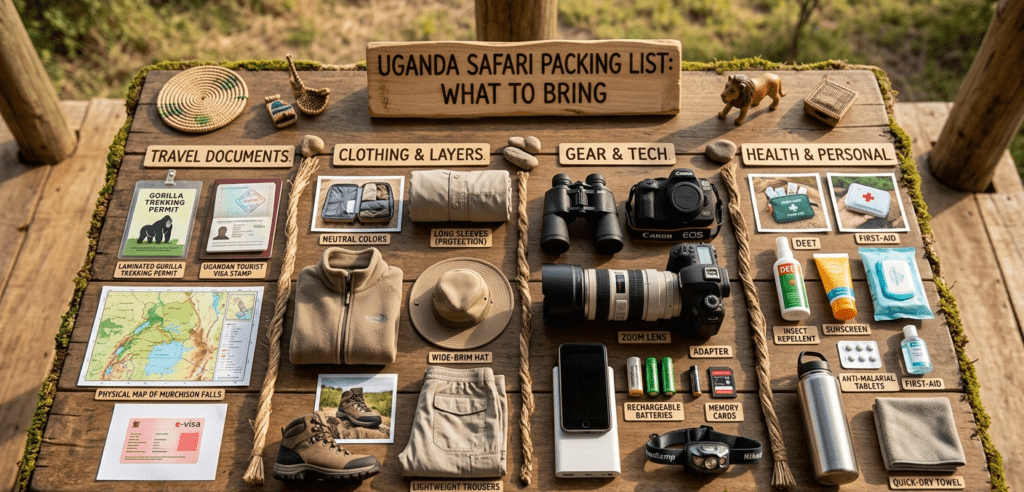
Uganda Safari Packing List: What to Bring (A First-Hand Experience Guide)
There’s a certain kind of excitement that comes with preparing for a safari in Uganda a mix of anticipation, curiosity, and just a little bit of uncertainty. I remember sitting on the edge of my bed the night before my journey, my suitcase wide open, wondering if I had packed enough… or perhaps far too much.
A safari in Uganda isn’t like any ordinary trip. It takes you deep into misty forests, across vast savannah plains, and into close encounters with wildlife that you’ve only ever seen in documentaries. And as I would soon learn, what you pack can shape not just your comfort, but your entire experience.
This is not just a packing list. This is the story of what I brought, what I wish I had brought, and what truly mattered as I journeyed through some of Uganda’s most iconic landscapes from Bwindi Impenetrable National Park to Kibale National Park and beyond.
The Moment I Realized Packing Was Everything
When I first arrived in Uganda, the air felt different warmer, richer, filled with the scent of earth and greenery. My journey began in Entebbe, but it wasn’t long before I was on the road heading west, watching the city slowly give way to rolling hills, tea plantations, and eventually dense forests.
It was during my first forest walk in Kibale National Park that I truly understood the importance of packing right. The ground was damp, the trail uneven, and the forest alive with movement and sound. Around me, others struggled, some in unsuitable shoes, others without proper clothing.
That’s when I quietly thanked myself for one simple decision: packing the right essentials.
Clothing: Dressing for the Wild
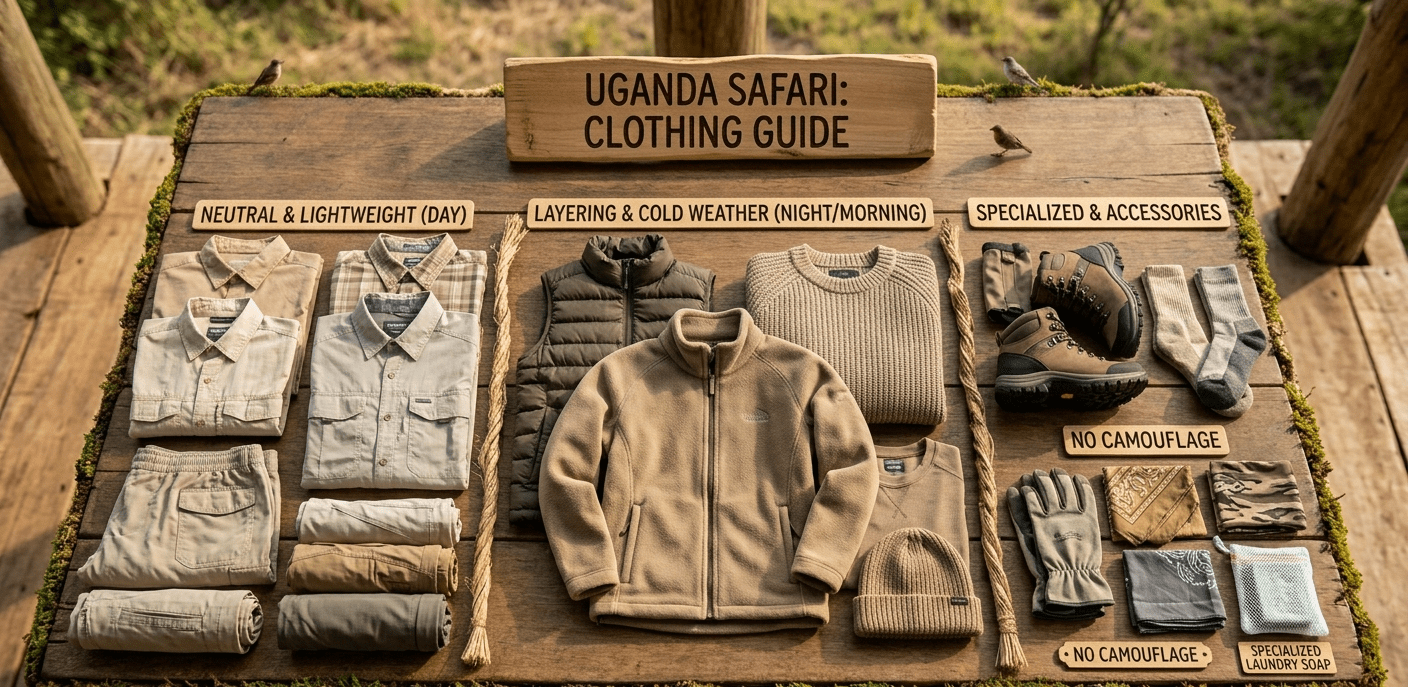
The first lesson I learned was that Uganda doesn’t demand fashion—it demands practicality.
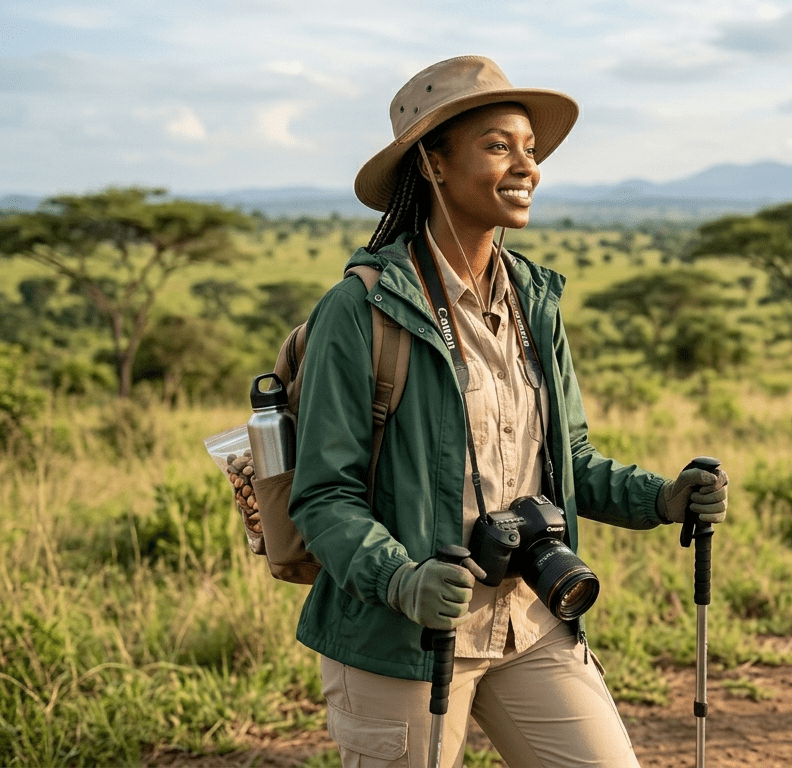
Each morning began early, often with a slight chill in the air. I found myself reaching for lightweight long-sleeved shirts and breathable trousers. These weren’t just for comfort, they protected me from insects, thorny vegetation, and the occasional scratch from branches along narrow forest paths.
Neutral colors became my best friend. Earth tones like green, brown, and khaki helped me blend into the environment, especially during game drives in Queen Elizabeth National Park, where every movement matters.
And then there was the rain.
Even on days that began with sunshine, the skies could change in an instant. A light rain jacket became something I carried everywhere, tucked neatly into my daypack. It saved me more times than I can count, especially in the dense, unpredictable forests of Bwindi Impenetrable National Park.
Footwear: The Unsung Hero of My Safari
If there’s one thing I would emphasize more than anything else, it’s this: your shoes will define your safari.
My hiking boots were, without question, the most important item I packed. They were sturdy, waterproof, and already broken in—something I was grateful for as I trekked through muddy trails and uneven terrain.
I remember one particular trek in Bwindi. The forest floor was slick from overnight rain, and every step required careful footing. Around me, I saw travelers slipping and struggling, their shoes caked in mud and offering little grip.
In that moment, I realized that good footwear isn’t just about comfort—it’s about confidence.
By the end of that trek, my boots were covered in mud, but they had carried me safely to one of the most unforgettable encounters of my life.
The Daypack: My Constant Companion
Every day of the safari, I carried a small backpack. It quickly became my most trusted companion.
Inside it, I kept:
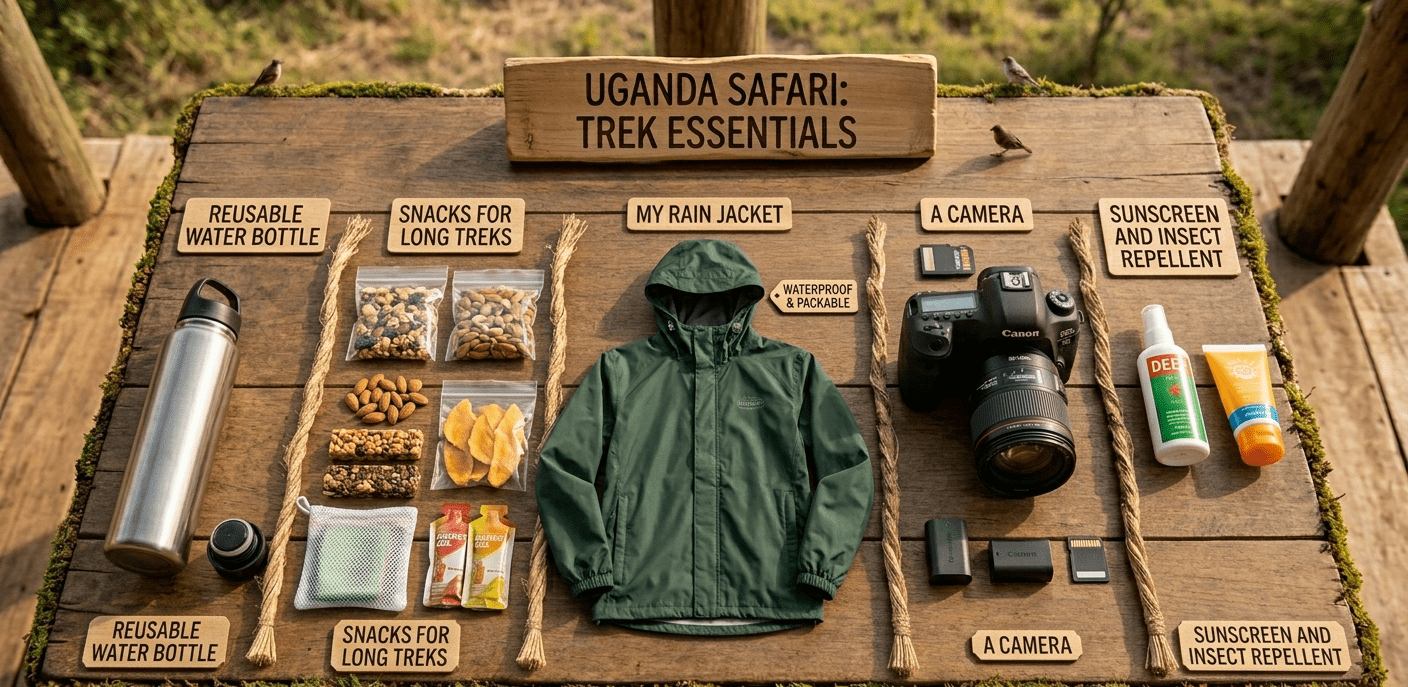
- A reusable water bottle
- Snacks for long treks
- My rain jacket
- A camera
- Sunscreen and insect repellent
There was a moment during a chimpanzee trek in Kibale National Park when we followed the troop deeper into the forest than expected. The trek stretched longer than planned, and the humidity began to take its toll.
Having water and a small snack made all the difference. It wasn’t just about staying energized, it was about staying present and enjoying the experience.
Protection from the Elements
Uganda’s beauty comes with its own set of challenges, sun, rain, and insects.
I quickly learned to respect all three.
A wide-brimmed hat became essential during game drives, especially under the open skies of Murchison Falls National Park, where the sun can be intense. Sunscreen was not optional, it was necessary.
Then there were the insects.
In the forests, insect repellent became part of my daily routine. It was a small step that made a huge difference in comfort. I also carried a pair of lightweight gloves, which proved surprisingly useful when navigating through dense vegetation during treks.
Moments I Wanted to Capture
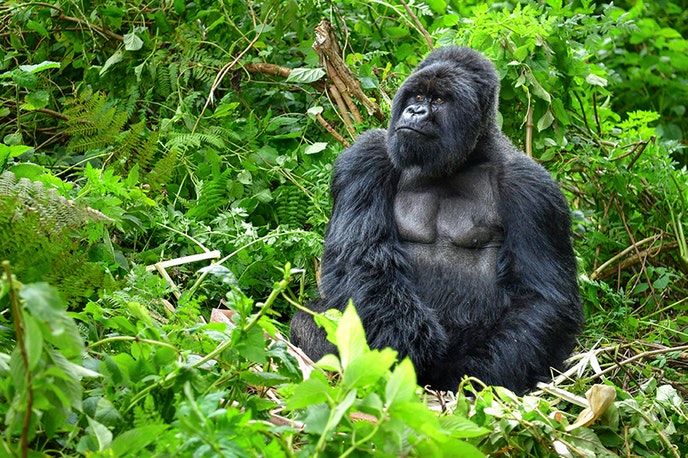
There are moments on a safari that stay with you forever, the gaze of a silverback gorilla, the sudden movement of chimpanzees through the canopy, the stillness of a savannah at sunrise.
For me, capturing those moments mattered.
I brought a camera with a good zoom lens, and it allowed me to photograph wildlife without disturbing it. But just as important was knowing when to put the camera down.
During my gorilla trek in Bwindi Impenetrable National Park, there was a moment when a young gorilla looked directly at me. For a second, everything stood still.
No photograph could truly capture that feeling.
What I Didn’t Need (And Learned the Hard Way)
Not everything I packed was necessary.
I had brought more clothes than I needed, thinking I would change frequently. In reality, simple, practical outfits worked best, and laundry services at lodges made it easy to manage.
I also packed items “just in case” that I never used. By the end of the trip, I realized that a lighter bag would have made traveling between destinations much easier.
A safari teaches you something unexpected, it teaches you simplicity.
Health and Small Essentials That Made a Difference
There were small things I almost overlooked that turned out to be incredibly important.
A basic first aid kit gave me peace of mind. Wet wipes and hand sanitizer became essential during long days in the field. A flashlight came in handy at lodges where pathways were dimly lit at night.
These were not glamorous items, but they quietly improved my experience every day.
The Emotional Side of Packing
Packing for a safari is not just about items, it’s about preparing yourself for an experience that will stay with you long after you return home.
As I zipped up my suitcase at the end of my journey, it felt different. It wasn’t just filled with clothes and gear anymore. It carried memories, of forests, wildlife, laughter, and moments of awe.
I realized that while packing well had made my journey smoother, it was the experiences themselves that truly mattered.
A safari in Uganda is an experience that changes you. It teaches you patience, appreciation, and a deeper connection to the natural world.
And while it’s easy to focus on what to bring, the truth is that the most important thing you carry with you is your mindset.
Be prepared, yes, but also be open.
Open to the unexpected.
Open to the beauty.
Open to the moments that cannot be planned.
Plan Your Safari with Feather Trail Safaris
If you’re preparing for your own journey through Uganda, Feather Trail Safaris is here to guide you every step of the way. From personalized itineraries to expert advice on what to pack, we ensure that your safari is seamless, comfortable, and unforgettable. Because in the end, it’s not just about what you bring, it’s about what you experience. And Uganda has more than enough to offer. Contact Us!